For decades, the Indian household response to a child’s winter sniffle or hacking cough was deeply predictable: a quick trip to the neighborhood pharmacy to purchase a bottle of over-the-counter (OTC) cough syrup. Self-medication was culturally ingrained, inexpensive, and entirely legal. However, as the global and domestic medical community raised severe alarms over pediatric overdoses, irrational fixed-dose combinations, and tragic instances of toxic contamination, the regulatory landscape has undergone a tectonic shift.
As of late 2026, the era of casually buying pediatric liquid cough medicine is officially over. Driven by a series of child fatalities linked to adulterated syrups and a growing clinical consensus against administering multi-ingredient cold formulas to toddlers, India’s Central Drugs Standard Control Organization (CDSCO) and the Ministry of Health and Family Welfare have implemented their most aggressive regulatory crackdown in history. Through sweeping amendments to national drug rules, mandatory red-label warnings, and strict packaging bans, regulators are actively dismantling the OTC cough syrup market.
Here is an in-depth analysis of how Indian regulators are currently handling children’s cough and cold medicines, the structural legal changes enacted in 2026, and what this paradigm shift means for pediatric healthcare across the nation.
1. The End of the OTC Era: The Schedule K Amendment
The most consequential regulatory intervention arrived on June 9, 2026, when the Union Ministry of Health and Family Welfare notified the Drugs (Fifth Amendment) Rules, 2026 in the Official Gazette of India. The legal change hinged on the deletion of a single word, but its nationwide impact was massive.
Historically, under Schedule K (Serial No. 13, Entry No. 7) of the Drugs Rules, 1945, “syrups, lozenges, pills, and tablets for cough” were explicitly exempted from requiring a doctor’s prescription. This decades-old regulatory exemption is what allowed highly potent, multi-ingredient cough syrups to be sold freely over the counter like common household remedies.
The June 2026 amendment officially removed the word “Syrups” from this exemption list. With immediate effect, all syrup-based medicines—including pediatric cough and cold liquids—were stripped of their OTC status nationwide.
- The Prescription Mandate: Pharmacists are now legally required to verify and record a valid prescription from a registered medical practitioner before dispensing any cough syrup. Selling without a prescription is a strict compliance violation that attracts severe license action under the Drugs and Cosmetics Act.
- The Nuance in Solid Formulations: Crucially, the regulatory clampdown specifically targets liquid formulations due to historic dosing vulnerabilities and contamination risks. Tablets, pills, and lozenges for cough relief remain exempt from the new rule and can still be legally purchased OTC.
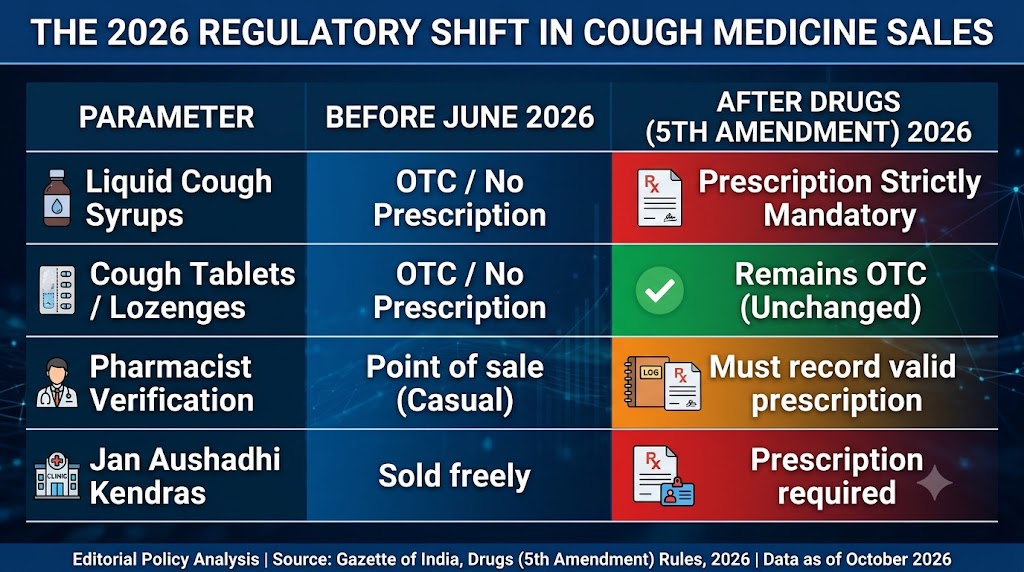
The 2026 Regulatory Shift In Cough Medicine Sales
2. Protecting the Vulnerable: The “Under-4” Red Line
Beyond removing the OTC status of syrups, regulators have taken specific aim at the physiological risks posed to infants and toddlers. Children’s bodies metabolize active pharmaceutical ingredients far differently than adults, and the Directorate General of Health Services (DGHS) had previously issued an advisory in October 2025 explicitly warning against the use of cough syrups in children under the age of four.
Despite these clear advisories, the deeply entrenched habit of prescribing and purchasing these drugs for infants persisted across the country. To combat this, the government moved from issuing advisories to enforcing hard restrictions.
In 2025, the government invoked Section 26A of the Drugs and Cosmetics Act to legally restrict the use of popular fixed-dose combinations (FDCs) containing chlorpheniramine maleate and phenylephrine hydrochloride in children below the age of four. These ingredients, commonly found in heavily prescribed pediatric cold syrups like Ascoril and T-Minic, can cause extreme drowsiness, respiratory issues, and adverse cardiovascular strain in young children.
To visually enforce this clinical boundary, the CDSCO escalated its labeling requirements in late 2026. In October 2026, the regulatory body recommended sweeping changes to how pediatric syrups are packaged and marketed to the public:
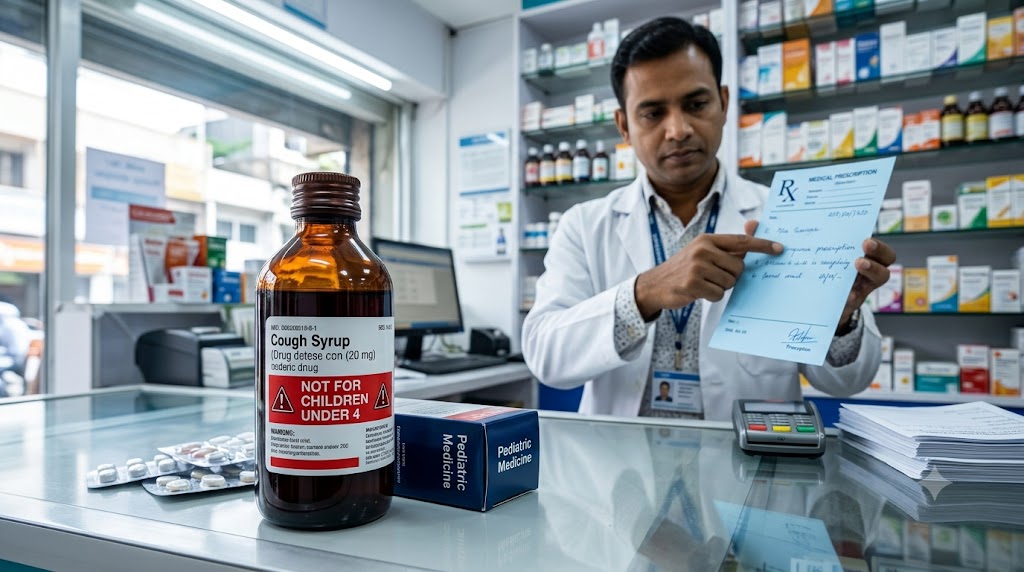
- The Red Warning Label: Manufacturers are now required to display a prominent red warning label on cough syrup bottles, explicitly stating that the medication should not be used in children under four years of age.
- Ban on Infant Imagery: To prevent the psychological manipulation of parents, the CDSCO recommended a strict ban on the use of infant and toddler imagery (such as smiling babies or cartoons) on the packaging of these syrups. This strikes directly at the marketing strategies that historically normalized the use of cold medicines for infants.
3. The Contamination Crisis and Manufacturing Overhaul
The urgency behind India’s regulatory pivot cannot be divorced from the tragic backdrop of toxic contamination. In recent years, both domestic and global health authorities were rocked by mass fatalities linked to Indian-manufactured cough syrups contaminated with diethylene glycol (DEG). DEG is a highly toxic, cheap industrial solvent that, when illicitly substituted for pharmaceutical-grade propylene glycol, causes acute kidney failure, severe neurological damage, and death in young children.
Recent incidents in Madhya Pradesh and Rajasthan—where children under five suffered suspected kidney failure after being administered a contaminated syrup brand named Coldrif—further accelerated the government’s aggressive response. State authorities swiftly revoked manufacturing licenses, halted production at linked facilities, and initiated criminal investigations into the illegal trade of adulterated and codeine-laced syrups.
To prevent future DEG tragedies, the scheduling changes are running parallel to a massive structural overhaul of India’s Good Manufacturing Practices (GMP) under Schedule M.
- Tightened Batch Oversight: The Schedule M overhaul requires pharmaceutical manufacturers to implement electronic batch records, stringent raw material vendor validation, and continuous quality risk management to ensure industrial toxins never enter the supply chain.
- Aggressive Pharmacovigilance: Updated CDSCO rules now demand that syrup manufacturers submit Periodic Safety Update Reports (PSURs) based on the actual market launch date rather than the approval date. This creates a highly monitored, continuous adverse-event reporting loop specifically designed to catch toxicity or adverse reactions early.
4. The Clinical Reality of Pediatric Cough Management
The restriction of OTC cough syrups aligns India with modern global pediatric consensus. Medical experts and major pediatric academies have long stressed that coughing is a vital reflex designed to clear the respiratory tract, and treating the underlying cause of the cough—whether viral, bacterial, or allergic—is far more important than merely suppressing the symptom with multi-ingredient chemical concoctions.
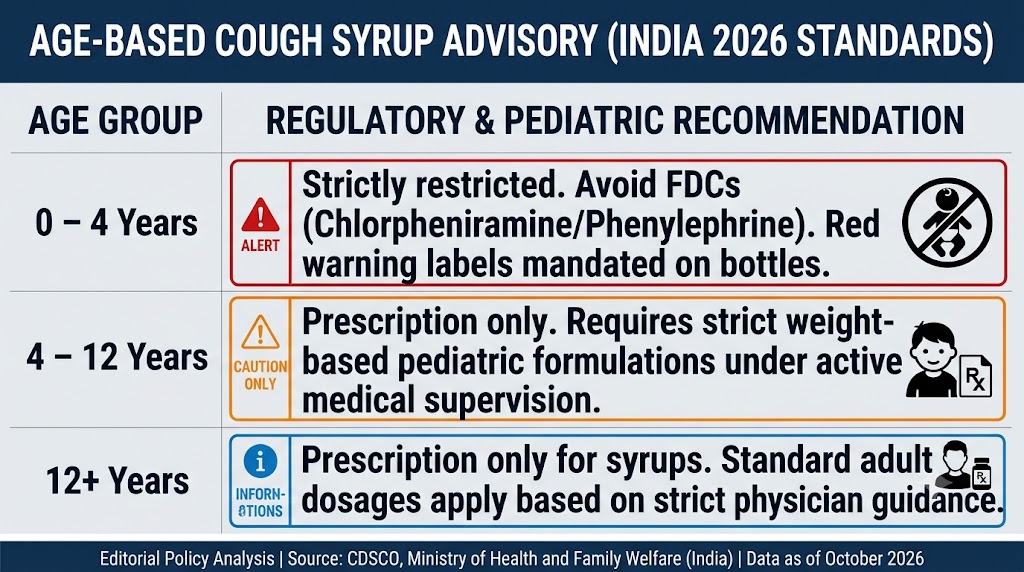
Age-Based Cough Syrup Advisory (India 2026 Standards)
For parents, the new regulatory landscape requires a fundamental behavioral shift. The era of bypassing the pediatrician for a quick chemical fix is over. Giving cough syrup without medical supervision carries high risks of incorrect dosing, accidental overdoses, and adverse reactions when combined with other medications.
Conclusion
The transformation of India’s cough and cold medicine regulations in 2026 represents a critical maturation of the nation’s pharmaceutical oversight. By stripping liquid syrups of their historic Schedule K exemption, enforcing strict age-based contraindications, and mandating glaring red warning labels to protect infants, the CDSCO and the Ministry of Health have firmly prioritized child safety over consumer convenience.
While the transition has caused friction at local pharmacy counters, the long-term public health benefits are undeniable. Regulators have essentially dismantled the dangerous culture of self-medicating children with potent, potentially toxic liquids. In doing so, India is not just cleaning up its pharmaceutical supply chain; it is fundamentally rewriting the rules of pediatric care to ensure that a simple remedy for a winter cold never again becomes a lethal threat to a child.
* Conceptual illustration generated using AI