
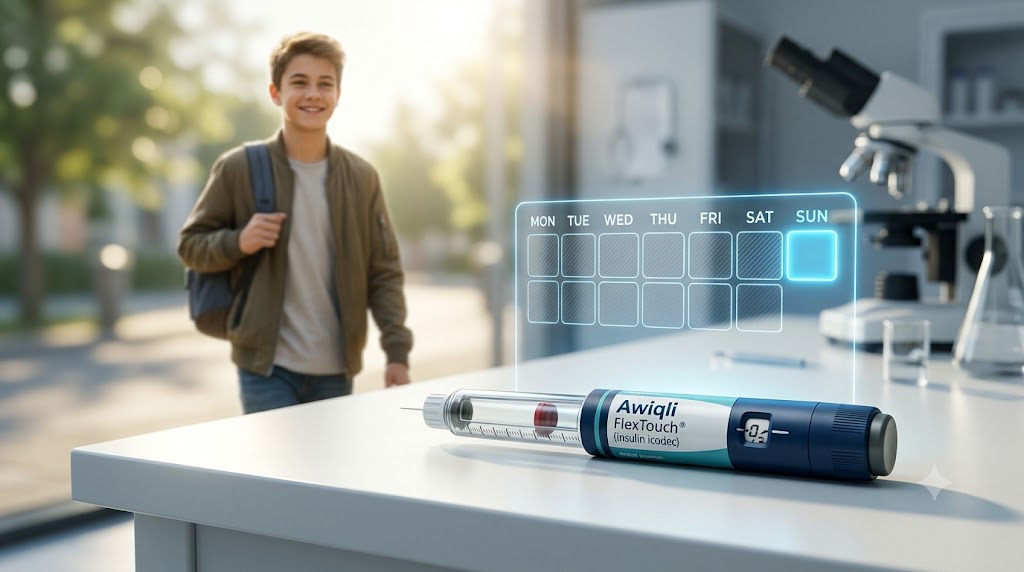
On October 23, 2026, the U.S. Food and Drug Administration (FDA) reached a historic milestone in pediatric endocrinology by approving Awiqli (insulin icodec). Manufactured by Novo Nordisk, Awiqli is the first-ever once-weekly, long-acting basal insulin approved for children aged 10 years and older diagnosed with type 2 diabetes. This approval extends the product’s reach beyond adults, who received authorization for the same condition earlier this year. For the growing population of adolescents managing this chronic metabolic condition, the regulatory decision promises to dramatically alter the daily landscape of disease management, reducing the burden of basal insulin injections from seven times a week to just one.
The Crisis of Youth-Onset Type 2 Diabetes
To understand the profound importance of this FDA approval, one must first recognize the changing demographics of diabetes. Historically, type 2 diabetes was almost exclusively an adult-onset disease, driven by long-term metabolic strain, insulin resistance, and aging. However, over the past two decades, the incidence of type 2 diabetes in pediatric populations has surged alarmingly. When type 2 diabetes develops in children and adolescents, it often presents with a more aggressive clinical phenotype than in adults, marked by a rapid decline in pancreatic beta-cell function and a faster onset of microvascular and macrovascular complications.
In type 2 diabetes, the body either does not produce sufficient insulin or develops severe resistance to it, preventing the hormone from moving glucose out of the bloodstream and into the body’s cells for energy. This causes dangerous levels of sugar to build up in the blood. Furthermore, without sufficient insulin signaling, the liver continues to inappropriately produce and release more glucose into the system. Insulin is therefore a critical tool, as it actively moves sugar out of the bloodstream and simultaneously tells the liver to halt excess glucose production.
For young patients requiring basal insulin therapy to manage their blood glucose, the standard of care has long been daily subcutaneous injections. While effective, daily injections impose a severe psychological and physical burden on teenagers. “Needle fatigue,” social stigma at school, and the sheer logistical friction of daily dosing frequently lead to poor medication adherence, resulting in erratic glycemic control and long-term organ damage.
The Pharmacological Engineering of Awiqli
Awiqli represents a marvel of modern protein engineering designed specifically to address the challenge of dosing frequency. But how does an insulin molecule remain active and steady in the human body for an entire week?
The secret lies in the molecular design of insulin icodec. Awiqli is a long-acting insulin engineered to bind strongly to a protein in human blood called albumin. When Awiqli is injected subcutaneously, the insulin molecules attach themselves to circulating albumin, which acts as a vast biological reservoir. This slow-release design prevents the insulin from being rapidly metabolized and cleared by the kidneys. Instead, the insulin slowly and steadily detaches from the albumin over a seven-day period, providing a continuous, stable baseline of glucose-lowering action throughout the week.
Available in a single concentration of U-700 (meaning there are 700 units of insulin per milliliter of solution), the drug allows for a condensed injection volume. It is administered once weekly on the same day each week using the proprietary Awiqli FlexTouch pen.
The Clinical and Psychological Impact: The Mathematics of Adherence
From a patient quality-of-life perspective, the mathematics of Awiqli are revolutionary. Transitioning a child from daily basal insulin to a once-weekly formulation reduces their annual injection burden from 365 shots per year down to just 52 shots.
For a 12-year-old managing the complex social and psychological dynamics of middle school, eliminating the need for daily medical interventions can significantly reduce diabetes-related distress. Instead of taking an insulin shot every single day, young people with type 2 diabetes can now rely on just one shot each week to achieve steady regulation. Because it requires only a single weekly dose, healthcare providers anticipate a substantial improvement in long-term therapeutic adherence, which is the most critical factor in preventing the devastating complications of early-onset type 2 diabetes.
Beyond the immediate physiological benefits for the child, the introduction of a once-weekly insulin profoundly alleviates the logistical and emotional strain placed on caregivers and families. Managing pediatric type 2 diabetes is a relentless, family-wide undertaking. Parents often serve as the primary enforcers of the daily insulin regimen, a dynamic that can strain the parent-child relationship. By shifting the medical intervention to a single day per week, Awiqli removes the daily friction of “shot time” from the household routine. This allows families to collaborate on individualized care strategies rather than constantly policing daily compliance.
Clinical Evidence and FDA Priority Review
The FDA granted Novo Nordisk’s application for Awiqli a “priority review,” a designation reserved for medications that offer significant improvements in the safety or effectiveness of the treatment of serious conditions.
The regulatory approval for the pediatric indication was built upon a robust foundation of clinical data. It leveraged the comprehensive efficacy and safety data demonstrated in the pivotal ONWARDS clinical trial program, which initially proved the drug’s effectiveness in adult populations. To confirm its suitability for youth, the FDA relied on a specialized single-dose pediatric pharmacokinetic study. This study assessed how the bodies of children and adolescents process the drug. Based on these pharmacokinetic findings, the FDA concluded that Awiqli is expected to lower blood glucose in pediatric patients in a predictable manner similar to how it operates in adults.
It is important to note that Awiqli is currently only approved for children aged 10 and older; it is not yet known if the medication is safe and effective in children under the age of 10.
Safety Profile, Contraindications, and Unique Dosing Mechanics
While the convenience of a weekly injection is a monumental leap forward, Awiqli carries a stringent safety profile that prescribers and parents must carefully navigate.
First and foremost is the risk of hypoglycemia (dangerously low blood sugar), which is a serious side effect that can be life-threatening. Symptoms of hypoglycemia include dizziness, sweating, confusion, fast heartbeat, blurred vision, anxiety, irritability, and slurred speech. Because Awiqli remains in the system for a full week, managing a hypoglycemic event requires careful, sustained monitoring.
Furthermore, the FDA highlights several severe potential side effects:
- Hypokalemia: Insulin treatments can cause a dangerous drop in blood potassium levels.
- Severe Allergic Reactions: Patients must be monitored for whole-body reactions, including rashes across the entire body, trouble breathing, sweating, or rapid heartbeat. Immediate medical help is required if these occur.
- Heart Failure Risk with TZDs: If Awiqli is taken in combination with a class of oral diabetes medications known as thiazolidinediones (TZDs), it can trigger or worsen heart failure. This can occur even in patients with no prior history of heart problems. Symptoms of heart failure to watch for include shortness of breath, sudden weight gain, and swelling of the ankles or feet.
Finally, the FDA issued a specific operational warning regarding the administration of the drug. Because Awiqli is dosed entirely differently than traditional daily insulins, patients and caregivers must be meticulously trained. They should always check the product label and verify the dose shown on the Awiqli FlexTouch pen before each injection to make sure they are taking the correct amount.
Strategic Industry Implications
From a macroeconomic and pharmaceutical industry perspective, the approval of Awiqli represents another significant commercial milestone for Novo Nordisk. While global financial markets have been intensely focused on the company’s blockbuster obesity pipeline, regulatory triumphs like the pediatric approval of Awiqli highlight the firm’s ongoing efforts to advance healthcare innovation specifically for diverse diabetic populations. By securing approvals across the United States, the European Union, and 18 additional countries, the company continues to cement its dominance in the global metabolic disease sector.
Conclusion: A New Era in Pediatric Endocrinology
The FDA’s approval of Awiqli on October 23, 2026, marks the beginning of a new era in pediatric endocrinology. By successfully uncoupling basal insulin delivery from the rigid demands of a 24-hour cycle, Novo Nordisk has provided an invaluable tool in the fight against the growing epidemic of youth-onset type 2 diabetes.
While it is not a cure, a once-weekly injection profoundly normalizes the lives of children and teenagers bearing the weight of a chronic metabolic disease. It replaces the daily reminder of illness with a manageable, weekly routine, offering young patients the freedom to focus less on their medical regimen and more on their childhood. As this medication becomes available at over 70,000 pharmacies nationwide, the healthcare community watches with optimism, hoping this innovation translates into better adherence, stabilized blood sugars, and brighter, healthier futures for the next generation.
* Conceptual illustration generated using AI