
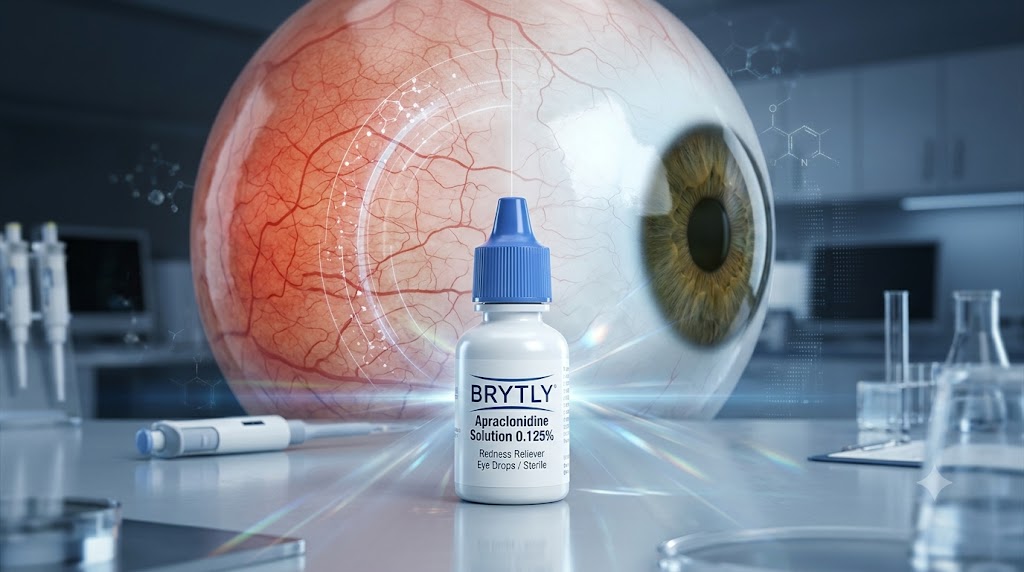
In October 2026, the U.S. Food and Drug Administration (FDA) granted non-prescription approval for Brytly (apraclonidine ophthalmic solution 0.125%), distributed by Alcon. The regulatory green light marks a landmark shift in over-the-counter (OTC) eye care: Brytly is the first non-prescription eye drop containing apraclonidine, approved for the temporary relief of eye redness caused by minor irritations in adults and children aged 12 and older.
For decades, the over-the-counter ocular redness market was dominated by legacy decongestants—primarily non-selective alpha-1 adrenergic agonists like tetrahydrozoline and naphazoline. While effective in the short term, these older formulations carry a notorious reputation among optometrists and ophthalmologists for triggering severe “rebound hyperaemia” (tachyphylaxis) and chemical dependence upon cessation.
The entry of Brytly introduces a low-dose, highly selective alpha-2 adrenergic agonist into the OTC space. Historically restricted to prescription-only clinical settings for controlling intraocular pressure spikes after laser surgery (under brand names like Iopidine at 0.5% and 1.0% concentrations), apraclonidine has been re-engineered at a gentle 0.125% dosage specifically to target surface conjunctival micro-vessels without compromising deeper intraocular dynamics.
Here is an in-depth clinical and market analysis of Brytly, its mechanism of action, how it compares to existing OTC redness relievers, proper usage guidelines, and key safety considerations for consumers and practitioners alike.
1. The Pharmacology: How Apraclonidine Works
Ocular redness occurs when the delicate micro-blood vessels (capillaries and arterioles) running through the clear conjunctiva layer over the sclera become dilated in response to environmental irritants—such as screen fatigue, dust, smoke, dry air, lack of sleep, or minor allergies.
Apraclonidine is an alpha-adrenergic agonist with a strong selectivity for alpha-2 receptors. When applied topically to the surface of the eye, apraclonidine binds to the alpha-2 adrenergic receptors located on the smooth muscle lining the superficial conjunctival blood vessels.
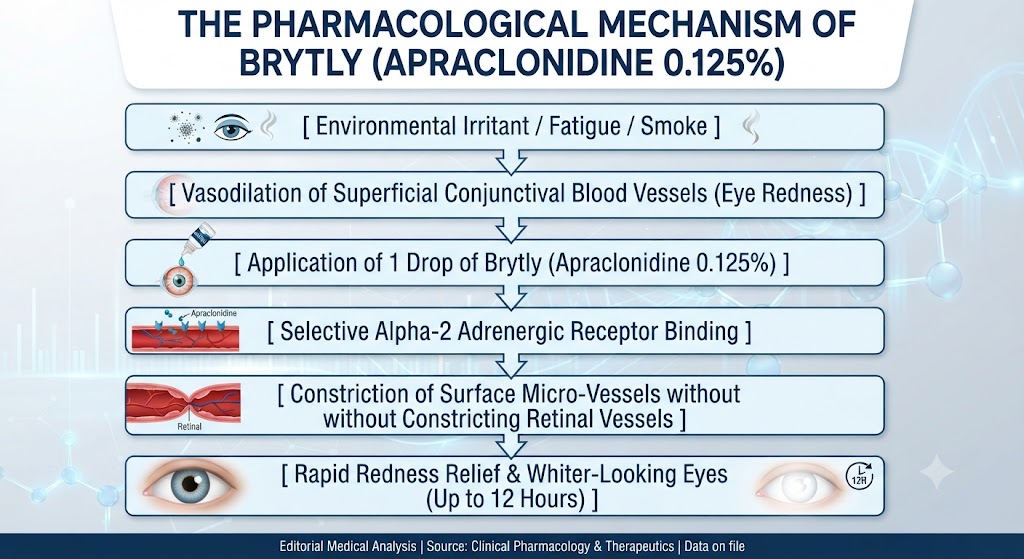
The Pharmacological Mechanism of Brytl (Apraclonidine 0.125%)
By selectively stimulating these receptors, apraclonidine induces localized vasoconstriction, narrowing the dilated surface vessels back to their baseline diameter. Because the 0.125% concentration targets the outer ocular surface, it restores a bright, white appearance to the sclera while minimizing systemic absorption and avoiding impact on pupil size (mydriasis).
2. Comparative Matrix: Brytly vs. Existing Redness Relievers
To understand Brytly’s positioning in the over-the-counter ophthalmic market, it is essential to contrast it against existing OTC categories: legacy non-selective alpha-1 agonists (e.g., Visine) and modern selective alpha-2 agonists (e.g., Lumify).
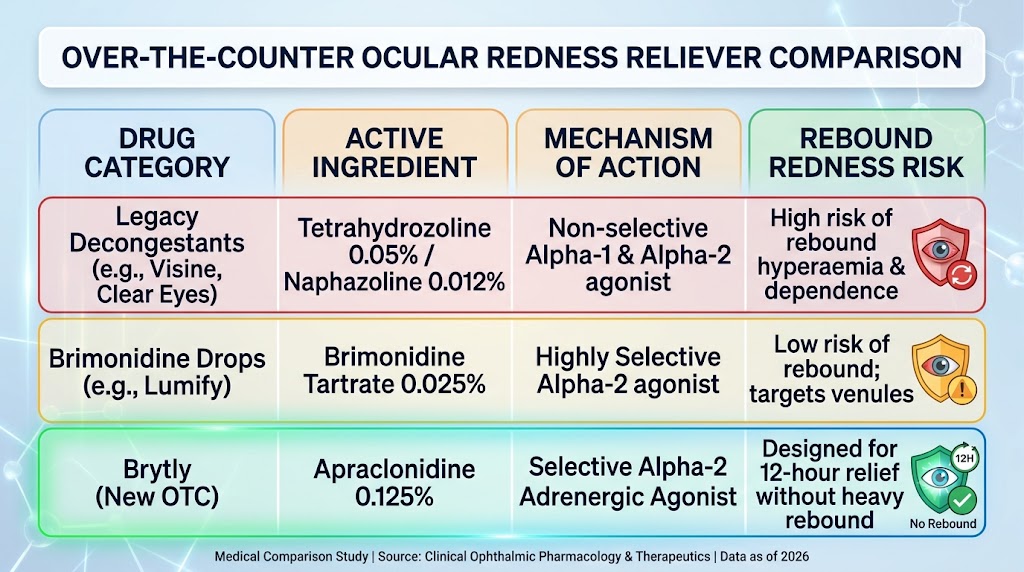
Over-The-Counter Ocular Redness Reliever Comparison
Why the Receptor Target Matters
Older OTC drops act predominantly on alpha-1 receptors. Alpha-1 stimulation constricts both arterioles and larger arteries supplying oxygen to the conjunctival tissue. When the drug wears off, the oxygen-deprived tissue reacts by dilating the blood vessels even wider to restore blood flow—creating a vicious cycle of worsening redness that forces users to reapply drops constantly.
In contrast, selective alpha-2 agonists like apraclonidine (Brytly) and brimonidine (Lumify) restrict their constrictive action primarily to the superficial micro-vessels without shutting off critical nutrient and oxygen supply to the surrounding tissue. This mechanism substantially reduces the physiological trigger for severe rebound hyperaemia when used as directed.
3. Dosing, Usage, and Administration Guidelines
The FDA-approved labeling for Brytly establishes clear dosage limits to ensure safety and maintain therapeutic efficacy.
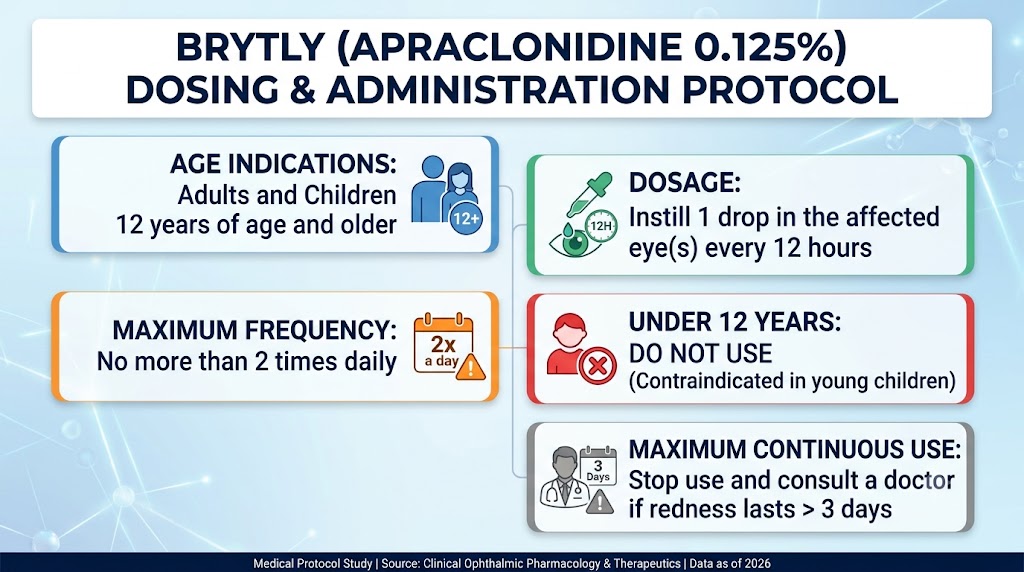
Brytly (Apraclonidine 0.125%) Dosing & Administration Protocol
Step-by-Step Instructions for Patients:
- Hand Hygiene: Wash hands thoroughly with soap and water before handling the bottle.
- Contact Lens Removal: Contact lenses must be removed prior to instilling Brytly. Wait at least 10 minutes after applying the drop before re-inserting contact lenses.
- Preventing Contamination: Do not touch the tip of the container to the eye, eyelid, fingers, or any other surface. Replace the cap immediately after use.
- Multi-Drop Spacing: If using other ophthalmic products, wait at least 5 minutes between instilling each product.
4. Safety Profile, Contraindications, and Clinical Warnings
While Brytly offers a well-tolerated profile for temporary redness relief, consumers and healthcare providers must remain aware of specific precautions and potential side effects.
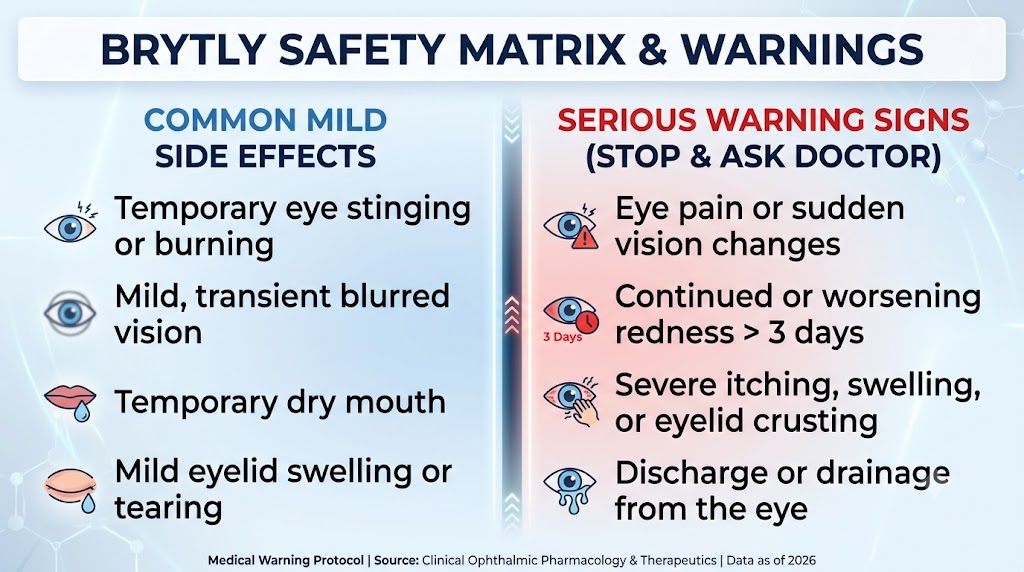
Brytly Safety Matrix & Warnings
Key Contraindications and Warnings:
- Age Restriction (<12 Years): Brytly is not approved for children under 12 years of age. In infants and young children, alpha-2 adrenergic agonists can cross the blood-brain barrier and cause serious central nervous system depression, severe bradycardia (slow heart rate), hypothermia, and sedation.
- Solution Integrity: Do not use the product if the solution changes color or becomes cloudy.
- Masking Underlying Conditions: Redness can be a sign of a more serious underlying ocular issue—such as bacterial conjunctivitis, corneal abrasion, uveitis, acute angle-closure glaucoma, or foreign body trauma. If redness persists past 3 days or is accompanied by severe pain, photophobia (light sensitivity), or discharge, immediate evaluation by an optometrist or ophthalmologist is required.
Conclusion: A New Standard in Consumer Eye Care
The approval of Brytly (apraclonidine 0.125%) as a non-prescription option represents a significant advancement in over-the-counter ophthalmic care. By transitioning apraclonidine from specialized prescription usage into an accessible, lower-strength OTC formulation, Alcon provides consumers aged 12 and older with an effective 12-hour redness reliever.
As Brytly hits pharmacy shelves, its success will depend on consumer education. When used responsibly—adhering to the twice-daily maximum, observing contact lens guidelines, and respecting the 3-day usage limit—Brytly offers a sophisticated, science-backed solution for clear, bright-looking eyes without the harsh consequences of legacy decongestants.
* Conceptual illustration generated using AI