
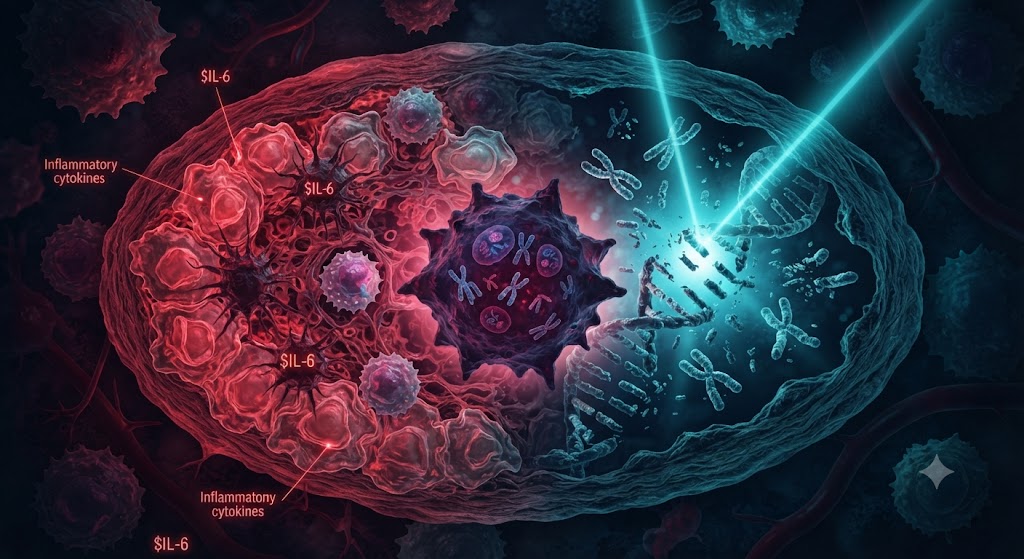
In classical pathology, diseases were historically categorized into neat, isolated silos: inflammatory conditions, autoimmune disorders, metabolic syndromes, physical traumas, and neoplastic malignancies. A patient suffering from severe ulcerative colitis was treated for gastrointestinal inflammation; a patient with severe liver cirrhosis was managed for fibrotic liver failure; and a patient exposed to high-dose radiation was monitored for acute tissue necrosis.
Yet, as modern molecular biology, single-cell sequencing, and evolutionary oncology have advanced, a profound and unifying law of pathology has emerged. Whether a tissue undergoes a slow-burning, chronic “severe” disease or experiences an acute, hyper-intense “more severe” genotoxic trauma, the ultimate cellular endpoint frequently converges on the exact same phenomenon: oncogenesis.
The biological phrase—the severe becomes the cancer, and the more severe also becomes the cancer—captures a fundamental truth about human biology. When cellular stress crosses a critical threshold, whether through decades of low-grade severe inflammation or a rapid, catastrophic mutational assault, normal cooperative cells abandon their tissue architecture and revert to an ancestral, selfish program of unregulated proliferation.
Here is an in-depth analysis of how different spectrums of disease severity converge on malignancy, the molecular mechanics driving this transformation, and how 2026 medicine is learning to intercept “severity” before it crosses the point of no return.
1. The “Severe” Pathway: Chronic Inflammation as Cancer’s Crucible
In clinical medicine, many conditions designated as “severe” are non-malignant on their own. Yet, prolonged severe inflammation is famously referred to in oncology as the “indispensable soil” for tumor development.
Consider the classic clinical trajectories:
- Severe Ulcerative Colitis: Patients with severe, unmanaged inflammatory bowel disease (IBD) face up to a 5-fold to 8-fold increased risk of developing colorectal cancer over a 20-year window.
- Severe Liver Cirrhosis: Chronic hepatitis B/C infections or severe non-alcoholic steatohepatitis (NASH) leading to advanced cirrhosis precedes over 80% of hepatocellular carcinomas (HCC).
- Severe Barrett’s Esophagus: Persistent, severe gastroesophageal acid reflux induces metaplasia in the esophageal lining, advancing to severe dysplasia, and ultimately to adenocarcinoma.
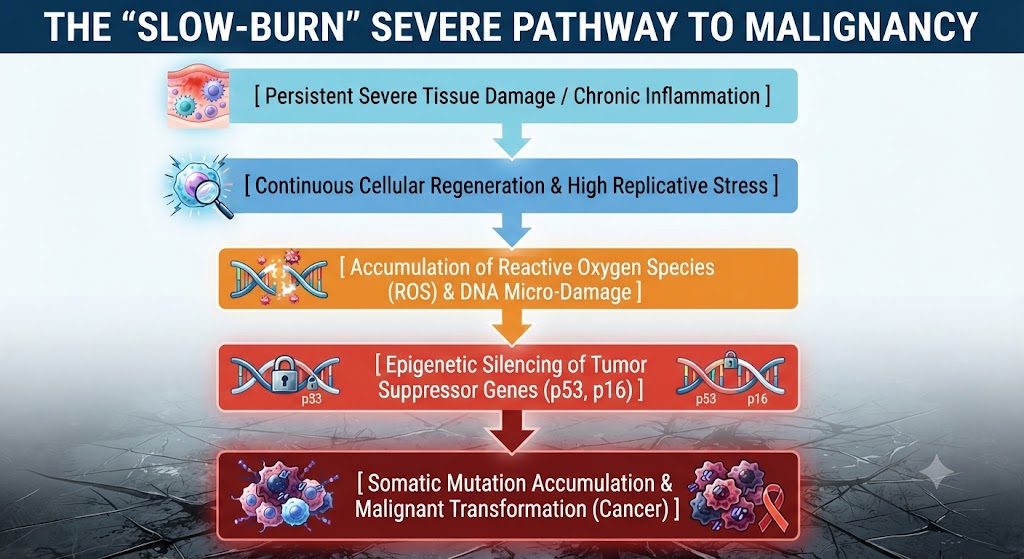
The slow-burn severe pathway to malignancy
Why does the “severe” state inevitably lead to cancer? The answer lies in the price of continuous repair.
When a tissue is chronically inflamed, immune cells (macrophages and neutrophils) flood the microenvironment with pro-inflammatory cytokines such as $IL-6$, $TNF-\alpha$, and $NF-\kappa B$. To survive this hostile chemical environment and replace damaged cells, local stem cell populations are forced into a state of hyper-proliferation.
This relentless, accelerated cell division causes replicative stress. Every time a cell replicates its genome, it risks introducing copying errors. Compounded by high levels of Reactive Oxygen Species (ROS) produced by surrounding immune cells, the local DNA suffers constant single-strand breaks and oxidative lesions. Over years of severe inflammation, the tissue’s DNA repair mechanisms become overwhelmed. Eventually, a single stem cell acquires key driver mutations in tumor suppressor genes like $p53$ or oncogenes like $KRAS$—crossing the boundary from severe inflammation to invasive carcinoma.
2. The “More Severe” Pathway: Genotoxic Catastrophe and Chromothripsis
If the “severe” pathway is a slow, grinding burn toward malignancy, the “more severe” pathway is a sudden, catastrophic blast.
Certain environmental, chemical, or radiological insults do not give cells time to adapt through years of inflammation. Instead, they inflict immediate, severe structural trauma directly upon the genome:
- High-Dose Ionizing Radiation: Induces widespread double-strand DNA breaks (DSBs).
- Severe Carcinogenic Exposure: Heavy exposure to potent mutagens like tobacco-specific nitrosamines, aflatoxins, or industrial benzene.
- Hyper-Mutational Pulses: Sudden collapses in mismatch repair (MMR) systems or $BRCA1/2$ double-hit loss.
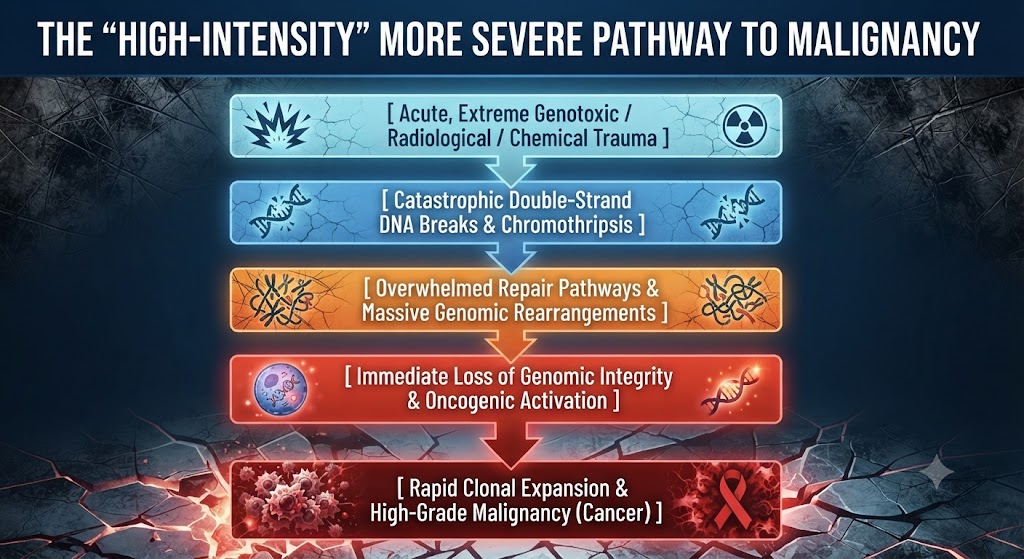
The high-intensity more severe pathway to malignancy
In these “more severe” conditions, cells undergo a catastrophic event known as chromothripsis—a phenomenon where one or several chromosomes are literally shattered into tens or hundreds of fragments in a single cellular event, and then stitched back together by error-prone DNA repair machinery (such as non-homologous end joining).
While most cells experiencing such extreme trauma trigger programmed cell death (apoptosis), a tiny fraction survive if the master guardian gene, $p53$, is simultaneously inactivated. The resulting cell emerges from the acute trauma with a massively rearranged genome, amplified oncogenes, and lost tumor suppressors. Here, the “more severe” insult bypasses years of gradual inflammatory progression to produce an aggressive, highly mutated cancer almost overnight.
3. Evolutionary Biology: Cancer as the Atavistic Fallback
Why do both the “severe” and the “more severe” pathways converge on the exact same disease state?
The answer lies in evolutionary oncology and the Atavistic Theory of Cancer. Multicellular life evolved over 600 million years ago when individual single-celled organisms agreed to suppress their autonomous proliferation to form cooperative tissues and organs. To maintain a complex multicellular organism (like a human), cells must obey strict signals regarding when to divide, differentiate, or die.
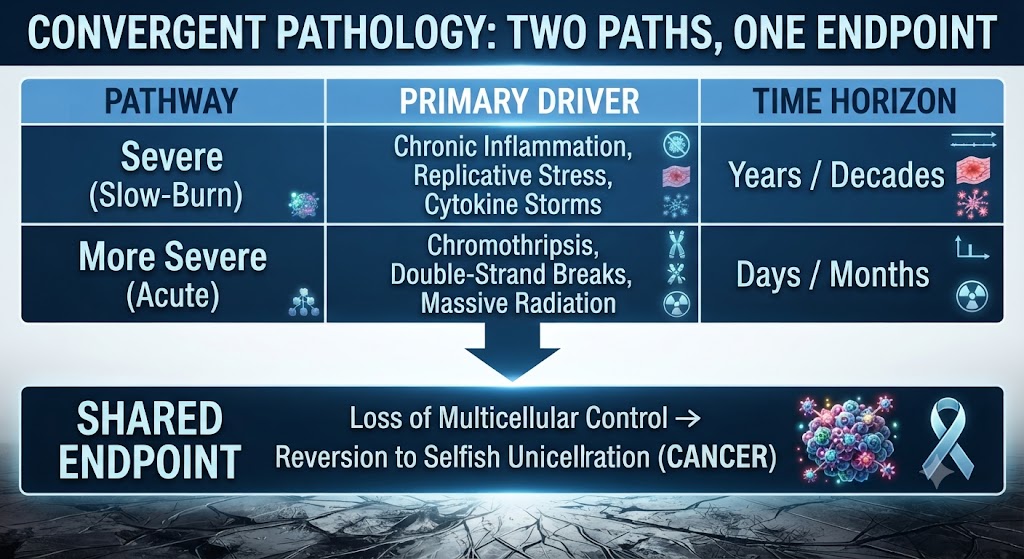
Convergent Pathology – Two paths, one endpoint
When a tissue microenvironment suffers severe, prolonged breakdown (whether from chronic disease or acute trauma), the cooperative biochemical signals that hold multicellular architecture together crumble. The cell’s internal microenvironment becomes toxic, acidic, hypoxic, and structurally chaotic.
In response to this extreme, unresolvable environmental stress, the cell activates ancient, highly conserved evolutionary survival programs embedded deep within its DNA. It drops its multicellular specialized functions and reverts to a primitive, single-celled survival mode: unregulated growth, anaerobic glycolysis (the Warburg Effect), resistance to cell death, and motility (metastasis).
In essence, cancer is the cell’s ultimate emergency biological fallback plan when local tissue conditions become catastrophically severe.
4. Intercepting the Threshold: 2026 Therapeutic Frontiers
Understanding that both severe non-cancerous conditions and hyper-severe mutational events inevitably lead to malignancy has revolutionized medical intervention strategies in 2026. Rather than waiting for a formal cancer diagnosis, modern medicine focuses on oncological interception—de-escalating “severe” conditions before they cross the somatic mutation threshold.
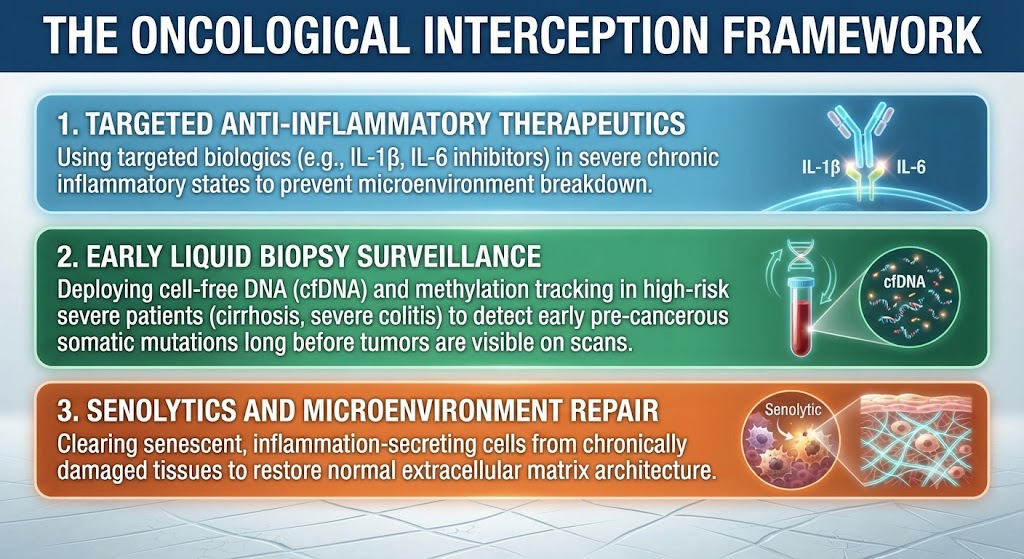
The Oncological Interception Framework
By actively dampening severe chronic inflammation with targeted biologics and using ultra-sensitive liquid biopsies to monitor clonal expansion in real time, clinicians can prevent the “severe” from making its tragic, predictable transition into the “cancer.”
Conclusion
The biological reality that the severe becomes the cancer, and the more severe also becomes the cancer is a stark reminder of the limits of cellular tolerance. Whether through the slow, grinding wear of chronic inflammation or the swift, violent destruction of genotoxic trauma, extreme biological stress forces living cells to abandon their cooperative commitments and revert to malignant autonomy.
Recognizing this common destination has dissolved the artificial boundaries between chronic disease management and oncology. True cancer prevention is not merely about avoiding known carcinogens; it is about treating severe chronic tissue damage with the urgency it deserves—extinguishing the inflammatory and mutational fires long before they ignite the spark of malignancy.
* Conceptual illustration generated using AI