
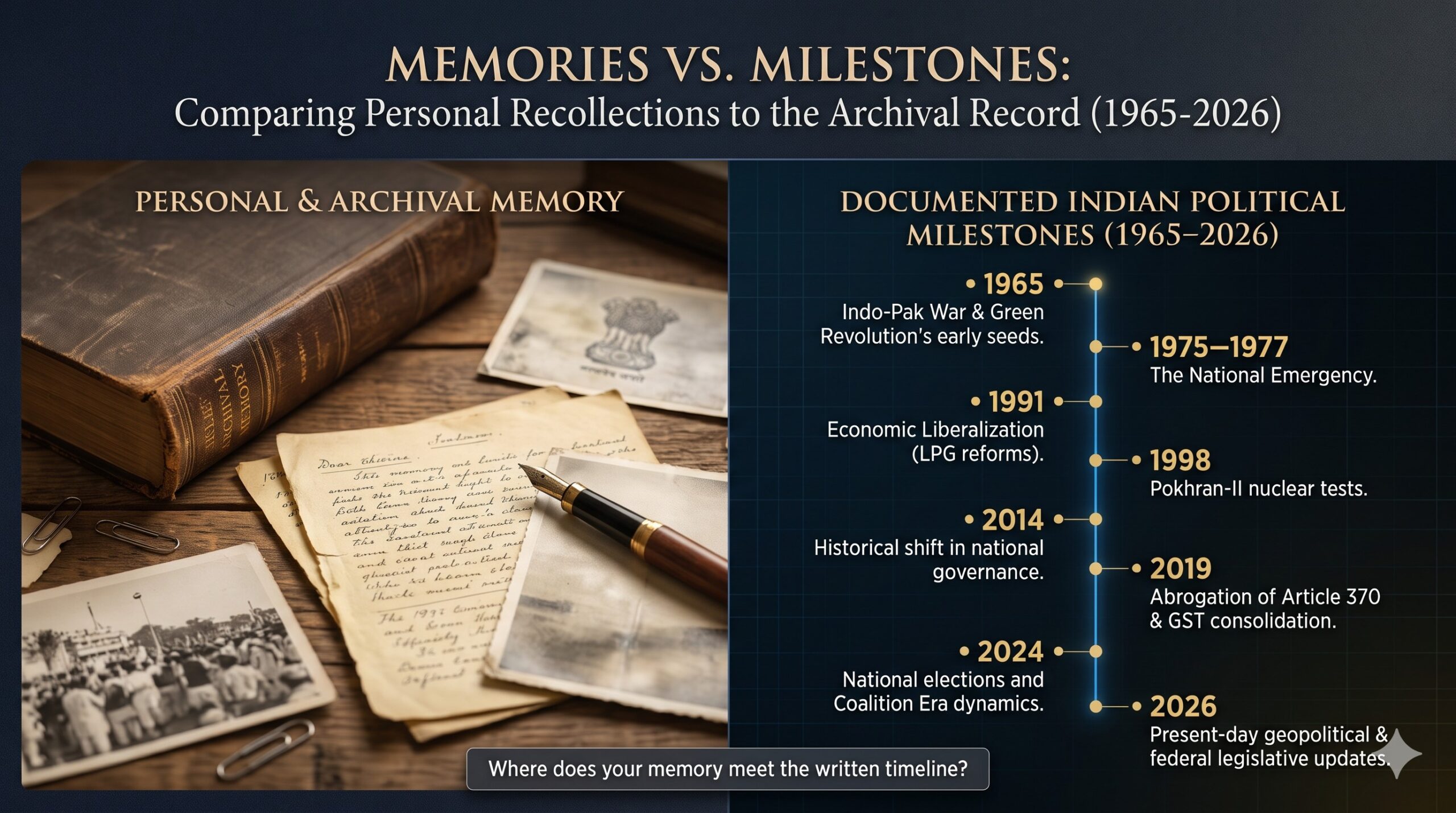
Author Note & Methodology: This analysis examines Sonia Gandhi’s memoir, Belonging: A Journey of Love, published in November 2026 via HarperCollins India following earlier editorial and publishing shifts. Rather than taking partisan reactions at face value or treating a personal memoir as an archival monograph, this piece cross-checks contested claims against primary statutory and historical benchmarks—including the Constitution of India (Articles 79–80 on the bicameral Parliament), Justice G.T. Nanavati Commission inquiry findings on the 1984 anti-Sikh violence, Election Commission of India (ECI) general election tallies, and Supreme Court orders—while evaluating how the book’s release interacts with upcoming state elections in early 2027.
1. Executive Summary: High Readability, Fragile Archival Grounding
Few political memoirs in recent Indian public life carry as much built-in curiosity as Belonging: A Journey of Love. Written by a figure who spent decades at the center of the Indian National Congress and as a Member of Parliament, the book moves from her early years in post-war Italy and meeting Rajiv Gandhi in 1960s Cambridge to bereavement, family life, and high-stakes Indian politics. Its stated purpose—answering long-circulating stories and personal hurts—gives it emotional momentum and strong commercial traction.

Archival records and historical memory. Source: miljko / Getty Images
Yet a memoir written by a major political actor is never just a diary; it operates simultaneously as personal testimony, historical interpretation, and political positioning. Where Belonging runs into trouble is not simply that it offers a sympathetic view of the author and her family—every memoir does. The deeper vulnerability lies in two converging problems:
- Verifiable Factual and Institutional Slips: Across multiple passages touching on parliamentary mechanics, constitutional history, court orders, and election timelines, the text diverges from documented public records. When a public figure writes about institutions she has served in for over two decades, basic accuracy errors erode credibility far faster than ideological disagreements.
- Contested Historical Framing at a Sensitive Moment: Releasing a retrospective that touches on sensitive episodes—such as 1984, coalition politics, and rival figures—in November 2026 invites immediate political counter-attacks just months ahead of major state assembly contests in early 2027, including Punjab and Uttar Pradesh.
2. Primary Sourcing: Where Memory Meets the Public Record
A disciplined reading separates subjective recollection (how an event felt at the time) from verifiable public fact (dates, constitutional rules, judicial holdings, and official tallies). Several widely noted points illustrate why archival cross-checking matters:
- Parliamentary Composition: Under Article 80 of the Constitution of India, the Rajya Sabha is not simply a chamber of nominated members; the vast majority of its seats (up to 238) are indirectly elected by the elected members of State Legislative Assemblies, with 12 nominated by the President for special expertise in literature, science, art, and social service. Conflating election and nomination in a description of India’s Parliament is an avoidable institutional slip for a long-serving MP.
- Election Tallies and Timelines: Public electoral records distinguish the 2014 Lok Sabha outcome (where the BJP won 282 seats and the NDA tally was 336) from 2019 (where the NDA reached 353). Similarly, major public events—such as the founding of the Rashtriya Swayamsevak Sangh in 1925, the 1984 general election tally, the 1990 Bharat Ratna visit of Nelson Mandela, the anti-corruption agitation of 2011, and the passing of longtime aide Ahmed Patel in November 2020—have fixed dates in official and historical records.
- Judicial and Statutory Nuance: Legal and constitutional milestones require precision. In Daniel Latifi v. Union of India (2001), for instance, the Supreme Court upheld the constitutional validity of the Muslim Women (Protection of Rights on Divorce) Act, 1986 while interpreting it to require reasonable and fair provision and maintenance beyond the iddat period. Likewise, legal timelines and procedural distinctions—such as a stay of conviction versus suspension of sentence—carry specific legal meaning that should not be blurred.
- 1984 and Official Inquiry Records: Any account touching on the aftermath of Operation Blue Star and the November 1984 anti-Sikh violence enters heavily contested historical terrain. Commission of inquiry records—including the Justice Nanavati Commission report—examined administrative delays, law-and-order breakdowns in Delhi, and political responsibility, meaning broad or selective framing immediately triggers sharp rebuttal from critics and political rivals.
READING POLITICAL MEMOIRS AGAINST THE RECORD
| ANALYTICAL LAYER | WHAT TO CHECK BEFORE ACCEPTING A CLAIM | VERIFICATION METHODOLOGY & SOURCES |
| Institutional & Legal Facts | Constitutional articles, statutory text, and exact court holdings vs. casual paraphrase. | Cross-reference against official gazette notifications, Supreme Court/High Court judgments, and statutory parliamentary acts. |
| Dates & Vote Tallies | Official ECI records, calendar chronology, and internal consistency across chapters. | Verify against Election Commission of India (ECI) statistical reports, constituency-level data logs, and archived legislative journals. |
| Contested Episodes | Inquiry commissions, contemporary documents, and multiple eyewitness/political accounts. | Triangulate with official judicial inquiry reports, declassified cabinet notes, contemporaneous diplomatic cables, and multi-party oral histories. |
3. Independent Analysis: Why Timing Turns a Personal Book into a Political Gamble
A sober assessment does not assume every dispute around a memoir is a coordinated conspiracy, nor does it dismiss criticism as mere noise. Instead, it looks at incentives and timing.
A. The Publishing & Editorial Pressure Cooker
High-profile political books face intense scrutiny before they even reach bookstores. When a manuscript changes hands or undergoes editorial friction prior to release, readers and reviewers arrive with heightened skepticism. Even minor editorial oversights—repeated numbers, misstated years, or garbled titles—quickly become headlines that overshadow the human story the author wanted to share.
B. Electoral Cycles Reward Attack Lines Over Nuance
In Indian politics, memoirs rarely stay confined to literary pages when major elections are months away. Ahead of the 2027 Assembly cycles, political opponents have every incentive to mine a senior leader’s book for contradictions, past controversies, or perceived slights toward former colleagues and allies. In Punjab, for example, references to 1984 and Sikh-related history immediately intersect with sensitive regional memories and competitive party messaging. Across national debates, remarks about rivals or past party figures give opponents ready-made talking points.
C. The Limits of “My Truth” in Public Life
Personal grief, family loyalty, and lived emotion are legitimate subjects for any autobiography. Yet leaders who wielded decisive influence over party strategy, cabinet choices, and national politics cannot ask the public to treat selective memory as an unchallengeable verdict. When emotional candor is paired with sloppy dates or one-sided history, sympathizers defend the heart of the book while critics attack its factual reliability—leaving the middle ground polarized.
4. Practical Takeaways for Readers, Students, and Analysts
If you are reading Belonging—or any political memoir during an election cycle—these four habits will keep your analysis sharp:
- Separate Emotion from Evidence: Value a memoir for insight into motives, relationships, and personal stress, but verify dates, laws, election numbers, and institutional rules independently.
- Watch for “Retrospective Smoothing”: Authors naturally explain past choices using present hindsight. Ask whether a decision described as reluctant or inevitable looks different when placed alongside contemporary records.
- Read Political Reactions With a Grain of Salt: Opponents amplify errors to discredit a rival’s entire legacy; supporters downplay errors to protect a symbol. Check the underlying primary document yourself.
- Distinguish Book Buzz From Voter Behavior: Viral debates over a memoir dominate news cycles and social feeds, but voters in 2027 will weigh local governance, livelihoods, candidate appeal, and coalition math far more heavily than book excerpts.
Primary Sources
- Constitution of India, Articles 79–80 (Composition of Parliament and the Council of States / Rajya Sabha)
- Election Commission of India (ECI), Statistical Reports on General Elections to the Lok Sabha – 2014 and 2019
- Report of the Justice G.T. Nanavati Commission of Inquiry into the 1984 Anti-Sikh Riots (2005)
- Supreme Court of India, Danial Latifi & Anr. v. Union of India (2001) 7 SCC 740 (and related judicial orders on parliamentary disqualification and stays of conviction)
Secondary / Media Sources
* Conceptual illustration generated using AI