
At a Glance
- The Subject: M.S. Subbulakshmi, India’s legendary Carnatic vocalist and the first musician to receive the Bharat Ratna.
- The Project: M.S. – A Legacy On Screen, a massive pan-India cinematic biopic.
- The Cast & Crew: Starring Rashmika Mandanna; directed by Gowtam Tinnanuri; music by Anirudh Ravichander.
- The Catalyst: Officially launched on her 110th birth anniversary at the Music Academy in Chennai, with veteran actor Kamal Haasan delivering the first clap.
The Indian film industry has officially embarked on one of its most ambitious biographical projects to date: translating the life of Carnatic music legend M.S. Subbulakshmi to the big screen. Launched on her 110th birth anniversary at Chennai’s historic Music Academy, the pan-India project immediately commanded national attention by announcing Rashmika Mandanna in the titular role, backed by director Gowtam Tinnanuri and the blockbuster musical composition of Anirudh Ravichander.
For a generation accustomed to overnight viral fame, M.S. Subbulakshmi—affectionately revered as “MS Amma”—represents a striking contrast of lifelong devotion and rigorous discipline. Born in Madurai into the Isai Vellalar community, she began her musical journey at the age of ten, eventually breaking the rigid, male-dominated barriers of classical Carnatic music. Her voice became the definitive spiritual soundtrack for millions of Indian households, immortalizing devotional renditions like the Venkateswara Suprabhatam and Vishnu Sahasranamam.
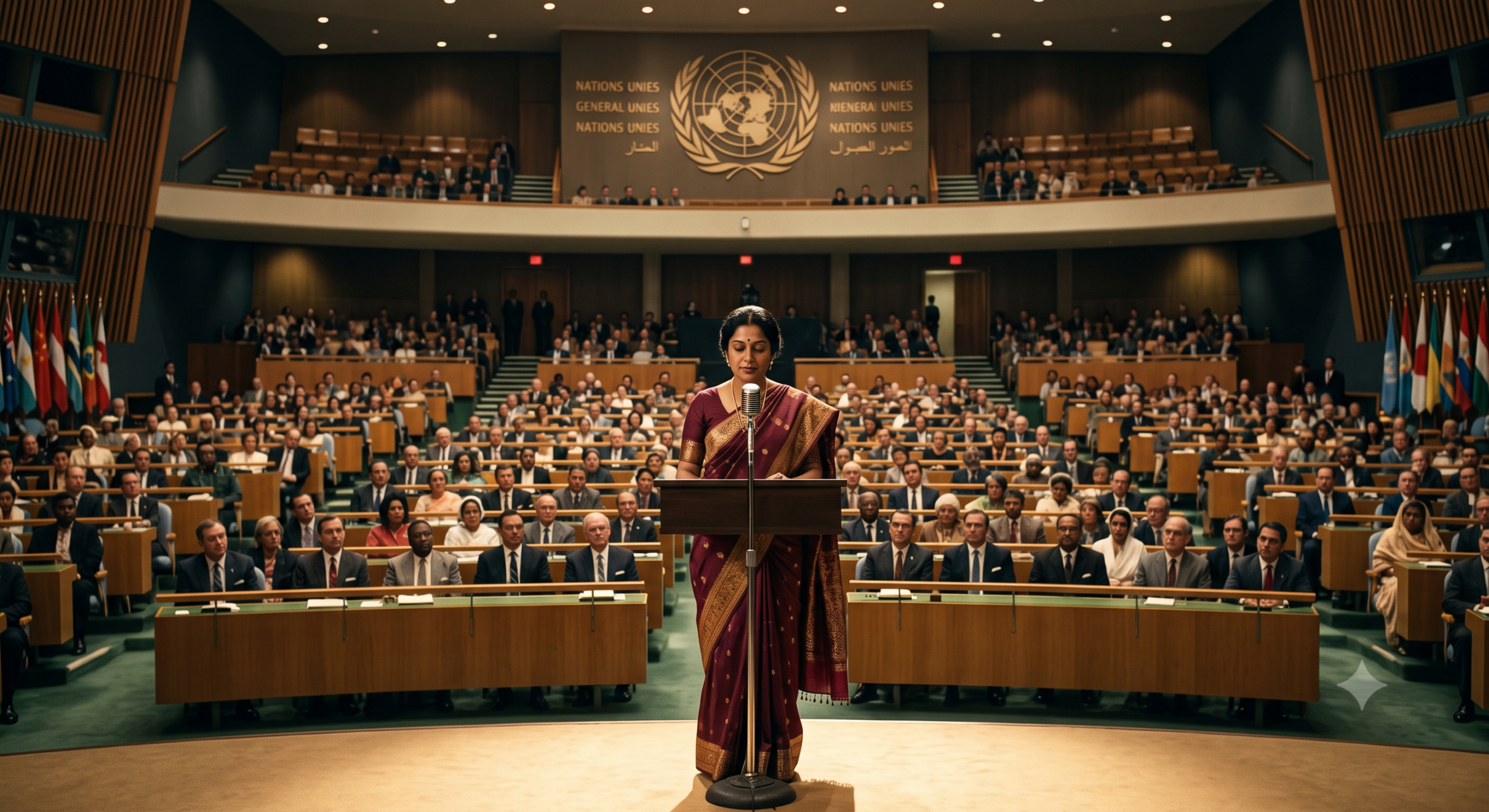
Yet, her legacy extends far beyond regional devotion. Subbulakshmi was a global cultural ambassador long before the term existed in the modern music industry. In 1966, she shattered international ceilings by becoming the first Indian artist to perform at the United Nations General Assembly, rendering the iconic Sanskrit composition “Maitreem Bhajata”—a profound plea for world peace. She subsequently became the first Indian musician to receive the Ramon Magsaysay Award and, ultimately, India’s highest civilian honor, the Bharat Ratna, in 1998.
Bringing a figure of this magnitude to cinema requires immense tact. The launch event underscored this gravity, with Kamal Haasan presiding and noting that the role demands much more than mimicry; it requires capturing the profound compassion that defined Subbulakshmi’s aura. For Rashmika Mandanna, an actress celebrated for massive commercial hits, this represents a monumental pivot. She publicly acknowledged the immense responsibility, referring to the casting as a divine opportunity to portray a woman whose art unified a newly independent nation.
By assembling a contemporary powerhouse cast and crew to tell a deeply traditional story, the producers are attempting to ensure that Subbulakshmi’s legacy does not remain confined to history books, but resonates powerfully with modern audiences.