
At a Glance
- The Producers: Allu Aravind, Rockline Venkatesh, and Bunny Vas.
- The Development Cycle: A grueling seven-year process to secure life rights and family backing.
- The Musical Bridge: Hiring Anirudh Ravichander to connect classical Carnatic history with modern commercial viability.
A historical biopic centering on a mid-20th-century classical singer is, by traditional box office metrics, a massive financial risk. However, the economic architecture behind M.S. – A Legacy On Screen reveals a masterclass in modern pan-India risk mitigation. To ensure this story reaches beyond the niche classical arts demographic, producers Allu Aravind, Rockline Venkatesh, and Bunny Vas have engineered a project that merges historical reverence with undisputed commercial banking power.
The foundation of this economic strategy lies in the grueling seven-year acquisition process spearheaded by Rockline Venkatesh. Securing the official life rights and the steadfast backing of Subbulakshmi’s family was critical. In an era where biopics frequently face pre-release injunctions and defamation lawsuits from surviving relatives, securing this intellectual property outright protects the film’s massive production budget. And that budget will be immense—recreating 1930s Madras, the 1966 United Nations General Assembly in New York, and iconic global concert halls like Carnegie Hall demands top-tier visual effects, elaborate set design, and authentic period costuming.
To recoup these costs, the film must perform across multiple linguistic markets, which explains the strategic casting of Rashmika Mandanna. Mandanna is a certified pan-India draw, commanding massive fanbases across the Telugu, Tamil, Kannada, and Hindi markets. Her presence guarantees a massive opening weekend across the country, effectively insulating the film against regional box-office fluctuations.
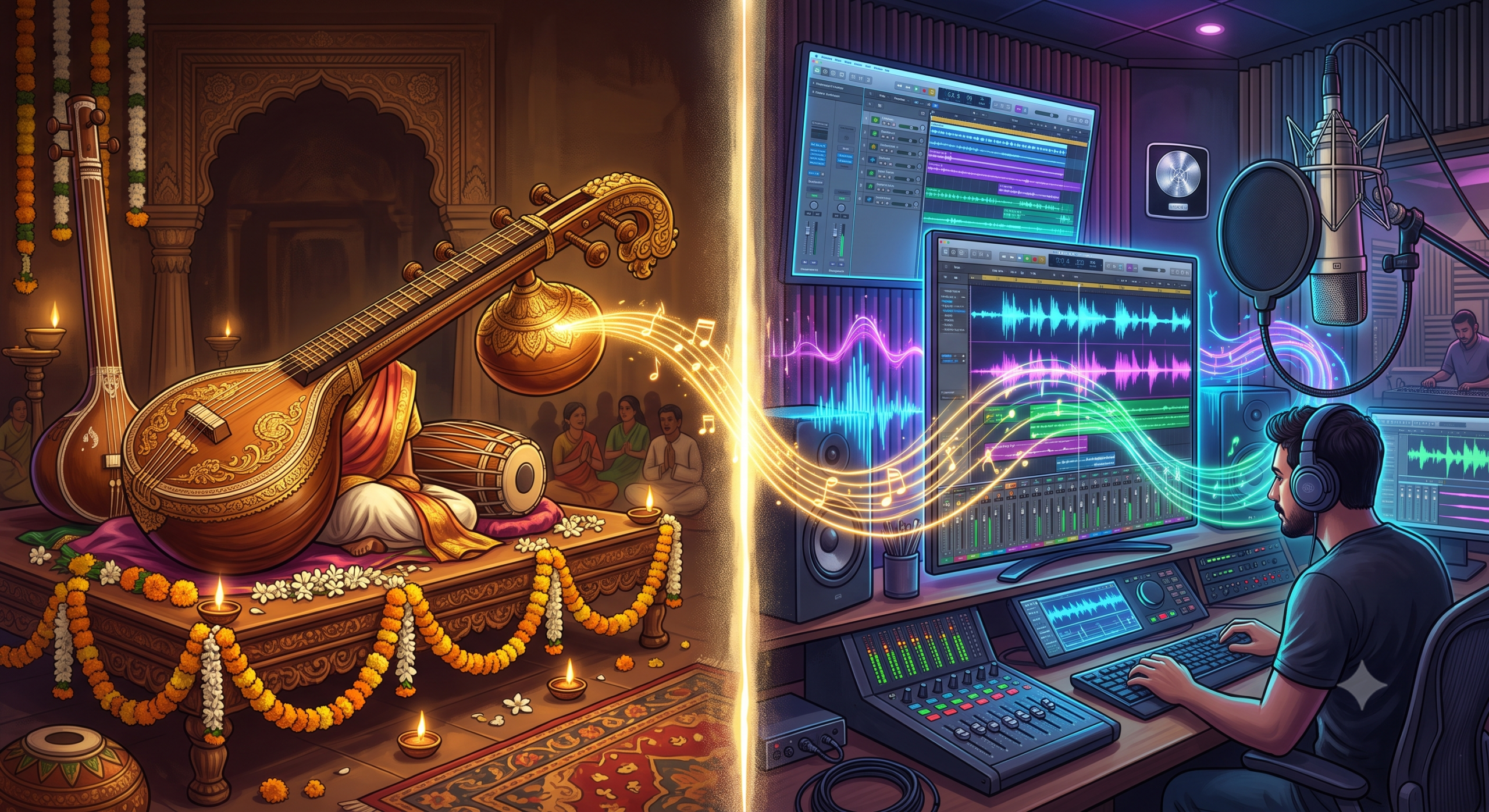
However, the most brilliant economic stroke is the hiring of Anirudh Ravichander. Scoring a film about the “Goddess of the Perfect Note” is an intimidating prospect, but the producers explicitly stated they are not attempting to simply recreate Subbulakshmi’s classical recordings. Instead, Anirudh—currently the most bankable music director in South Indian commercial cinema—is tasked with creating a contemporary sonic bridge. By weaving Anirudh’s modern cinematic sensibilities with Subbulakshmi’s historical milestones, the producers are ensuring the soundtrack will dominate modern streaming platforms like Spotify and Apple Music, generating millions in audio rights and ancillary revenue long before the film even hits theaters.
This project proves that the “pan-India” formula is no longer reserved strictly for violent action epics. By strategically deploying commercial titans like Mandanna and Anirudh, the industry can now financially sustain grand, prestige storytelling.