

Political memoirs written by active party leaders rarely function as neutral works of history. More often, they serve as instruments of legacy management—attempts to smooth over inconvenient episodes, redistribute institutional blame, and frame a political career for posterity. Yet when Sonia Gandhi’s long-awaited 544-page autobiography, Belonging: A Journey of Love, arrived in bookstores across India and worldwide on Tuesday, November 10, 2026, it did far more than stir polite literary debate. Within hours of its release, the book triggered an intense political and historical firestorm over selective omissions, contested factual claims, and remarkably fraught political timing.
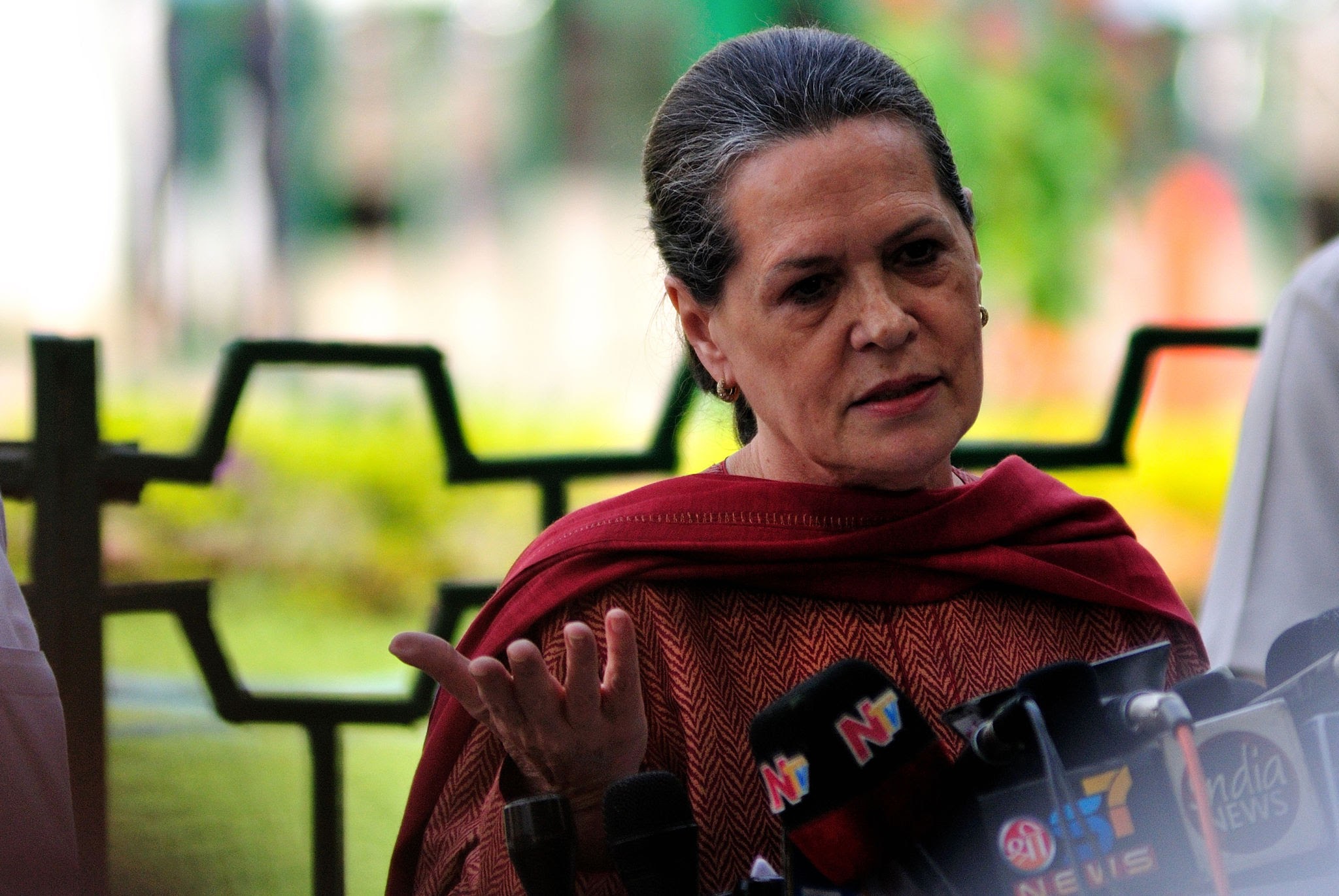
Sonia Gandhi’s memoir faces intense historical scrutiny. Source: Mint / Hindustan Times via Getty Images
Unlike retired statesmen writing from a safe distance, Gandhi remains the Chairperson of the Congress Parliamentary Party (CPP) and a sitting Rajya Sabha MP, while her son Rahul Gandhi serves as Leader of the Opposition in the Lok Sabha and her daughter Priyanka Gandhi Vadra sits alongside him in the Lower House. Consequently, every retrospective justification inside Belonging carries immediate electoral consequences—especially with high-stakes Assembly elections in Punjab and Uttar Pradesh scheduled for early 2027.
By revisiting some of modern India’s most sensitive chapters—from the 1975 Emergency and Operation Blue Star to the 1984 anti-Sikh riots, the 1992 Babri Masjid demolition, and the 2004 prime ministerial selection—through a lens that critics describe as historical revisionism, Belonging has handed political opponents fresh ammunition at precisely the moment the Congress party can least afford self-inflicted wounds.
Here is an analytical breakdown of the major factual disputes flagged by legal experts and historians in Belonging, why November 2026 represents an inopportune moment for these disclosures, and how the book’s turbulent publishing journey foreshadowed its contentious reception.
1. Memory vs. Official Record: Five Major Factual and Historical Disputes
While Belonging offers rare personal candour regarding Gandhi’s post-war childhood in Orbassano, Italy, her 1965 meeting with Rajiv Gandhi in Cambridge, and the devastating assassinations of Indira Gandhi in 1984 and Rajiv Gandhi in 1991, its political chapters repeatedly collide with documented official records.
CONTESTED NARRATIVES IN ‘BELONGING’ VS. DOCUMENTED HISTORICAL & OFFICIAL RECORDS
| HISTORICAL EPISODE | CLAIM IN ‘BELONGING’ | OFFICIAL RECORD / CRITIQUE |
| 1. 1984 Anti-Sikh Riots (Army Deployment) | Claims the then-Army Chief declined to deploy nearby troops promptly to halt the violence . | Senior advocate H.S. Phoolka notes the Army cannot deploy without civil requisition; records cite state inaction. |
| 2. 1975–77 Emergency (Decision-Making) | Portrays Indira Gandhi as reluctant and blames Sanjay Gandhi’s extra-constitutional push [cite: 1.1.2, 2.1.4]. | Historians note an all-powerful PM held sole constitutional authority; Sanjay is not alive to rebut the claim. |
| 3. 1992 Babri Masjid Demolition | Highlights personal tears and implicit lapses by PM P.V. Narasimha Rao [cite: 1.1.2, 2.2.2]. | Glosses over Rajiv Gandhi’s 1986 lock-opening and 1989 shilanyas decisions in Ayodhya . |
| 4. May 2004 PM Refusal (“Inner Voice”) | Frames declining the PM post in favour of Dr. Manmohan Singh as purely personal duty [cite: 2.1.5, 2.2.1]. | Allies and records point to Mulayam Singh Yadav’s refusal of support and coalition hurdles . |
| 5. Operation Blue Star (June 1984) | Emphasizes Indira Gandhi’s tears and premonition of death upon seeing Akal Takht damage [cite: 1.1.5, 2.1.4]. | Critics note non-tank siege tactics later succeeded in 1988’s Operation Black Thunder. |
The 1984 Anti-Sikh Riots and the Military Deployment Claim
Perhaps the sharpest factual rebuttal triggered by the memoir concerns its explanation for the delayed arrival of the Indian Army during the November 1984 anti-Sikh pogroms in Delhi. Seeking to absolve Rajiv Gandhi’s nascent administration of culpability, Gandhi writes that the then-Army Chief decided against deploying nearby military units.
Within hours of the book’s release, senior Supreme Court advocate H.S. Phoolka—who has spent four decades litigating 1984 riot cases—dismissed the assertion as “absolutely false, against official records”. Under Indian constitutional and military protocol, armed forces cannot deploy on domestic streets independently; they require formal requisition and executive magistrate orders from the civil administration. Judicial inquiry records, including findings of the Nanavati Commission, documented repeated failures by the Delhi administration and Home Ministry to issue timely deployment orders and curfew enforcement—making any attempt to shift blame onto military leadership factually unsustainable.
Operation Blue Star and Selective Remorse
Similarly, Gandhi recounts that Prime Minister Indira Gandhi wept upon viewing photographs and video footage of the damaged Akal Takht following Operation Blue Star in June 1984, sensed her impending assassination, and instructed a young Rahul Gandhi to remain brave. Both the Aam Aadmi Party (AAP) and BJP leaders criticized the framing as selective. As critics noted, Operation Blue Star was authorized directly by Indira Gandhi’s government after years of political brinkmanship in Punjab—whereas four years later, Operation Black Thunder (1988) demonstrated that cutting water and electricity supplies could compel militants inside the Golden Temple complex to surrender without deploying battle tanks.
Deflecting Blame on the Emergency and Ayodhya
On the June 1975 Emergency, Gandhi concedes the decision was a “mistake,” yet suggests Indira Gandhi was reluctant while attributing the authoritarian excess largely to Sanjay Gandhi’s extra-constitutional interventions. Political commentators—including JD(U) MP Sanjay Kumar Jha and BJP MP Nishikant Dubey—questioned the credibility of portraying a dominant Prime Minister as subordinate to her younger son, noting that with Indira, Sanjay, and Rajiv Gandhi all deceased, apportioning blame solely to Sanjay functions as convenient family exoneration.
The same pattern recurs in her treatment of the December 6, 1992 Babri Masjid demolition. By centering her own grief and implicitly faulting Prime Minister P.V. Narasimha Rao’s inaction, the memoir sidesteps the Congress party’s own complicated trajectory in Ayodhya—including the 1986 unlocking of the disputed gates and the 1989 shilanyas permitted during Rajiv Gandhi’s premiership.
The 2004 PM Twist and Early Timeline Omissions
Gandhi also reiterates that declining the Prime Minister’s post in May 2004 in favour of Dr. Manmohan Singh was an unconflicted decision guided by conscience. Yet contemporary political records—recalled this week by coalition insiders—underscore that Samajwadi Party chief Mulayam Singh Yadav had refused to back her premiership alongside constitutional questions surrounding her Italian origins, a period spanning 15 years after her 1968 marriage until she acquired Indian citizenship in 1983. Biographers have also noted familiar omissions regarding her 1960s years in Cambridge—where she attended a local language school and worked as a restaurant waitress rather than studying at Cambridge University—as well as the two-year gap between 1965 and 1967 before her marriage.
2. Why This Is the Wrong Time: Strategic Miscalculations Ahead of 2027
Beyond archival accuracy, Belonging suffers from acute political mistiming. Publishing a contentious retrospective in November 2026 collides directly with three immediate political realities:
THE TIMING TRAP: WHY NOVEMBER 2026 AMPLIFIES POLITICAL DAMAGE FOR CONGRESS
| STRATEGIC VECTOR | IMMEDIATE POLITICAL CONSEQUENCE |
| 1. 2027 Punjab & UP Assembly Elections | Reopening Operation Blue Star, 1984 anti-Sikh riots, and Ayodhya gives AAP and BJP potent campaign ammunition months before voting begins. |
| 2. Active Leadership Overlap | Because Sonia, Rahul, and Priyanka Gandhi remain active parliamentarians, historical missteps translate into present-day electoral liabilities. |
| 3. Distraction From Current Opposition Campaigns | Shifts media focus away from opposition campaigns on electoral roll revisions (SIR) and economic issues toward defending 40-year-old Congress controversies. |
- The Road to Punjab and Uttar Pradesh (2027): With crucial state Assembly elections due in Punjab and Uttar Pradesh in early 2027, reopening debates over Operation Blue Star and the 1984 anti-Sikh riots hands both the ruling AAP in Punjab and the BJP a ready-made emotional wedge issue. Simultaneously, revisiting the Babri Masjid demolition allows the BJP to contrast Congress’s internal contradictions on Ayodhya against its own ideological narrative.
- Narrative Hijacking: In recent weeks, the Congress leadership had sought to focus national attention on institutional debates, including the Election Commission’s Special Intensive Revision (SIR) of electoral rolls. Instead, Belonging has forced senior Congress spokespersons—such as Pawan Khera—into a defensive posture, explaining 1975 and 1984 decisions rather than prosecuting current governance issues.
- The Publishing Row Prologue: Even before its release, the book generated avoidable controversy in August and September 2026 when Penguin Random House India stepped back from publishing the Indian edition—which was originally set to mirror Alfred A. Knopf’s global rollout—over unresolved editorial differences regarding political passages, prompting HarperCollins India to step in for the November 10 launch. That pre-release dispute primed critics to scrutinize every historical claim on day one.
Conclusion: When Legacy Management Outruns Historical Rigour
A political autobiography succeeds when it illuminates the past with candour strong enough to withstand archival verification. While Belonging: A Journey of Love offers poignant personal reflections on grief, family tragedy, and an extraordinary cross-cultural journey from Piedmont to New Delhi, its political sections falter wherever personal loyalty overrides documented history.
By advancing contested claims over the 1984 anti-Sikh riots, selectively apportioning blame for the Emergency and Ayodhya, and releasing the volume mere months before pivotal elections in Punjab and Uttar Pradesh, Sonia Gandhi has inadvertently demonstrated a timeless rule of political memoir-writing: when history is still an active battlefield, rewriting it rarely brings peace.
References & Primary Sources
- HarperCollins India & Alfred A. Knopf (September 4 & November 10, 2026): Official publication announcements and release details for Belonging: A Journey of Love (544 pages) by Sonia Gandhi.
- India Today Opinion & Analysis (November 10, 2026): The past is never past in Sonia Gandhi’s India — Critical examination of the memoir’s treatment of the 1975 Emergency, Sanjay Gandhi, P.V. Narasimha Rao, Ayodhya, and implications for the 2027 Uttar Pradesh and Punjab Assembly elections.
- ANI News & Jagran National Reports (November 10, 2026): Statements from senior advocate H.S. Phoolka refuting claims regarding Army deployment during the 1984 anti-Sikh riots, alongside reactions from BJP leaders, AAP, JD(U) MP Sanjay Kumar Jha, and Congress spokesperson Pawan Khera.
- Open Magazine (Minhaz Merchant, September 11, 2026) & Newslaundry (September 4, 2026): Facts and Friction: Will Sonia Gandhi’s memoir conceal more than reveal? and coverage of the Penguin Random House India editorial impasse prior to HarperCollins India acquiring Indian publishing rights.
* Conceptual illustration generated using AI