UK Prime Minister Andy Burnham has reopened one of the most fiercely debated topics in modern British history, breaking a significant political taboo by placing the possibility of the United Kingdom rejoining the European Union firmly back on the table. Speaking on Wednesday, following his address at the Labour Party conference, Burnham outlined that his government could “go all the way” regarding EU membership if a careful assessment determines that the “pros outweigh cons”. The statement quickly drew warm, encouraging responses from key European leaders, with French President Emmanuel Macron and Spanish Prime Minister Pedro Sánchez declaring a readiness to welcome Britain back into the bloc.
Burnham used his Tuesday conference speech in Manchester to assert that leaving the European Union has actively weakened Britain’s cooperation with European nations on critical issues such as migration. He described the current diplomatic and economic arrangement as insufficient, stating directly that “Brexit has done more harm than good” and has contributed to a “decade of low growth” for the country. According to Burnham, securing a prosperous path for Britain for the rest of the century requires a formalized, long-term relationship with what remains its largest trading market.
This new approach marks a sharp departure from the cautious European policy that defined his immediate predecessor. Burnham noted that an upcoming UK-EU summit would serve as the primary opportunity to lay out different structural options for Britain’s long-term relationship with its European partners. Speaking to BBC radio on Wednesday, the Prime Minister clarified that these possibilities range from joining the European single market and customs union to full re-entry into the 27-member bloc. He emphasized a pragmatic, analytical approach to the constitutional question, stating, “We have to look at what is doable, and what would be the pros and cons of each”.
The response from across the English Channel was swift and remarkably positive. During diplomatic talks in Madrid, French President Emmanuel Macron responded to Burnham’s overtures by saying in English, “Welcome back”. Macron elaborated that if the British public and the Prime Minister are moving toward rejoining, it constitutes “very good news both for his country and for Europeans”.
Spanish Prime Minister Pedro Sánchez echoed Macron’s sentiment during the same event. Sánchez stated that if the United Kingdom formally asks to rejoin the European Union, Spain would “applaud it and open its arms again to a brotherly people”. The official apparatus in Brussels also maintained an open posture to the shifting political winds in London. European Commission spokesman Balazs Ujvari stated that the EU remains “open to engaging on the options it may put forward,” leaving the responsibility firmly with the UK government to chart a specific way forward.
Despite the warm continental reception, Burnham faces significant domestic political constraints. He took office as premier in July 2026 after Labour MPs ousted Keir Starmer. Because of this mid-term leadership change, Burnham’s government is technically still bound by Starmer’s 2024 election-winning manifesto. That specific manifesto explicitly ruled out joining a customs union, re-entering the single market, or allowing the return of freedom of movement with the EU.
To navigate this inherited manifesto constraint, Burnham indicated to the broadcaster ITV that he is closely monitoring public opinion. If the electorate points toward backing re-entry into the bloc, he suggested he might commit to another referendum in Labour’s next election manifesto. With the next general election not expected until 2029, the government has a multi-year window to assess the political and economic viability of such a major constitutional pivot.
Current polling presents a complex picture of British sentiment toward the EU, ending more than four decades of membership following the 2016 vote. A Survation poll conducted in June 2026 found that 55 percent of voters would opt to rejoin if a referendum were held again. Analysts, such as David Henig, an expert on UK-EU relations, suggest that Burnham is recognizing a widespread public view that the Brexit project has failed to deliver on its economic promises.
However, public support for rejoining the bloc is not unconditional. While baseline polls show a majority backing a return to the EU, that support often fades when voters are confronted with the specific, stringent requirements of full membership. These requirements typically include making substantial financial contributions to the EU budget and adopting the euro currency—conditions that remain highly contentious among the British electorate.
Furthermore, Burnham is balancing this long-term European vision with immediate domestic economic pressures. When pressed on the financial help households could receive in the upcoming budget to combat the looming winter and rising energy and fuel costs, the Prime Minister was cautious. Burnham mentioned he was considering measures such as scrapping planned fuel duty increases, but noted the constraints, asking, “How many can I afford?”. Chancellor John Healey has also emphasized that “fiscal discipline” will remain at the heart of his budget, despite facing calls to offer more assistance with the cost of living.
Burnham’s willingness to re-open the European debate has already drawn immediate criticism from right-wing rivals. The prospect of a new referendum or closer alignment threatens to reignite the bitter “Brexit wars” that dominated British politics following the contentious 2016 vote to leave the European Union. Successive governments have grappled with the economic and diplomatic fallout of that initial vote, and any legislative move to reverse it will face fierce parliamentary and public scrutiny.
As the UK prepares for its upcoming summit with the EU, the structural nature of its long-term relationship with Europe is once again the central question in British politics. Whether Burnham pursues a customized integration involving the customs union and single market, or pushes for full EU membership, the political landscape is shifting. The next three years leading up to the 2029 election will determine if the UK is prepared to navigate the immense political and economic complexities of a return to the European project.
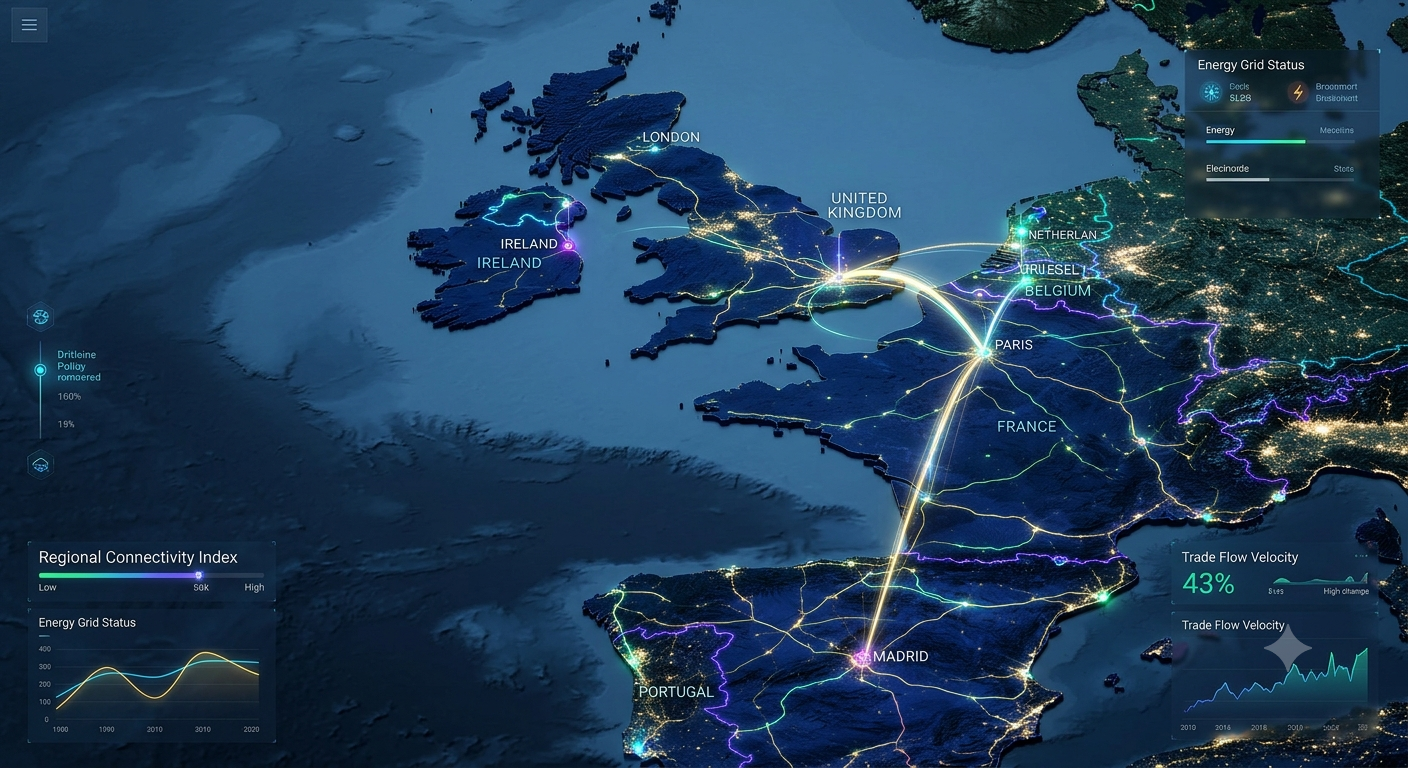
* Conceptual illustration generated using AI