For decades, the H-1B visa program has been heralded by Silicon Valley and corporate America as an indispensable pipeline for acquiring the world’s most brilliant minds. It has been the structural foundation upon which global technology hubs, financial institutions, and multinational consultancies have built their modern workforces. However, the political winds in Washington have shifted dramatically. On October 2, 2026, US Vice President JD Vance launched a blistering attack on the program, declaring it “completely broken” and explicitly advocating for its total abolition.
By framing the visa program not as an instrument of innovation, but as a corporate loophole designed to undercut American wages, Vance has thrust one of the most contentious issues in US immigration policy back to the forefront of the national economic debate. The Vice President’s remarks signal a hardline escalation by the White House, moving beyond calls for mere reform and directly challenging the very existence of a system heavily relied upon by global IT professionals.
The Core Critique: Wage Suppression Over Talent Acquisition
The foundational premise of the H-1B visa was to allow US employers to temporarily employ foreign workers in specialty occupations that require theoretical or technical expertise—the proverbial “geniuses” that cannot be found within the domestic labor pool. Over time, however, critics have argued that the system has been fundamentally co-opted.
In a recent video posted on X, Vice President Vance articulated this precise grievance, arguing that the program has been “totally taken advantage of” by a wide array of corporate sectors. Significantly, he emphasized that this alleged exploitation is not confined merely to Big Tech companies, but is rampant across accounting firms, consulting agencies, and general corporate enterprises.
Vance drew a sharp distinction between importing highly specialized, irreplaceable global talent and utilizing the visa system as a backdoor mechanism to drive down domestic labor costs. To illustrate his point, he presented a hypothetical yet highly relatable scenario: “If you’re going to bring in an accountant making $45,000 a year to replace an accountant who is an American making $60,000 a year, that’s not you using the program to bring in a genius,” Vance stated. “That’s you destroying American jobs and defrauding the American people”.
This rhetoric strikes at the heart of populist economic anxiety. By focusing on the middle-class professional—the $60,000-a-year accountant—Vance is strategically reframing the H-1B debate. It is no longer just an abstract argument about high-tech coding jobs at massive firms like Google or Microsoft; it is portrayed as a direct threat to the financial security of everyday white-collar American workers who find themselves competing against cheaper foreign labor.
The $100,000 Levy and the Judicial Standoff
The Vice President’s comments do not exist in a policy vacuum; they are part of a broader, aggressive administrative effort to fundamentally alter the economics of foreign hiring. One of the most controversial weapons deployed by the current administration has been the attempted implementation of a massive $100,000 levy on certain H-1B petitions.
The logic behind this exorbitant fee is straightforward: if corporations are forced to pay a $100,000 premium to sponsor a foreign worker, the financial incentive to use the program for “cheap labor” instantly evaporates. Only companies legitimately seeking world-class, irreplaceable talent—where a $100,000 surcharge is a negligible cost of doing business—would continue to utilize the system. Vance has robustly defended this levy as a necessary deterrent against systemic wage arbitrage.
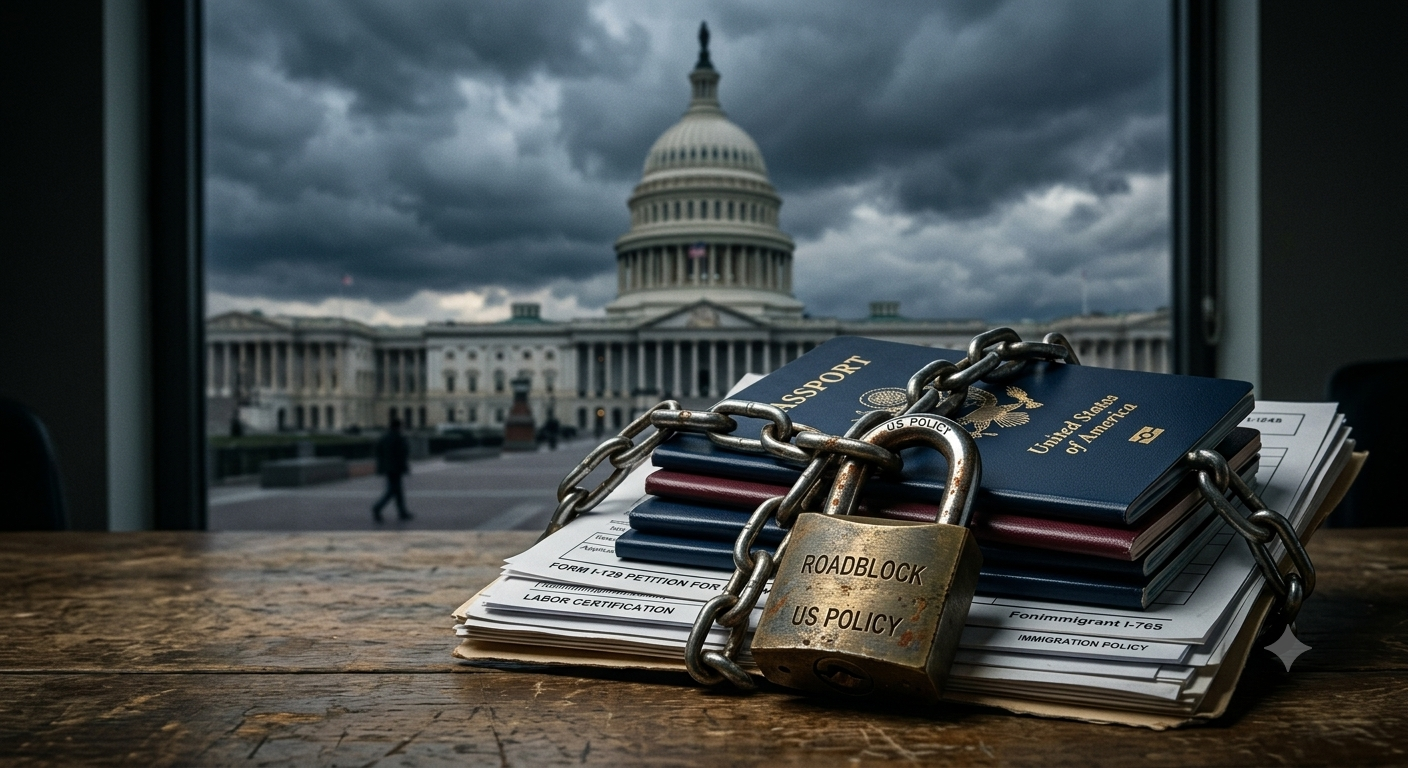
However, this aggressive regulatory maneuver has hit a significant legal brick wall. On October 1, 2026, just a day prior to Vance’s public remarks, a federal magistrate enjoined the $100,000 charge. The court determined that the administration had failed to adhere to mandatory administrative rulemaking protocols, compounding a similar judicial injunction that had been issued earlier in the year. This judicial roadblock highlights the deep institutional friction between an executive branch eager to unilaterally dismantle globalized labor practices and a legal system enforcing strict procedural boundaries.
Regulatory Tweaks vs. Complete Abolition
While the $100,000 levy remains tied up in federal courts, the administration is concurrently exploring other regulatory avenues to tighten the net. These ongoing reforms include heavily scrutinizing and evaluating recent layoffs by sponsoring firms. The objective is to prevent a scenario where a corporation conducts mass layoffs of American workers, only to turn around and fill those exact same roles with lower-paid H-1B beneficiaries. Furthermore, the administration is attempting to restructure the lottery system to strictly prioritize higher-salaried roles, ensuring that only the highest-paid applicants are granted entry.
Despite these ongoing adjustments, Vance’s latest rhetoric suggests that the administration views these regulatory tweaks as insufficient. The Vice President has made it clear that he believes these incremental reforms may not address the core, systemic flaws of the program, reiterating his ultimate call for total elimination to protect the American workforce.
The Ripple Effect: Silicon Valley and the Indian IT Sector
The potential abolition, or even the severe curtailment, of the H-1B program carries seismic implications for the global economy. For Silicon Valley, the visa has long been viewed as a critical tool for maintaining American technological supremacy. Tech lobbying groups argue that the US simply does not produce enough native-born graduates with advanced STEM (Science, Technology, Engineering, and Mathematics) degrees to meet the insatiable demands of the AI, semiconductor, and software industries. They warn that capping or eliminating the program will not force companies to hire Americans; rather, it will force companies to offshore those high-paying jobs entirely to hubs in Canada, Europe, or Asia.
For India, the stakes are equally monumental. Historically, Indian nationals have secured the overwhelming majority—often upwards of 70%—of the 85,000 H-1B visas issued annually. The program has been the primary artery connecting India’s premier engineering talent to the lucrative US job market. Furthermore, Indian IT service behemoths have traditionally relied on the H-1B framework to deploy technical staff to client sites across the United States.
While massive Indian IT firms have spent the last several years localizing their US workforces—hiring more American citizens and setting up domestic innovation centers to insulate themselves from immigration shocks—a complete abolition of the program would still cause immense operational disruptions. It would effectively shatter the traditional pathway for thousands of young Indian graduates and force a massive geopolitical realignment in how digital services are exported and delivered.
The Road Ahead
As the legal battles over the $100,000 levy continue and the rhetoric from the Vice President’s office reaches a fever pitch, corporate America finds itself in a precarious position. The H-1B program is currently caught in a fierce ideological tug-of-war between the demands of globalized corporate capitalism and the rising tide of populist economic nationalism.
Vice President JD Vance has drawn a definitive line in the sand. By labeling the system as a vehicle for corporate exploitation that “defrauds the American people,” he is setting the stage for a prolonged, high-stakes legislative and judicial battle over the future of American labor. Whether the administration can successfully navigate the legal system to implement its crippling fees, or whether it will push for outright legislative abolition, remains to be seen. What is undeniable, however, is that the golden era of frictionless, globalized tech talent acquisition in the United States is facing its most existential threat to date.
* Conceptual illustration generated using AI