
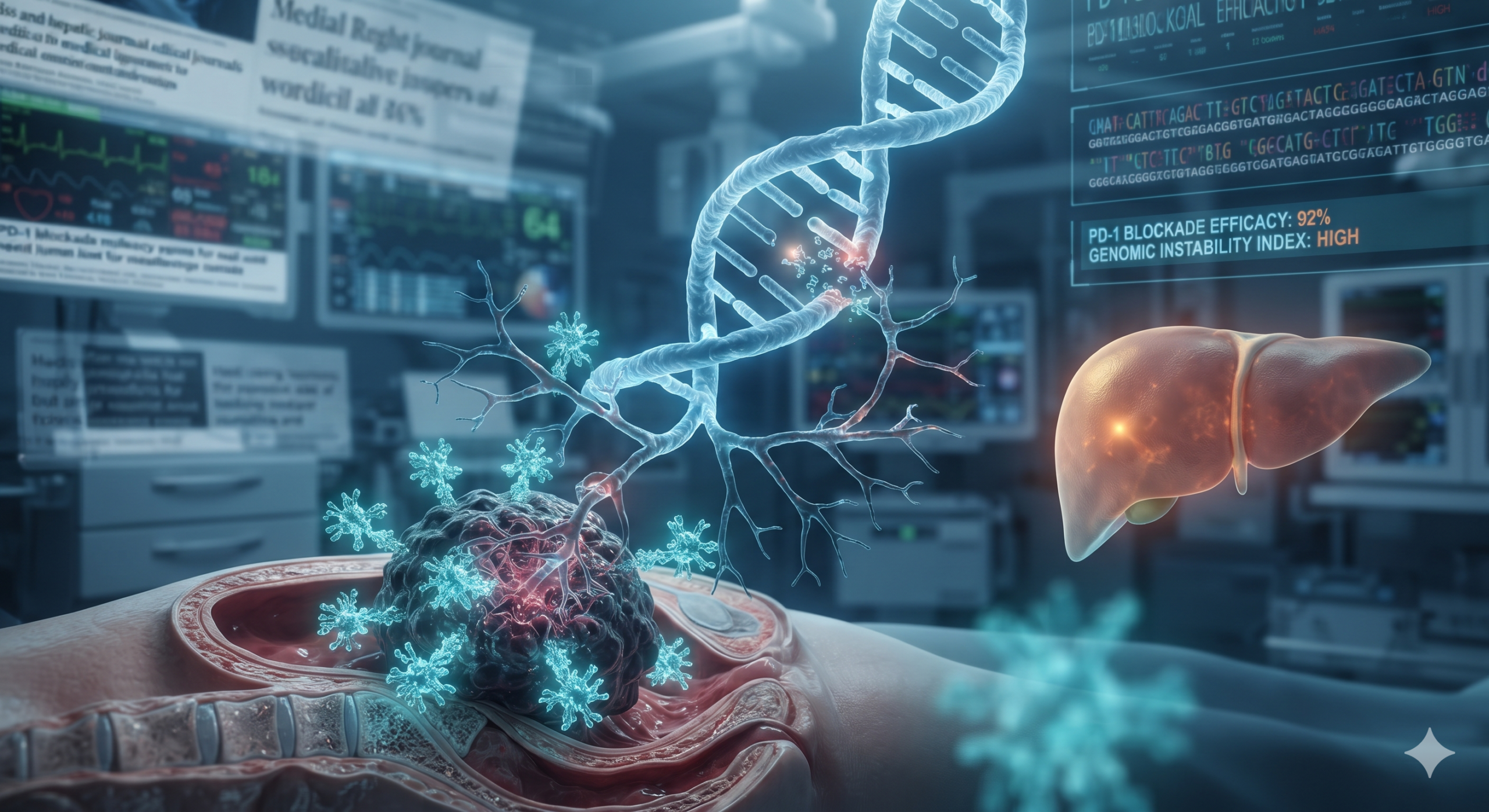
For decades, the standard of care for locally advanced rectal cancer has been defined by one of the most grueling treatment paradigms in modern oncology. Known clinically as Total Neoadjuvant Therapy (TNT), the traditional approach relies on a punishing triad: systemic chemotherapy, pelvic chemoradiation, and ultimately, a major surgical intervention such as a Total Mesorectal Excision (TME). While often curative, this path comes at a devastating cost to the patient’s quality of life. Survivors frequently endure permanent colostomies, severe bowel dysfunction (Low Anterior Resection Syndrome), neuropathy, and lifelong urinary or sexual impairment.
However, the treatment landscape was fundamentally fractured in late October 2026. The U.S. Food and Drug Administration (FDA) granted accelerated approval to dostarlimab-gxly (Jemperli), a programmed death receptor-1 ($PD-1$) blocking antibody, as a single-agent treatment for adults with stage II or III locally advanced rectal cancer. Crucially, this approval is strictly limited to a biomarker-defined population: tumors that are Mismatch Repair Deficient (dMMR) or Microsatellite Instability-High (MSI-H).
This regulatory milestone marks the first time an immunotherapy has been approved to completely replace chemotherapy, radiation, and surgery in a locally advanced solid tumor. Yet, the FDA paired this groundbreaking organ-sparing potential with a sobering caveat: an updated Boxed Warning for severe, immune-mediated liver toxicity.
Here is an in-depth clinical and systemic analysis of dostarlimab’s accelerated approval, the underlying science of dMMR tumors, and why the new hepatic boxed warning fundamentally alters the risk-benefit calculus for oncologists and patients.
1. The Science of the “Brake Pedal”: How Dostarlimab Eradicates dMMR Tumors
To understand why dostarlimab is so uniquely effective in this specific subset of rectal cancer, one must first understand the genetics of mismatch repair deficiency (dMMR).
Every time a human cell divides, it must copy its DNA. Because errors naturally occur during this massive copying process, cells possess a genetic “spell-checker” system governed by mismatch repair genes (such as $MLH1$, $MSH2$, $MSH6$, and $PMS2$). When these genes mutate and fail to function, the tumor accumulates thousands of genetic errors—a state known as Microsatellite Instability-High (MSI-H).
These highly mutated cells produce abnormal proteins (neoantigens). To the human immune system, a dMMR tumor looks entirely foreign, like a rogue entity covered in warning flags. Naturally, the body’s $CD8^+$ cytotoxic T-cells should immediately recognize and destroy these cancer cells. However, cancer cells are notoriously evasive. They hijack a checkpoint pathway by expressing a protein called $PD-L1$, which binds to the $PD-1$ receptor on T-cells. This interaction effectively acts as an “off switch” or brake pedal, paralyzing the immune response and allowing the highly mutated tumor to grow unchecked.
Dostarlimab-gxly is a monoclonal antibody designed to intervene directly in this pathway. By binding to the $PD-1$ receptor, dostarlimab blocks the tumor’s ability to hit the immune system’s brake pedal. Once the brake is released, the patient’s own T-cells rapidly infiltrate the tumor microenvironment, recognizing the high volume of neoantigens and systematically destroying the rectal cancer cells.
2. The AZUR-1 Trial: A Paradigm Shift in Organ Preservation
The FDA’s accelerated approval is primarily anchored in the data from AZUR-1, a global, single-arm phase 2 clinical trial involving 154 patients with stage II or III MSI-H/dMMR locally advanced rectal cancer.
The trial’s design was audacious: rather than adding immunotherapy to standard chemotherapy, the investigators administered dostarlimab alone. Patients received dostarlimab intravenously every three weeks for six months. If the tumor entirely disappeared, patients were allowed to enter a “watch-and-wait” surveillance protocol, skipping radiation and surgery entirely.
The efficacy results were staggering. According to the FDA label, 47% of patients achieved a clinical complete response (cCR) that lasted for at least 12 months. A clinical complete response means that no evidence of cancer could be found using high-resolution magnetic resonance imaging (MRI), endoscopy, or digital rectal examination. For these patients, a potentially debilitating surgery was entirely avoided, preserving their native rectal anatomy and normal physiological functions.
3. The Updated Boxed Warning: The Hepatic Cost of Immune Activation
While dostarlimab frees patients from the toxicities of traditional chemotherapy—such as severe hair loss, profound nausea, and bone marrow suppression—immunotherapy introduces a distinct and volatile class of side effects known as immune-related adverse events (irAEs).
Because dostarlimab removes the molecular brakes on the immune system, T-cells can become hyperactive and mistakenly attack healthy, normal tissue. The FDA’s decision to mandate an updated Boxed Warning (the agency’s most serious safety alert) specifically highlights the risk of severe and potentially fatal immune-mediated liver toxicity (hepatitis).
During the clinical trials, a concerning subset of patients developed significant elevations in hepatic enzymes—specifically alanine aminotransferase (ALT), aspartate aminotransferase (AST), and total bilirubin. This biochemical signature indicates that the unleashed immune system was aggressively attacking the patient’s hepatocytes (liver cells).
The inclusion of this Boxed Warning fundamentally alters how oncology pharmacists and medical oncologists must manage these patients:
- Rigorous Baseline and Interval Monitoring: Patients must undergo comprehensive liver function testing prior to initiating dostarlimab, and before every subsequent infusion.
- Immediate Corticosteroid Intervention: If grade 2 or higher liver toxicity is detected, the immunotherapy must be paused or permanently discontinued. The primary treatment is the immediate administration of high-dose systemic corticosteroids (such as prednisone) to suppress the immune system and protect the liver from acute failure.
- Specialist Coordination: The Boxed Warning necessitates close coordination with hepatologists, as distinguishing between immune-mediated hepatitis and other forms of liver injury is highly complex and requires rapid, specialized clinical judgment.
4. The Health Economics and the “Watch-and-Wait” Burden
Beyond the clinical mechanics, the approval of dostarlimab-gxly introduces massive shifts in health economics and long-term survivorship care.
About 5% to 10% of all rectal cancers are classified as MSI-H or dMMR. While this represents a small fraction of total colorectal cancer diagnoses, it still translates to thousands of patients annually who are now eligible for this therapy. The upfront cost of dostarlimab therapy is exceptionally high, frequently exceeding $\$10,000$ per dose. However, health economists point out that avoiding complex pelvic surgeries, extended hospital stays, and the lifelong management of permanent stoma bags could ultimately yield a net cost savings to the healthcare system.
Furthermore, skipping surgery means the primary tumor bed is never physically removed and examined under a microscope. Therefore, a “clinical complete response” is not a guaranteed biological cure. To ensure the cancer does not silently recur, these patients must commit to a rigorous, lifelong surveillance protocol. This involves undergoing pelvic MRIs and flexible sigmoidoscopies every three to four months for the first several years. The psychological burden of this intense surveillance—often termed “scanxiety”—replaces the physical burden of surgical recovery.
Conclusion: A Delicate Balance of Risk and Reward
The FDA’s accelerated approval of dostarlimab-gxly for MSI-H/dMMR locally advanced rectal cancer is undeniably one of the most exciting developments in modern gastrointestinal oncology. The ability to melt away a primary tumor using the body’s own immune system, thereby sparing a patient from life-altering pelvic surgery and radiation, represents the holy grail of precision medicine.
However, the updated Boxed Warning for liver toxicity serves as a vital clinical anchor. It reminds the medical community that immunotherapy is not a benign intervention; releasing the brakes on the immune system carries profound, potentially lethal risks to vital organs. As this new treatment paradigm moves from tightly controlled clinical trials into community oncology clinics, the ultimate success of dostarlimab will depend not just on the drug’s efficacy, but on the meticulous vigilance of the physicians monitoring the liver enzymes of the patients they are trying to save.
* Conceptual illustration generated using AI