
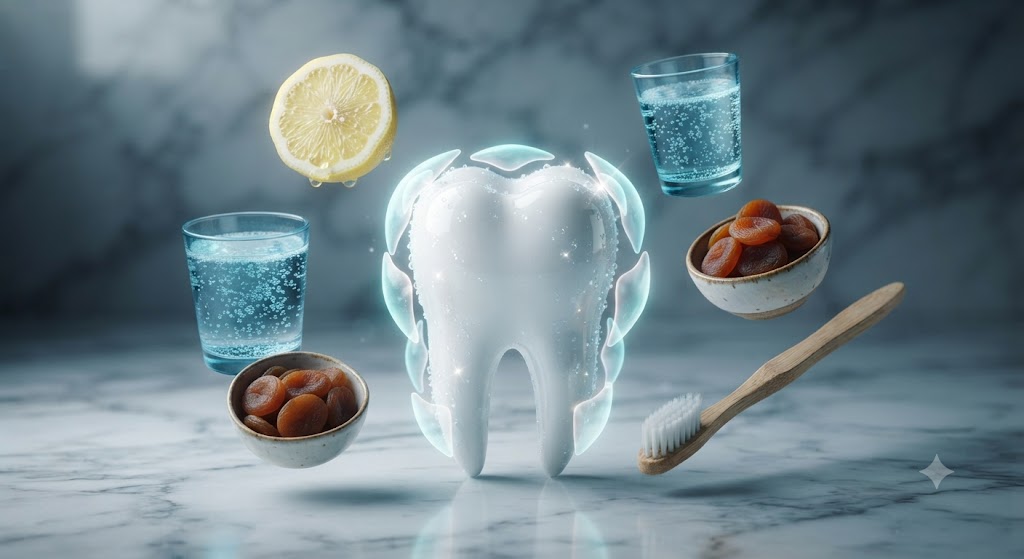
Ask any child what destroys teeth, and the answer is immediate: sugar, candy, and soda. For decades, public health messaging focused almost exclusively on the obvious culprits of dental caries. However, as preventative dentistry and oral microbiome research have advanced, dentists and periodontists are warning against a far more insidious threat to oral health: “stealth” foods that appear healthy or benign, but silently strip away enamel and erode tooth structure.
Even more concerning to oral health professionals is a widespread, well-intentioned hygiene habit that millions of health-conscious individuals practice daily—a habit that actually accelerates tooth decay and enamel wear rather than preventing it.
Here is an investigative breakdown of the foods dentists say are surprisingly damaging to your teeth, the science of enamel demineralization, and the common daily habit you must break to protect your smile.
The Science of Erosion: The pH Battleground in Your Mouth
To understand why certain foods damage teeth, one must first understand the chemistry of tooth enamel. Enamel is the hardest substance in the human body, composed primarily of a densely packed mineral matrix called hydroxyapatite ($Ca_{10}(PO_4)_6(OH)_2$).
Despite its strength, enamel has a critical vulnerability: acid. When the pH level inside the mouth drops below 5.5—known in dentistry as the critical pH threshold—the hydroxyapatite crystals begin to dissolve in a chemical process called demineralization.
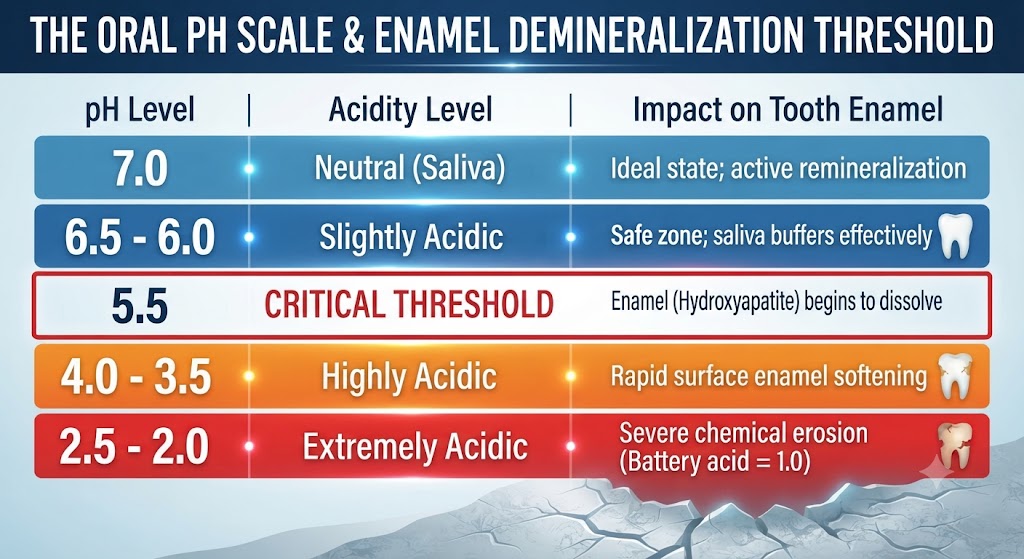
The Oral Ph Scale & Enamel Demineralization Threshold
While cavity-causing bacteria (Streptococcus mutans) produce acid when digesting sugars, direct chemical erosion occurs when we consume foods and beverages that are inherently acidic, regardless of whether they contain refined sugar.
The Stealth Offenders: Surprisingly Bad Foods for Your Teeth
Dental professionals frequently see patients with severe enamel thinning and cervical wear who report meticulous brushing habits and zero candy intake. The culprits are often found in “clean eating” diets and daily wellness routines.
1. Sparkling Water and Flavored Seltzers
Unflavored sparkling water may seem like a harmless alternative to soda, but the carbonation process involves forcing carbon dioxide ($CO_2$) under pressure into water, forming carbonic acid. While plain sparkling water typically sits at a mildly acidic pH of 5.0 to 5.5, adding natural citrus flavorings drops the pH into the 3.0 to 4.0 range—well past the threshold for enamel erosion. Sipping seltzers continuously throughout the day keeps the mouth in a permanent state of acidity.
2. Dried Fruit and “Health” Gummies
Dried apricots, raisins, dates, and fruit-based snack gummies are widely marketed as nutritious snacks. However, from a dental perspective, they combine two of the most destructive variables possible: high natural sugar concentration and extreme viscosity (stickiness). Unlike fresh fruit, whose water content helps wash away sugars, dried fruit lodges deep into the pits and fissures of molars, providing a prolonged feast for plaque bacteria right against the enamel surface.
3. Refined Crackers and Potato Chips
Many people assume savory starches are safe for teeth. However, refined carbohydrates like saltine crackers, potato chips, and white bread are rich in processed starches. When chewed, salivary enzymes (amylase) rapidly break down these starches into simple fermentable sugars. Worse, masticated crackers form a sticky paste that wedged between teeth and along the gumline, remaining trapped far longer than liquids.
4. Citrus Water and Apple Cider Vinegar Tonics
Starting the morning with a glass of warm lemon water or an apple cider vinegar (ACV) shot has become a staple wellness trend. However, lemon juice has a pH between 2.0 and 2.6 (nearly as acidic as stomach acid), while apple cider vinegar sits around 2.5 to 3.0. Bathing the teeth in a concentrated acid bath first thing in the morning strips away protective salivary pellicles and temporarily softens the outer enamel layer.
5. Ice and Hard Seeds
Damage is not always chemical; it can also be mechanical. Chewing on ice cubes or biting hard seed hulls creates micro-fractures in the crystalline structure of enamel. Over time, these microscopic cracks expand under the forces of chewing, leading to chipped teeth, cracked cusps, and heightened sensitivity.
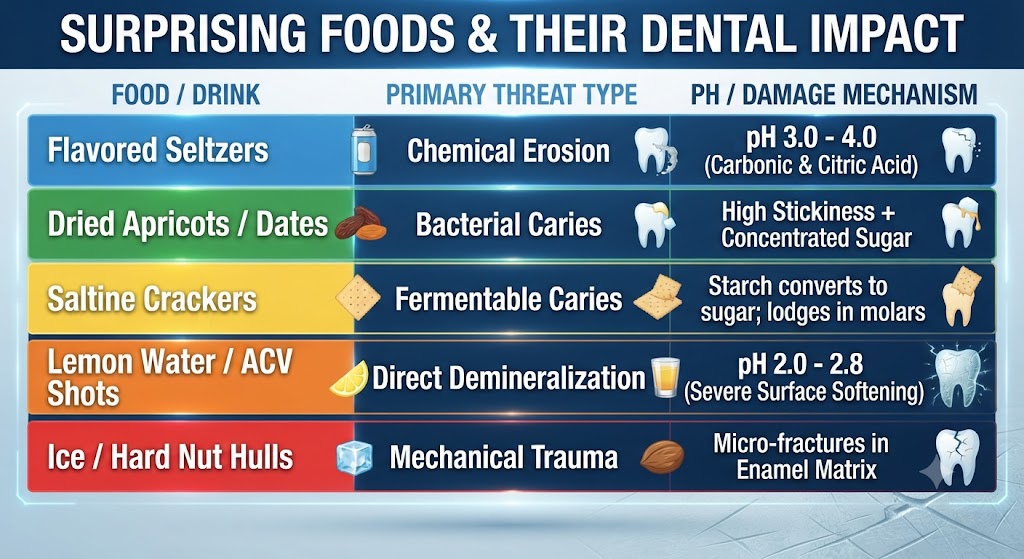
Surprising Foods & Their Dental Impact
The Common Habit That Makes It Worse: Immediate Post-Meal Brushing
While consuming acidic or sticky foods creates temporary vulnerability, a ubiquitous daily habit turns that vulnerability into permanent structural damage: brushing your teeth immediately after eating.
When you eat or drink something acidic (like citrus fruit, coffee, wine, or seltzer), the acid temporarily demineralizes and softens the outer 2 to 3 microns of your enamel. In this softened state, the enamel matrix is exceptionally fragile.
If you head straight to the bathroom with a toothbrush immediately after finishing a meal or drink, the mechanical abrasion of the toothbrush bristles—even soft bristles—acts like fine sandpaper across the softened enamel. Instead of removing plaque, you actively scrub away the softened, microscopic outer layers of your teeth.
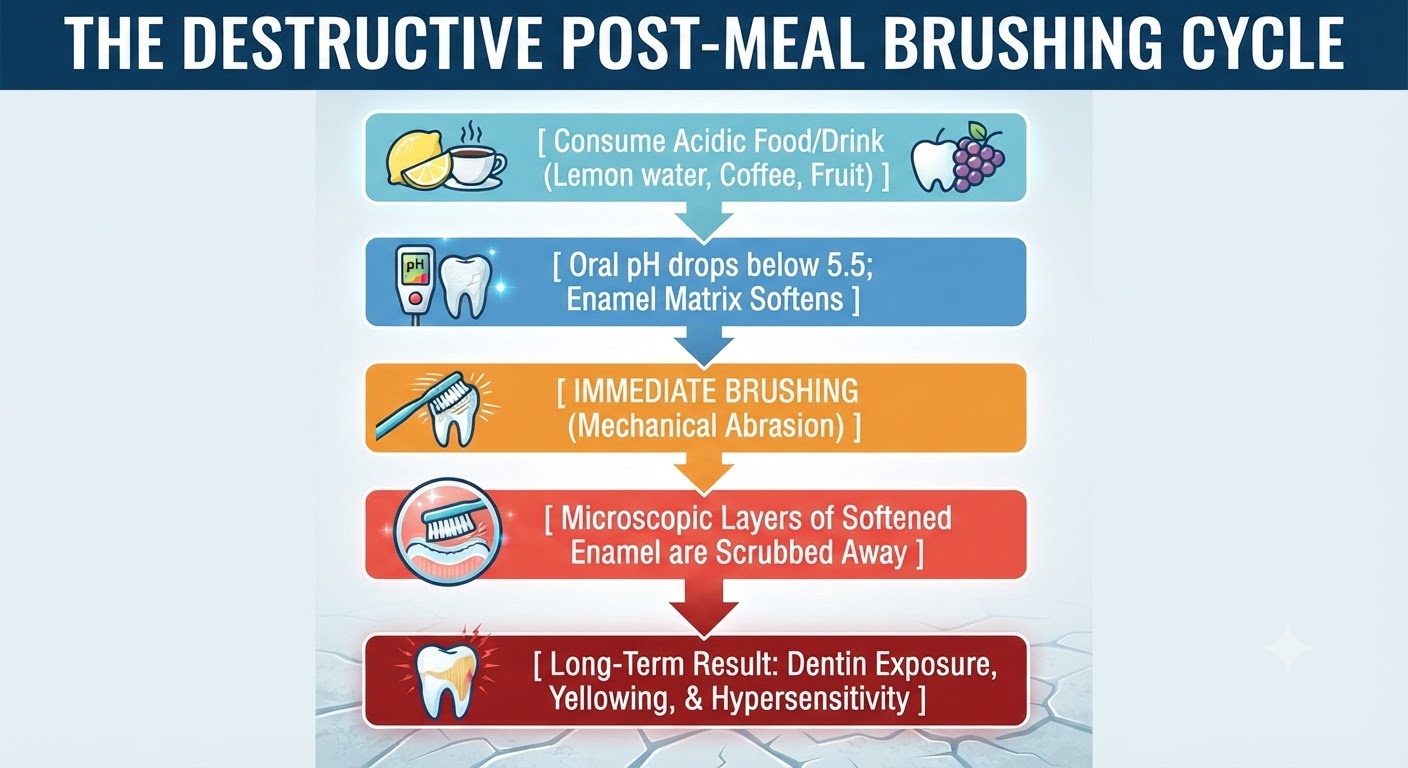
The Destructive Post-Meal Brushing Cycle
Over months and years, this practice leads to acid-abrasion syndrome: premature loss of enamel, yellowing of the teeth (as the darker, underlying dentin is exposed), notch-like wear near the gumline (cervical lesions), and acute temperature sensitivity.
The Second Compounding Habit: Continuous Sipping and Grazing
A closely related habit that exacerbates damage is “grazing” or sipping beverages continuously over several hours.
Saliva is the mouth’s natural defense mechanism. It contains bicarbonate to buffer acids, alongside calcium and phosphate ions that actively remineralize enamel once the pH returns to neutral. However, it takes saliva roughly 20 to 30 minutes to neutralize the oral environment after a single exposure to acid or sugar.
If you take a sip of flavored seltzer, iced coffee, or tea every 15 minutes while working at your desk, your mouth never gets the chance to return to a neutral pH. You keep your teeth in a continuous 4-hour acid bath, denying your saliva the window it needs to repair the enamel.
Evidence-Based Countermeasures: How to Protect Your Enamel
Protecting your teeth does not require eliminating healthy fruits or completely giving up sparkling water. Instead, it requires adjusting how and when you consume them, alongside adopting scientifically backed oral hygiene protocols.
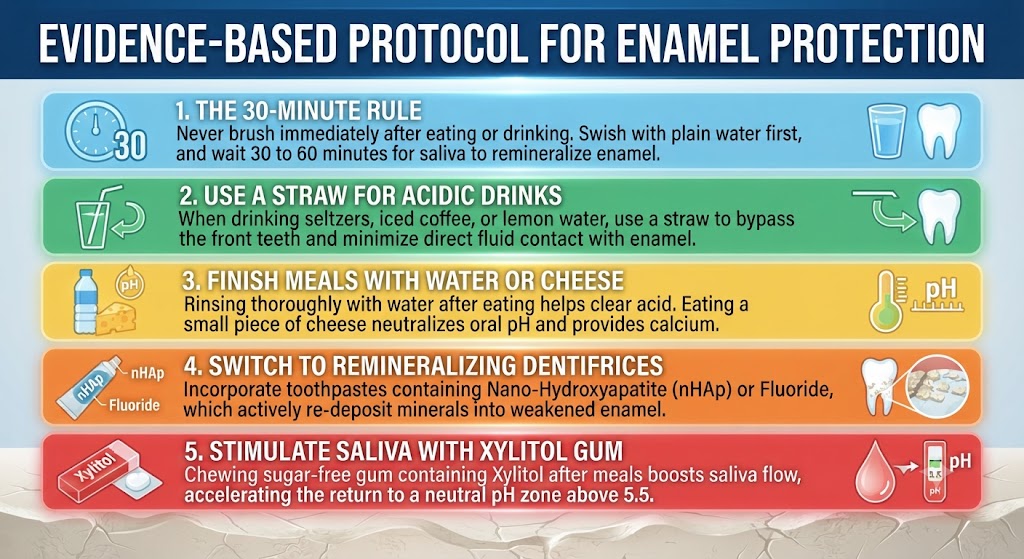
Evidence-Based Protocol for Enamel Protection
Conclusion: Rethinking Daily Oral Care
The path to lifelong dental health extends far beyond simply avoiding sugary sweets and brushing twice a day. True oral preservation requires recognizing that healthy, wholesome foods can pose hidden chemical risks to enamel, and that timing is everything when it comes to hygiene.
By giving up the habit of brushing immediately after meals, using water to rinse away acid, allowing saliva time to do its job, and adopting remineralizing oral care products, you can enjoy a diverse, nutrient-rich diet without sacrificing the structural integrity of your smile.
* Conceptual illustration generated using AI