
At a Glance
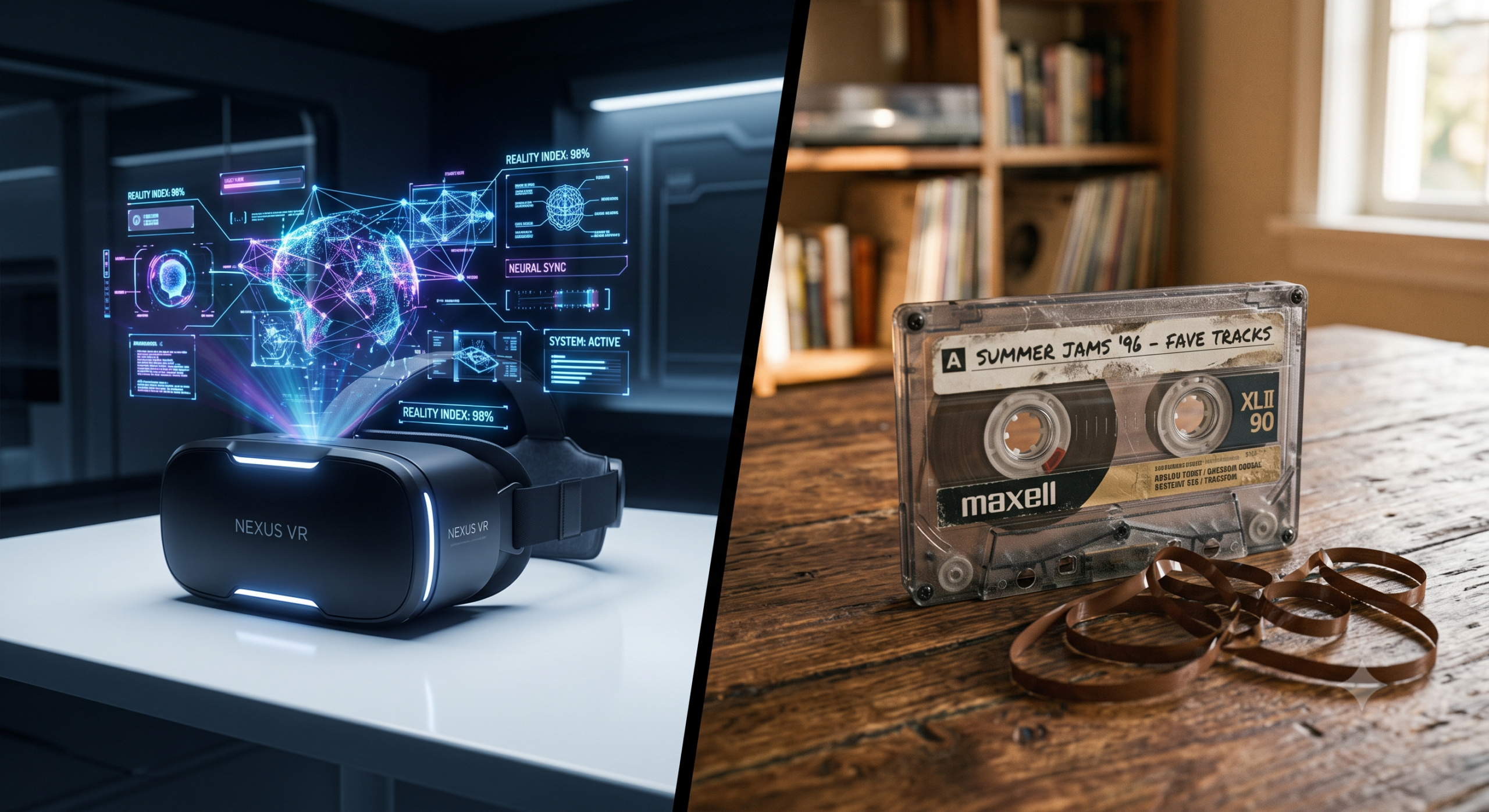
- The Trend: A simultaneous explosion in high-tech (AI, AR/VR) and low-tech (vinyl, cassettes) music consumption.
- The Catalyst: Maturation of generative AI audio models and the commercial rollout of next-generation mixed-reality headsets.
- The Counter-Movement: A massive, consumer-led backlash against purely digital ecosystems, driving physical media sales to 30-year highs.
The music industry in 2026 is defined by a massive technological paradox. In the studio and on the stage, the integration of artificial intelligence and immersive mixed reality has reached critical mass. Yet, at the consumer checkout counter, the most coveted items are heavy, fragile, and analog: vinyl records and magnetic cassette tapes. We are witnessing an industry sprinting toward the future while its most dedicated fans anchor themselves fiercely to the past.
The digital frontier has fundamentally shifted how music is produced and experienced. Generative AI is no longer a novelty tool for viral parodies; it is deeply embedded in the standard digital audio workstation (DAW). Producers are utilizing AI for rapid stem separation, dynamic mastering, and even generative counter-melodies, drastically reducing the friction from concept to final mix. Simultaneously, the live sector has embraced spatial computing. Following the groundwork laid by the Sphere in Las Vegas and early metaverse experiments, major artists are now routing fully immersive AR/VR concerts directly into fans’ living rooms, bypassing the geographical constraints of a traditional stadium tour.
However, a fierce counter-movement has emerged in direct response to this digital saturation. As music becomes infinitely accessible, algorithmically generated, and invisible, audiences are desperately seeking physical anchors. Vinyl sales have continued their decade-long climb, but the true surprise of 2026 is the explosive resurgence of the cassette tape. Driven by Gen Z and younger millennials—demographics that never experienced cassettes as a primary format—these physical items are no longer just playback mediums; they are cultural artifacts.
This paradox is the defining catalyst of the current era. Music is polarizing into two distinct experiences: the hyper-digital, infinitely scalable virtual event, and the ultra-tactile, limited-run physical artifact. For analysts monitoring “The Shunya,” understanding this divide is critical. The artists succeeding in 2026 are not choosing between the future and the past—they are weaponizing both, using AI to streamline production while pressing limited-edition cassettes to satisfy the physical craving of their fanbases.