
The automotive industry is undergoing a generational metamorphosis. The era of defining a vehicle by its horsepower and mechanical chassis is rapidly giving way to the Software-Defined Vehicle (SDV), where lines of code, AI algorithms, and connected architectures dictate performance, safety, and user experience. To navigate this extreme technical pivot, the traditional silos separating industrial engineering from academic research must be dismantled. Recognizing this urgent industry imperative, SRM Technologies officially launched its Drive Next Automotive (DNA) Lab at the SRM Institute of Science and Technology (SRMIST) in Chennai on September 30, 2026.
This strategic collaboration between the global technology services provider and one of India’s premier multidisciplinary academic institutions is engineered to advance complex automotive research and development. By embedding an industry-grade research environment directly within a university ecosystem, the DNA Lab aims to cultivate applied research, drive technology exploration, and foster hands-on, industry-led learning for the next generation of engineers.
The Technical Engine Room: Inside the DNA Lab
As modern vehicle architectures become increasingly reliant on software, the complexity associated with integrating, testing, and validating these advanced systems grows exponentially. A vehicle today is essentially a rolling data center, requiring entirely new testing paradigms before a single prototype hits the asphalt. The DNA Lab provides a dedicated environment designed specifically to tackle these modern integration bottlenecks.
Initially, the facility will concentrate on several core pillars of contemporary automotive engineering, including Advanced Driver Assistance Systems (ADAS), AUTOSAR (AUTomotive Open System ARchitecture), foundational automotive software, Hardware-in-the-Loop (HIL) testing, and comprehensive Verification and Validation (V&V) protocols.
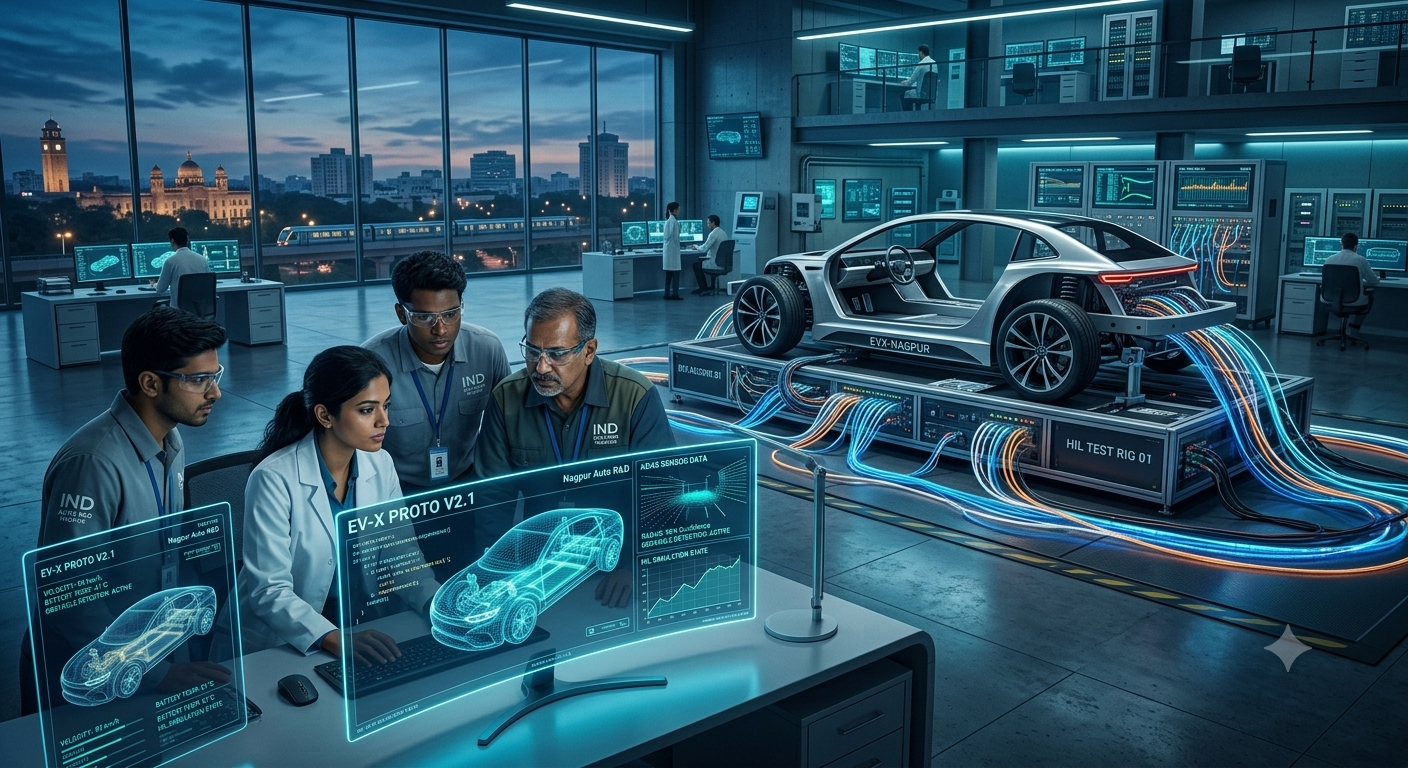
To simulate real-world conditions with pinpoint accuracy, the lab is equipped with high-performance infrastructure that mirrors the R&D departments of top-tier global automakers. This includes advanced ADAS systems and a sophisticated HIL setup powered by industry-standard dSPACE and Vector toolchains. For the uninitiated, HIL testing is a critical simulation technique used in the development and testing of complex embedded systems. It tricks the vehicle’s electronic control units (ECUs) into believing they are operating inside a real, moving vehicle by feeding them simulated electrical sensor data in real-time. By utilizing dSPACE and Vector toolchains—the absolute gold standards in automotive testing—students and researchers can conduct rigorous, real-time V&V in a controlled, highly accurate environment.
Forging the Next-Generation Talent Pipeline
The chronic shortage of engineers fluent in both mechanical systems and high-level software architecture is a major hurdle for the global mobility sector. The DNA Lab directly addresses this talent deficit by breaking down the walls between different academic disciplines. The facility brings together SRMIST students from automotive, general engineering, and artificial intelligence tracks, pairing them alongside seasoned domain subject-matter experts from SRM Technologies.
This cross-pollination of skills is exactly what the SDV era demands. Rather than learning software and mechanical engineering in a vacuum, these multidisciplinary teams will explore practical engineering approaches to current, real-world industry challenges. Students will not just study theory; they will actively develop promising ideas through functional prototypes and concrete proofs of concept.
Anantharaman Prakash, Chief Technology Officer of the Mobility Business Unit at SRM Technologies, emphasized the strategic dual-purpose of the facility. He noted that the DNA Lab allows the company to explore innovative solutions beyond the immediate constraints and demands of current customer programs, essentially investing in the capabilities they will need tomorrow. Furthermore, it creates a vital connection with academia, providing young engineers with meaningful, practical exposure to the industry long before they officially begin their corporate careers. According to Prakash, this initiative will fundamentally strengthen engineering capabilities, deliver greater value to customers, and forge a robust, highly skilled talent pipeline tailored for the evolving automotive sector.
Empowering the Educators
A critical, often overlooked component of technological advancement is ensuring that academic faculty keep pace with rapidly shifting industry standards. The DNA Lab is not solely focused on student development; it is designed to continuously upgrade the academic curriculum itself.
Beyond applied research and hands-on training, the laboratory will actively enrich SRMIST’s broader academic offerings through targeted Train-the-Trainer initiatives. By bringing faculty up to speed on the latest OEM requirements, toolchains, and software architectures, the institution ensures that its curriculum remains razor-sharp and relevant. Additionally, the partnership will introduce professional electives, specialized certification courses, and minor specializations. These structured programs allow students to build deeper, highly specialized expertise in niche automotive domains, drastically reducing the onboarding and training time required once they enter the workforce.
Dr. Kamalakkannan K, Professor and Head of the Department of Automobile Engineering at SRMIST, highlighted the institution’s longstanding philosophy of complementing theoretical classroom education with tangible industry experience. He stated that the DNA Lab serves as a natural extension of that commitment, enabling both students and faculty to actively engage with cutting-edge technologies, contribute directly to applied research, and systematically prepare the next generation of automotive innovators.
The Roadmap to a Global Center of Excellence
While the immediate launch provides a massive boost to the local engineering ecosystem in Chennai, the long-term blueprint for the DNA Lab is far more expansive. Over time, both SRM Technologies and SRMIST intend to dramatically scale the lab’s engineering and research capabilities. This future roadmap includes the integration of additional high-tech infrastructure, the rollout of broader training architectures, and an increase in joint research initiatives.
The ultimate goal is to evolve the facility from an academic R&D lab into a premier Center of Excellence for advanced automotive engineering. Sundar S, Head of the Mobility Business Unit at SRM Technologies, shared his overarching vision for this evolution. He envisions the DNA Lab becoming a centralized innovation hub that global Original Equipment Manufacturers (OEMs) and Tier-I suppliers can directly engage with. By leveraging the combined intellectual capital of SRMIST researchers and SRM Technologies engineers, these global automotive players will be able to deploy dependable, highly impactful innovations that directly advance mainstream vehicle development and lifecycle engineering.
The establishment of the DNA Lab in Chennai—a city historically recognized as the “Detroit of India” for its massive automotive manufacturing base—signals a critical shift. The region is no longer just assembling vehicles; it is writing the core algorithms that will define how they think, react, and navigate the roads of tomorrow. By physically merging corporate technology services with elite academic research, SRM Technologies and SRMIST are ensuring that India remains at the absolute cutting edge of the global software-defined mobility revolution.
* Conceptual illustration generated using AI