
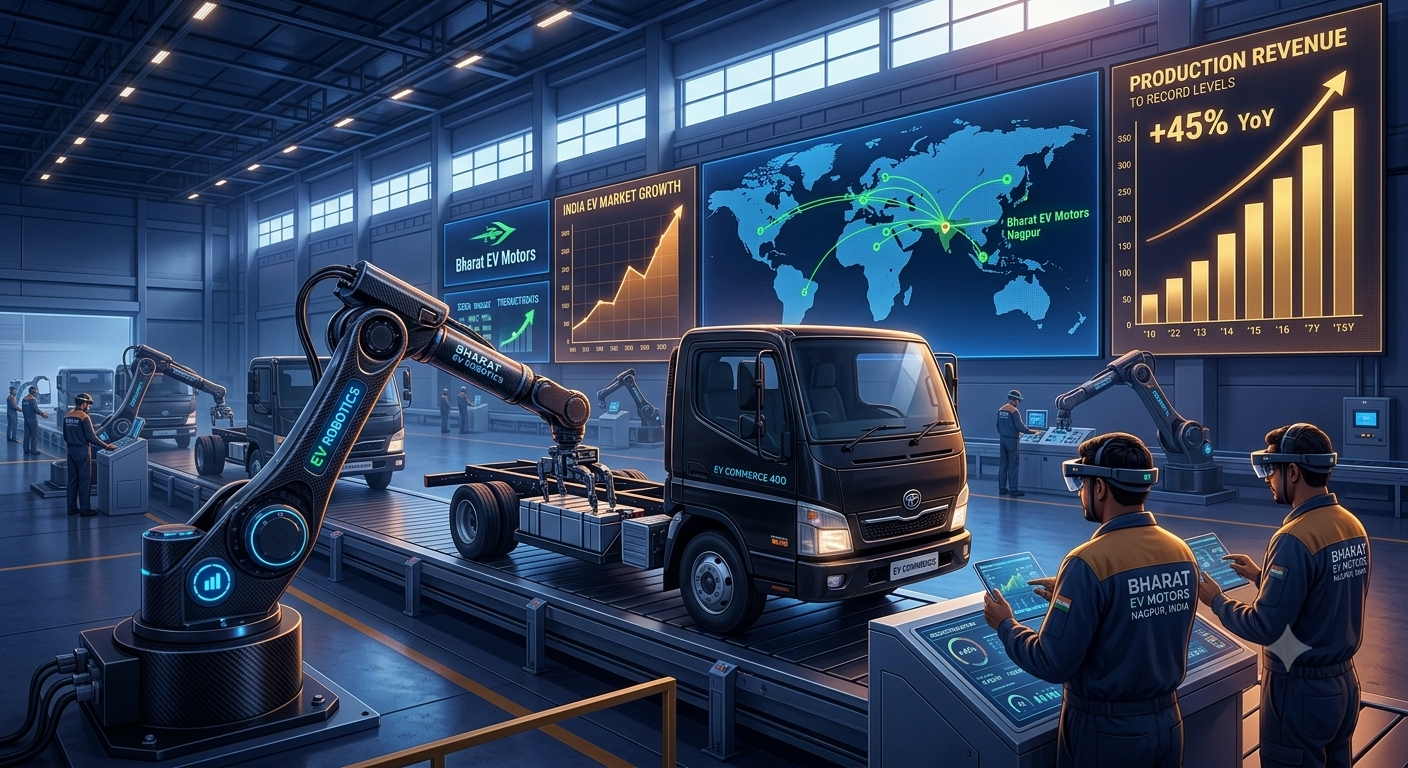
The Indian automotive sector stands at a critical historical juncture, balancing explosive domestic demand with the urgent necessity of a rapid, sustainable technology transition. This dynamic was brought into sharp focus on Wednesday, September 30, 2026, when Union Minister of Road Transport and Highways Nitin Gadkari delivered a clarion call to industry leaders at the inaugural HT Auto Leaderboard Awards in New Delhi. Powered by HPCL alongside knowledge partner Vector Consulting Group, the prestigious event served as a high-profile platform to recognize the vehicles, people, and innovations actively shaping the future of Indian mobility.
Taking the stage as the Chief Guest, Gadkari articulated an ambitious, unapologetic roadmap for the nation’s manufacturing sector. Highlighting the meteoric rise of the country’s industrial capabilities, he declared, “This industry is the backbone of the economy”. Refusing to settle for the status quo, he went on to outline his ultimate vision for the sector: “My dream is to make this industry number one in the world. Number one is the US, second is China. Third is India”.
Overtaking the undisputed global titans of automotive manufacturing is a monumental task. To understand the viability of Gadkari’s masterplan, it is essential to dissect where India currently stands, the economic stakes involved, and the strategic pivots required to ascend to the global summit.
The ₹22.75 Lakh Crore Economic Engine
To grasp the sheer gravity of the Minister’s ambition, one must first appreciate the massive scale of the domestic market. During his address, Gadkari underscored that India’s automotive sector currently contributes an astounding ₹22.75 lakh crore to the national economy. This immense financial footprint highlights the industry’s central role not just in corporate wealth generation, but as a foundational pillar driving the broader industrial ecosystem and national economic growth.
The automotive sector operates as a massive economic multiplier. From steel, aluminum, and chemical processing to electronics and software development, a thriving automotive base stimulates heavy industries across the board. However, maintaining this newly minted third-place ranking—having successfully surpassed Japan—is an entirely different challenge than actively unseating the United States or China. The US market is characterized by exceptionally high Average Transaction Prices (ATP) and a deep-rooted consumer demand for high-margin trucks and luxury SUVs. China, conversely, is an absolute manufacturing juggernaut, fortified by immense production volume and a near-monopoly on the global electric vehicle (EV) battery supply chain. For India to bridge this gap, domestic original equipment manufacturers (OEMs) must aggressively scale both their physical production volumes and their technological value propositions simultaneously.
The EV Mandate: Solving the Affordability Bottleneck
A central, recurring theme of Gadkari’s keynote was the necessary acceleration toward electric mobility. While he praised the technological leaps on display at the awards, Gadkari explicitly urged the Indian auto industry to prioritize finding ways to make electric vehicles significantly more affordable for consumers.
This affordability mandate is perhaps the single most critical hurdle in democratizing green mobility across the subcontinent. The high upfront acquisition cost of EVs continues to deter mass adoption. Importantly, this financial friction is not isolated to private passenger vehicles; it is acutely felt within the commercial and logistics sectors. For independent logistics operators and local freight forwarders securing regular transport contracts on the outskirts of regional hubs like Nagpur and the broader Vidarbha region, the capital cost of overhauling fleets remains the primary barrier to entry.
When regional fleet operators evaluate vehicles for demanding last-mile delivery routes, the choice between traditional diesel workhorses and emerging electric variants—such as the Tata Ace EV—hinges entirely on the Total Cost of Ownership (TCO). While electric commercial vehicles offer undeniably lower running costs per kilometer, the initial sticker price and associated financing rates often force smaller freight companies to stick with internal combustion engine (ICE) models. If Indian OEMs can successfully localize battery cell manufacturing and optimize their supply chains to drive down the sticker price of commercial EVs as Gadkari urges, local logistics networks can rapidly decarbonize. Affordable commercial EVs would fundamentally transform the profit margins of regional freight operations while simultaneously stripping thousands of tons of emissions from urban centers.
‘Make for the World’: From Domestic Reliance to Global Export Hub
While capturing and satisfying domestic volume is essential, the mathematical reality of becoming the world’s number one automotive industry demands a massive, sustained increase in exports. This strategic imperative was a major focal point at the HT Auto Leaderboard Awards, which featured a dedicated panel discussion aptly titled ‘Make for the World: Is India ready to become the world’s auto powerhouse?’.
Historically, India has been a formidable export hub for two-wheelers and compact passenger cars, reliably supplying emerging markets in Latin America, Africa, and Southeast Asia. However, to legitimately rival China, the scope and quality of Indian exports must evolve. The industry must transition from merely exporting budget-friendly internal combustion vehicles to becoming a premier global supplier of sophisticated, software-defined electric vehicles, advanced safety components, and autonomous driving architectures.
The ‘Make for the World’ philosophy requires a paradigm shift in quality control, testing protocols, and research and development (R&D). Indian automakers must design platforms from the ground up that meet the stringent safety and emission standards of highly regulated, lucrative markets like Europe and North America. By leveraging the country’s immense software engineering talent pool, India possesses a unique opportunity to dominate the connected vehicle space, exporting highly advanced automotive technology as aggressively as physical sheet metal.
The Road to 2030: Diversifying the Mobility Energy Mix
Another crucial systemic challenge addressed during the awards ceremony was the nation’s future energy strategy. This was explored in-depth during a second panel discussion titled ‘Road to 2030: Ethanol, EVs & beyond – India’s new mobility energy mix’.
Nitin Gadkari has long been a vocal proponent of looking beyond a singular, monolithic EV mandate, advocating instead for a highly diversified approach to sustainable transport. Relying solely on lithium-ion batteries—where the global supply chain is heavily controlled by geopolitical rivals—presents significant economic and security vulnerabilities for a rapidly developing nation. Therefore, exploring an array of alternative fuels is a cornerstone of the government’s 2030 vision.
Ethanol blending, flex-fuel engines, and hydrogen fuel cells represent vital, parallel components of this new energy matrix. For the agrarian sector, the aggressive promotion of ethanol derived from sugarcane and surplus grains offers a massive economic windfall, effectively transforming rural farmers into vital energy producers. In the heavy commercial and long-haul freight segments—where battery weight severely compromises payload capacity—hydrogen presents a highly viable, zero-emission alternative. By pursuing this multi-pronged energy strategy, India can drastically reduce its crippling reliance on imported fossil fuels while maintaining the industrial flexibility to adapt to future technological breakthroughs.
The Path Forward
Nitin Gadkari’s vision of a world-leading Indian automotive industry is undeniably bold. Surpassing the United States and China will require unprecedented, seamless collaboration between the central government, legacy automotive OEMs, agile component suppliers, and the broader tech sector. It demands aggressive capital investments in public charging infrastructure, a relentless, industry-wide focus on bringing down EV manufacturing costs, and an unwavering commitment to world-class safety standards.
As the HT Auto Awards successfully highlighted, the foundational pieces—a massive, growing domestic market, a robust manufacturing base, and a clear, forward-looking policy direction—are already firmly in place. The true test over the next decade will be disciplined execution. If the industry can innovate at scale and successfully transition from a domestic powerhouse to an indispensable global mobility supplier, Gadkari’s dream of a number-one-ranked Indian automotive sector may soon transition from ambitious rhetoric into an undeniable economic reality.
* Conceptual illustration generated using AI