
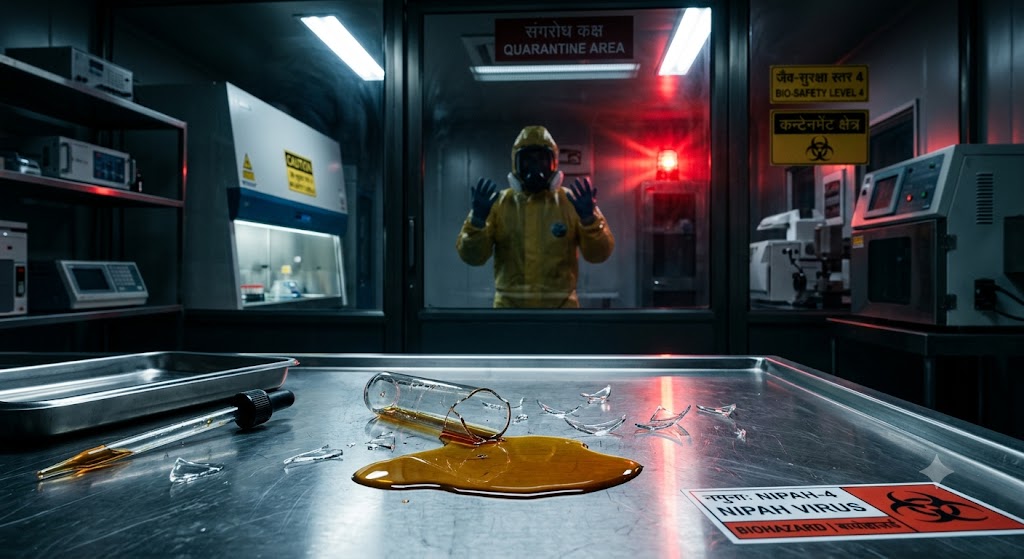
The chilling reality of modern biological research is that the most dangerous threats to human civilization are often separated from the outside world by mere millimeters of glass. This fragility has been thrown into sharp, terrifying relief in the Russian region of Siberia, where a deadly laboratory accident has claimed the life of a young researcher and triggered a massive, localized quarantine.
As October 2026 unfolds, nearly 200 people remain under strict medical observation in the Irkutsk region following the death of a 28-year-old laboratory technician, Darya Shipilova. Shipilova, an employee at the Irkutsk Anti-Plague Research Institute, succumbed to what authorities initially and cautiously termed a “particularly dangerous infection” or “pneumonia of unknown aetiology”. However, regional leaders, international health monitors, and Russian media have pointed to a far more sinister culprit: pneumonic plague, the deadliest variant of the ancient Yersinia pestis bacterium.
The Incident: A Fatal Misstep
The timeline of the tragedy underscores the profound risks undertaken by frontline biological researchers. According to local media reports and statements she made to medical staff before her passing, Shipilova was conducting routine sample testing at the Shelekhov-based Anti-Plague Research Institute when a critical breach occurred. She reportedly confessed to accidentally dropping and breaking a test tube containing live bacteria.
Despite the high-security protocols mandated for handling such lethal pathogens, the exposure was devastating. Shipilova fell violently ill and was admitted to the Shelekhov District Hospital on September 29, suffering from severe, rapidly progressing pneumonia. Her condition deteriorated with alarming speed. Doctors placed her on a mechanical ventilator in a desperate bid to save her life, but she tragically passed away on October 1.
The Fallout: A Drastic Quarantine
The high-probability suspicion that a pneumonic plague variant had escaped primary containment triggered a draconian public health response across the region. Regional officials activated emergency sanitary and anti-epidemic measures spearheaded by Rospotrebnadzor, Russia’s consumer protection and public health watchdog.
At least 197 individuals who had direct or indirect contact with Shipilova were swiftly tracked down and placed under medical isolation. The dragnet extended beyond her immediate colleagues; over 100 of these contacts are currently being monitored inside dedicated hospital wards. Furthermore, authorities clamped down on the Shelekhov District Hospital itself, imposing strict quarantine measures, while a nearby maternity facility was reportedly placed under operational restrictions to prevent any potential spread among highly vulnerable populations. Public events across the Irkutsk region were abruptly canceled to limit community congregation.
Irkutsk Governor Igor Kobzev has fronted the crisis management, urging the public to remain calm while chairing an emergency anti-epidemic commission. Kobzev stated that all identified contacts have thus far tested negative and are showing no clinical signs of the illness, providing a glimmer of hope that the pathogen has been successfully contained within the initial ring of exposure.
The Biological Threat: Why Pneumonic Plague is Different
To understand the panic surrounding a single broken test tube, one must understand the distinct, terrifying nature of pneumonic plague.
Plague is caused by Yersinia pestis, the very same bacterium responsible for the Black Death that wiped out millions in medieval Europe. However, the disease manifests in three primary forms: bubonic (affecting the lymph nodes), septicemic (affecting the bloodstream), and pneumonic (infecting the lungs).
While bubonic plague is the most common form and is typically transmitted through the bite of an infected flea, pneumonic plague is the rarest, most virulent, and by far the most dangerous. It is the only form of plague that can be transmitted directly from human to human through airborne respiratory droplets—meaning a cough or a sneeze is enough to pass the deadly infection to a bystander.
According to the US Centers for Disease Control and Prevention, the onset of pneumonic plague is violent and sudden. Symptoms include severe headache, weakness, rapidly developing shortness of breath, chest pain, and a cough that may produce bloody or watery mucus. The World Health Organization warns that, if left untreated, pneumonic plague is highly fatal, often killing its host rapidly. The only defense is the swift administration of targeted antibiotics, which must be given in the absolute earliest stages of the infection to be effective.
Geopolitical Ripples and the Transparency Deficit
Beyond the immediate public health crisis, the Shelekhov incident has sparked significant geopolitical anxiety. The term “Anti-Plague Institute” belongs to a vast network of Soviet-era biological research facilities originally established to monitor and combat natural outbreaks of endemic diseases, such as plague and anthrax, across the Eurasian steppe. Today, these high-containment labs routinely handle some of the world’s most dangerous pathogens.
The initial response from the Russian state apparatus was characterized by a distinct lack of transparency. Early official statements vaguely referred to Shipilova’s cause of death as “pneumonia of unknown aetiology,” deliberately avoiding the word “plague”. The narrative only shifted when Alexei Tsydenov, the head of the neighboring Buryatia republic, took to social media to dispel rumors that the outbreak originated in his territory, explicitly confirming that the Irkutsk lab worker had died from a form of the plague.
This opacity has drawn the attention of the international community. The US State Department and the White House are actively monitoring the reports emerging from Siberia. The US government has publicly appealed to Moscow to provide prompt, precise, and transparent information regarding the nature of the pathogen and the effectiveness of the containment protocols. In a post-COVID-19 world, global tolerance for obfuscation surrounding laboratory accidents involving respiratory pathogens is practically zero.
Conclusion: A Chilling Warning
As the quarantine period continues for the nearly 200 isolated residents of Irkutsk, the global health community watches with bated breath. The death of Darya Shipilova is a profound human tragedy, highlighting the extraordinary risks undertaken by the scientists who study the world’s most lethal micro-organisms to keep the rest of us safe.
However, the Siberian scare also serves as a chilling, necessary warning. It is a stark reminder that despite advanced medical technology and AI-driven disease modeling, a single moment of human error—a slip of the hand, a shattered vial on a linoleum floor—can unleash an ancient killer. While the Russian containment ring appears to be holding for now, the incident fundamentally underscores the non-negotiable need for absolute transparency and uncompromising safety standards in global biological research.
* Conceptual illustration generated using AI