
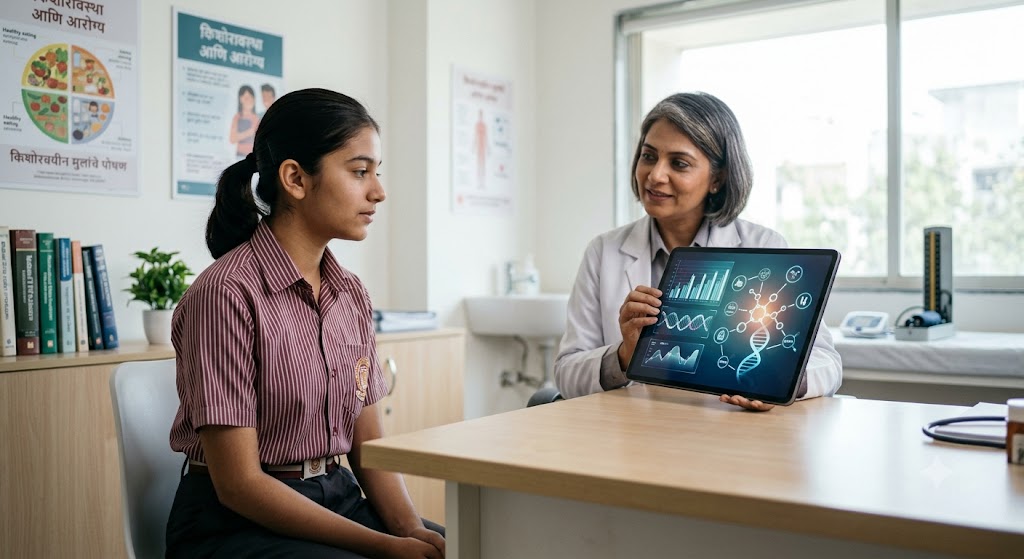
For decades, Polycystic Ovary Syndrome (PCOS) was largely viewed through the narrow lens of adult female fertility—a condition that women primarily worried about when trying to conceive in their late twenties or thirties. However, a major paradigm shift is currently underway in pediatric endocrinology. The conversation is rapidly moving from fertility clinics to high school classrooms, as medical professionals recognize that the hormonal and metabolic foundations of this complex disorder are often laid during early adolescence.
This pressing reality has been brought into sharp focus by a massive, ongoing screening program conducted by the All India Institute of Medical Sciences (AIIMS) in New Delhi. Preliminary findings from the survey, which has screened over 4,000 adolescent girls across seven private and government schools in the national capital since 2023, present a sobering picture of teenage metabolic health. According to the AIIMS data, an estimated 3% to 5% of these adolescent girls may be suffering from PCOS. Even more alarmingly, the survey revealed that nearly one in five schoolgirls (approximately 20%) experience persistent menstrual irregularities—a critical early warning sign of underlying hormonal imbalances.
As the medical community grapples with these findings, the AIIMS study serves as a vital wake-up call for parents, educators, and public health policymakers. It highlights an urgent need to rethink how we diagnose, discuss, and manage teenage reproductive and metabolic health in an era defined by increasingly sedentary lifestyles.
The Diagnostic Dilemma: Navigating the Murky Waters of Puberty
One of the most significant challenges highlighted by the AIIMS pediatric endocrinology team is the sheer complexity of diagnosing PCOS in teenagers. During the turbulent years of puberty, a young woman’s body undergoes massive hormonal fluctuations. Many of the hallmark symptoms of PCOS—such as irregular menstrual cycles, acne breakouts, and sudden weight fluctuations—are also entirely normal, transient phases of standard pubertal development.
Because of this overlap, doctors warn against rushing to a definitive PCOS diagnosis based on singular symptoms. For instance, discovering “polycystic” appearing ovaries on a routine ultrasound is no longer considered sufficient to automatically diagnose the condition in a teenager. According to experts like Dr. Rajni Sharma, Professor of Paediatric Endocrinology at AIIMS, the diagnostic criteria have become much more stringent in recent years.
A clinical diagnosis now requires a broader constellation of symptoms. Doctors must look for persistent menstrual dysfunction combined with clear clinical or biochemical signs of hyperandrogenism (excess male hormones), which physically manifests as severe, treatment-resistant acne or hirsutism (excessive facial or body hair growth). This careful, conservative approach to diagnosis is why the current AIIMS estimate sits at 3-5%, notably lower than older, less stringent studies that occasionally pegged teenage prevalence closer to 10%.
From PCOS to PMOS: Recognizing the Metabolic Threat
Perhaps the most crucial takeaway from the AIIMS press briefing is that PCOS is not merely a “menstrual issue” or a localized ovarian defect. In fact, international medical guideline groups have recently proposed a significant terminology shift: renaming the condition to Polyendocrine Metabolic Ovarian Syndrome (PMOS).
This new terminology reflects the condition’s true nature as a systemic metabolic and hormonal disorder. The health consequences of leaving severe menstrual irregularities unaddressed stretch far beyond the reproductive system. Adolescent girls with PMOS face a dramatically elevated risk of developing serious long-term health complications, including severe insulin resistance, prediabetes, early-onset Type 2 diabetes, dyslipidemia (lipid imbalances), hypertension, and fatty liver disease.
Furthermore, the AIIMS team identified a specific developmental risk pattern: girls who were born with a low birth weight and subsequently experienced rapid, excessive weight gain during childhood are at a particularly high risk of developing these metabolic complications later in life.
The Silent Psychological Toll
The physical manifestations of PCOS carry an immense, often unspoken psychological burden, particularly for teenagers navigating the highly pressurized social environments of high school and social media.
The visible symptoms of hyperandrogenism—such as dark facial hair on the chin or upper lip, severe cystic acne, and sudden, stubborn weight gain—can be devastating to an adolescent’s self-esteem. Doctors caution that teenagers suffering from PCOS are highly susceptible to severe anxiety, clinical depression, crippling body image issues, and the development of eating disorders as they desperately attempt to control their fluctuating weight. Therefore, treating the condition requires a holistic approach that includes robust mental health support, not just hormonal intervention.
The Modern Lifestyle Catalyst: Screens, Sleep, and Sugar
While genetics and family history (particularly a family history of Type 2 diabetes or obesity) play a foundational role in determining a girl’s risk, environmental factors act as the primary catalyst. The AIIMS experts pointed directly to the modern, urban adolescent lifestyle as a major driver of the rising metabolic crisis.
Unhealthy, highly processed diets, chronic sleep deprivation, and extreme sedentary behavior are creating a perfect storm for insulin resistance. Dr. Sharma placed a particular emphasis on “digital well-being,” noting that excessive, unregulated screen time keeps children physically inactive for hours while simultaneously disrupting their circadian rhythms and sleep quality.
When Should Parents Intervene?
Given that one in five girls experiences irregular periods, how can parents distinguish between normal pubertal adjustments and a genuine medical red flag?
AIIMS endocrinologists provided clear, actionable timelines:
- First Year After Menarche: Highly variable and irregular cycles are generally normal and expected.
- 1 to 3 Years After Menarche: A cycle that is shorter than 21 days or stretches longer than 45 days is considered clinically irregular and warrants observation.
- Beyond 3 Years: The window tightens. Cycles shorter than 21 days or longer than 35 days require medical evaluation.
- The Ultimate Red Flag: Regardless of the time since the first period, if a teenager misses her cycle for three consecutive months, or develops severe acne and excessive facial hair, an immediate consultation with a pediatric endocrinologist or gynecologist is necessary.
The Path Forward: Lifestyle Over Prescriptions
The most encouraging message from the AIIMS screening program is the heavy emphasis on conservative, non-pharmacological management. Medical professionals stress that we must avoid heavily medicating teenagers unnecessarily. Instead of immediately prescribing oral contraceptives or insulin-sensitizing drugs, the absolute first line of defense is lifestyle modification.
A balanced diet rich in whole grains, fresh vegetables, and adequate protein, combined with a strict regimen of regular, vigorous physical activity, can dramatically improve insulin sensitivity and naturally restore hormonal balance.
The AIIMS study is a critical intervention in India’s public health narrative. By identifying these metabolic red flags in high school corridors rather than waiting for them to appear in adult fertility clinics, the medical community is opening a vital window for early intervention. The challenge now lies with parents, schools, and society to foster an environment where our adolescents can eat better, move more, and unplug from their screens before these hormonal imbalances dictate their lifelong health.