When national headlines are dominated by geopolitical summits, macroeconomic indices, and legislative showdowns, the foundational bedrock of a democratic state often remains invisible. That bedrock is the civil service—the thousands of local administrators, educators, and public officials who transform abstract constitutional mandates into tangible civic realities.
The passing of Maria Panagiotou, a 42-year-old educator and senior administrator at the Primary Education Directorate of the Prefecture of Evia in Chalkida, offers a poignant lens through which to examine these structural mechanics. While local obituaries capture immediate community grief, analyzing the institutional role of regional education directorates reveals a complex web of constitutional obligations, bureaucratic processes, and political incentives.
How do local administrative posts sustain the Greek educational framework? What are the political and electoral incentives surrounding public-sector employment in regional prefectures? Here is an exhaustive, analytical exploration of the administrative state, institutional processes, and the vital role of local educators in modern governance.
1. The Constitutional Mandate: Public Education as a State Pillar
Under Article 16 of the Constitution of Greece, education is designated as a fundamental mission of the state. The Hellenic Republic assumes the constitutional responsibility to foster moral, intellectual, professional, and physical training for its youth, cultivate national and religious consciousness, and structure free public instruction across all educational tiers.
THE CONSTITUTIONAL AND ADMINISTRATIVE ARCHITECTURE OF GREEK EDUCATION
| LEVEL | RESPONSIBILITY / MANDATE | LEGAL FOUNDATION |
| Central Ministry | National curricula, budgetary allocations, and overarching policy direction. | Article 16, Greek Constitution; Centralized Ministerial Decree. |
| Regional Directorates (e.g., Evia / Chalkida) | Decentralized implementation, staffing, logistics, and local school oversight. | Prefectural Administration Acts & Civil Service Codes. |
| Local School Units | Direct pedagogy, classroom instruction, and student community engagement. | Primary / Secondary Education Operational Statutes. |
However, constitutional ideals cannot manifest without robust institutional machinery. While the Ministry of Education in Athens establishes macro-level curricula and national budgetary frameworks, the actual delivery of public education relies entirely on decentralized prefectural directorates. Officials like Maria Panagiotou operate at this critical administrative intersection—translating constitutional mandates into operational reality by managing teacher placements, school facility logistics, and administrative compliance across regional districts like Euboea.
2. Institutional Processes: The Mechanics of Regional Educational Administration
The operational burden carried by regional education directorates is immense. In a decentralized administrative unit like the Prefecture of Evia, the directorate acts as the primary administrative bridge between central government ministries and dozens of individual primary schools, kindergartens, and specialized educational units.
The institutional responsibilities managed within these offices include:
- Personnel Management and Resource Allocation: Coordinating teacher transfers, managing substitute staffing allocations, and overseeing professional evaluations within strict civil service guidelines.
- Bureaucratic Compliance and Crisis Management: Handling infrastructural deficits, responding to emergency school closures during weather events or public health crises, and maintaining institutional records.
- Inter-Agency Coordination: Serving as the liaison between municipal authorities, parent associations, and pedagogical boards to ensure that regional schools remain fully funded and operational.
When an experienced administrator passes away unexpectedly, the institutional friction caused by the vacancy highlights how heavily regional governance depends on dedicated civil servants. Institutional memory in public administration is rarely stored in digital handbooks alone; it resides in the day-to-day competence of career administrators who navigate complex bureaucratic workflows.
3. Political Incentives and the Civil Service in Regional Greece
The structure of public administration in regional areas like Chalkida and Euboea is deeply intertwined with the broader political economy of the Greek state. Historically, the civil service and public education sectors represent some of the largest institutional employers outside major urban hubs like Athens and Thessaloniki.
This dynamic creates specific political incentives for both regional governance and national political parties:
- The Patronage vs. Meritocracy Debate: Historically, public-sector appointments and regional directorate staffing have been sensitive political touchpoints. Balancing meritocratic civil service exams with localized political pressures remains a central challenge for successive governments seeking to modernize public administration.
- Decentralization Politics: National political parties frequently debate the degree of autonomy regional directorates should possess. While decentralization proponents argue for localized fiscal and administrative control to cut through red tape, central ministries remain protective of uniform standards across all prefectures.
- Socioeconomic Stability: In regional prefectures where private-sector industrial growth may fluctuate, stable civil service careers—such as teaching and educational administration—serve as the economic anchor of the middle class, heavily influencing local sentiment and voting behavior.
4. Electoral Impact and the Micro-Politics of Local Communities
While a regional education administrator operates far from the partisan debates of the Hellenic Parliament, their impact on local electoral sentiment should not be underestimated. In tight-knit communities like Chalkida, local public servants form the connective tissue of civic life.
THE IMPACT MATRIX OF LOCAL CIVIL SERVICE ON REGIONAL ELECTIONS
| COMMUNITY TOUCHPOINT | ADMINISTRATIVE FUNCTION | ELECTORAL / CIVIC RESULT |
| Parent Associations | Resolving school infrastructural needs and staffing shortages. | Builds institutional trust between citizens and state. |
| Teaching Fraternities | Managing professional development and civil service welfare. | Fosters grassroots loyalty and professional stability. |
| Local Civic Networks | Interfacing with municipal councils and cultural directorates. | Reinforces perceptions of competent local governance. |
When local administrative machinery functions smoothly—ensuring classrooms are staffed on the first day of the academic year, resolving logistical bottlenecks, and treating families with dignity—citizens develop a baseline trust in state institutions. Conversely, administrative dysfunction or bureaucratic gridlock at the prefectural level quickly translates into voter dissatisfaction with incumbent political figures.
Thus, career civil servants and educators exert a profound, indirect influence on regional political stability. Their dedication underpins the credibility of the democratic social contract at the community level.
Conclusion: Honoring the Unsung Architects of the State
The sudden loss of an educator and administrator like Maria Panagiotou reverberates far beyond an immediate family circle or local teaching union. It serves as a reminder of the human infrastructure required to sustain constitutional governance.
While sensational political scandals and high-level legislative battles dominate national news cycles, the true test of a republic lies in its daily administrative competence—in classrooms kept open, administrative files processed, and communities served with quiet, unyielding dedication.
Analyzing the constitutional frameworks, institutional processes, and political dynamics of regional public service reveals that civil servants are not merely cogs in a bureaucratic machine; they are the indispensable guardians of the state’s promise to its citizens.
References & Citations
- Constitution of Greece: Article 16 – Education, Art, Science and Research — Official legal framework establishing the Hellenic Republic’s obligations regarding public instruction and educational administration.
- Dnews Greece (September 29, 2026): Θρήνος στη Χαλκίδα: Πέθανε 42χρονη εκπαιδευτικός, είχε παντρέψει μία μέρα νωρίτερα the αδερφή της — Primary biographical report detailing Maria Panagiotou’s administrative role at the Primary Education Directorate of Evia and community tributes.
- Newsbomb Greece (November 13, 2026): Πέθανε στα 42 της η δασκάλα Μαρία Παναγιώτου — Coverage of her passing, institutional contributions, and impact on regional public education.
- Hellenic Ministry of Education and Religious Affairs (2026): Operational Guidelines for Decentralized Regional Educational Directorates — Administrative guidelines detailing the division of responsibilities between central ministries and prefectural directorates.
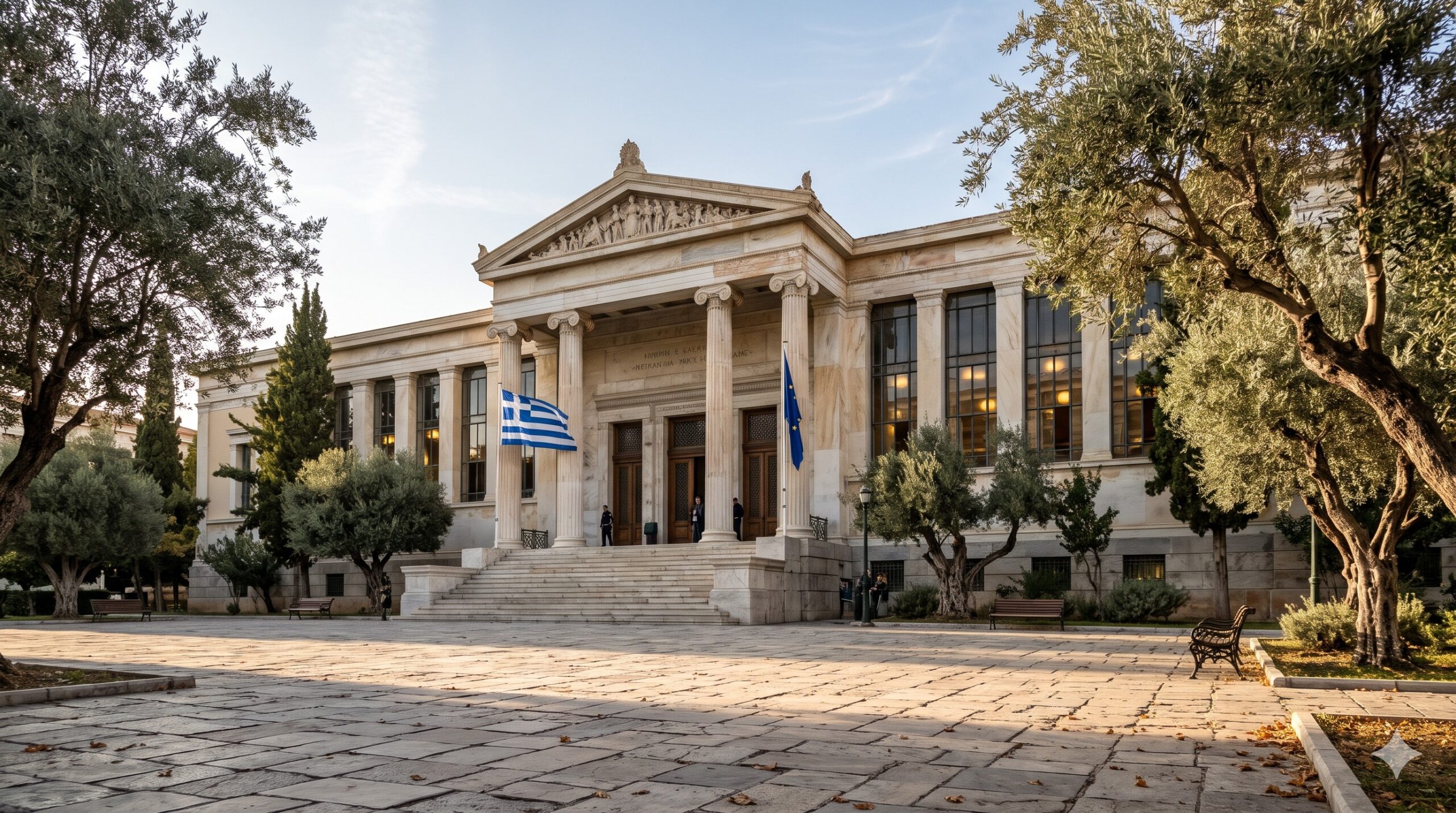
* Conceptual illustration generated using AI