
For months, the trajectory of the U.S.-India trade relationship was dictated entirely by the executive branch and the federal courts. From the Trump administration’s sweeping 50% punitive tariffs in 2025 to the highly publicized $500 billion interim framework negotiated in February 2026, Congress largely remained on the sidelines.
That era of congressional passivity ended abruptly this week.
Frustrated by what it perceives as executive leniency and judicial roadblocks that stripped away previous tariff authorities, the U.S. Congress has violently seized control of the trade narrative. On Wednesday, September 16, 2026, lawmakers unleashed a statutory shockwave designed to force the President’s hand and force New Delhi into an impossible corner over its continued purchases of Russian energy. The threat? A catastrophic 100% tariff on Indian exports.
Here is a breakdown of the new legislation sitting on the President’s desk, the mechanics of how it works, and why India is firmly in the crosshairs.
The Passage of the Graham Sanctions Act
The legislative vehicle driving this new trade war is the Lindsey O. Graham Sanctioning Russia and Iran Act of 2026. Named after the late Republican senator who championed the original framework, the bill represents the most aggressive congressional effort to date to financially isolate Moscow and punish the nations that sustain its war economy.
The legislation moved with overwhelming, bipartisan momentum. In August, the U.S. Senate passed the measure by a dominant 86-11 margin. On September 16, despite internal debates over tariff powers, the U.S. House of Representatives cleared the bill in a 262-159 vote, sending the measure directly to the White House for President Trump’s signature.
The core of the legislation expands traditional sanctions on Russian officials, the shadow fleet of oil tankers, and banking institutions. However, its most consequential provision is a direct attack on Russia’s primary trading partners: it grants the U.S. President unprecedented statutory authority to impose tariffs of up to 100% on goods from the world’s largest importers of Russian crude oil and natural gas.
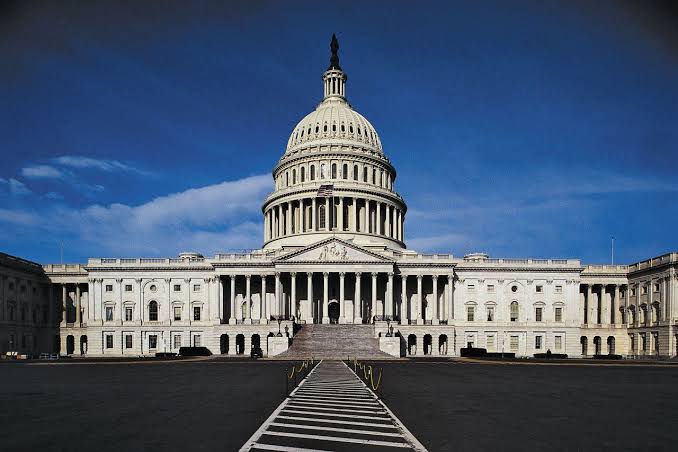
United-States-Capitol-Building
The Mechanics: A 180-Day Cycle of Threat
The legislation does not instantly slap a 100% tax on Indian goods the moment it is signed. Instead, it creates a rigid, permanent statutory mechanism designed to hold a financial gun to the head of major Russian energy buyers.
According to the bill’s framework, the U.S. Trade Representative (USTR) is mandated to reassess and publish a list of the top five global purchasers of Russian crude and natural gas every 180 days. Because India and China account for the lion’s share of Moscow’s energy exports, they are perpetually locked into this top-tier target group alongside nations like Turkiye and Hungary.
Once a nation is on the list, the President is authorized to levy a tariff ranging from above zero up to 100%. The explicit goal is to weaponize access to the massive U.S. consumer market. If a country wants to keep selling its textiles, pharmaceuticals, and technology to American buyers, it must sever its energy ties with Moscow.
The Exemption Trap
One of the most controversial elements of the bill is how it treats different allies. The legislation includes a specific exemption clause for countries that import less than 15% of Russia’s natural gas exports and can demonstrate “significant steps” toward reducing those purchases.
This loophole was crafted specifically to protect European allies that are still struggling to completely decouple from Russian pipelines. However, because India imports massive volumes of Russian crude (accounting for over 30% of its total crude import basket in FY2026), New Delhi falls completely outside the scope of this exemption. India is left entirely exposed to the full 100% tariff threat.
The Washington Divide
While the bill passed with a comfortable margin, it exposed a deep rift within the Democratic party over the expansion of executive power.
Representative Gregory Meeks, the top Democrat on the House Foreign Affairs Committee, fiercely opposed the tariff provisions, calling the bill a “Trojan horse.” Opponents argue that at a time of soaring domestic inflation and high mortgage rates, Congress should not be handing the Trump administration broad, unchecked authority to slap 100% tariffs on a massive trading partner like India—a move that would inevitably pass catastrophic costs onto American consumers.
Despite these warnings, the legislation was heavily lobbied by Ukrainian officials, with President Volodymyr Zelenskyy publicly urging Congress to pass the measure. “During the war, it is sometimes better to make a not-so-perfect decision than to do nothing,” Zelenskyy noted on social media shortly before the House vote.
India’s Steadfast Defiance
As the bill cleared Congress, the reaction from New Delhi was swift and unyielding.
India’s Ministry of External Affairs reiterated that the country’s energy procurement strategy is dictated strictly by domestic needs, not international pressure. Officials emphasized that securing affordable fuel for 1.4 billion citizens remains the government’s paramount responsibility. Responding to the looming threat of 100% tariffs, the government signaled that it will not compromise its energy security to satisfy a Western sanctions regime.
The U.S.-India trade relationship now teeters on a knife’s edge. President Trump is faced with a profound dilemma: sign a bill that grants him immense tariff power but threatens to incinerate the $500 billion bilateral trade framework he personally negotiated with Prime Minister Modi just months ago, or veto a bipartisan sanctions package strongly backed by Ukraine. The economic future of the Indo-Pacific hangs in the balance.
Source: Britannica