By early February 2026, it appeared that the diplomatic crisis between Washington and New Delhi had been averted. The historic interim framework negotiated directly between Prime Minister Modi and President Trump promised to slash the devastating 50% penal tariffs down to a manageable 18%. Indian exporters exhaled. Supply chain managers began unwinding emergency contingencies.
But just two weeks later, the foundation of U.S. trade policy collapsed—not in the halls of Congress, but inside the United States Supreme Court.
On February 20, 2026, the U.S. judicial system fundamentally altered the global tariff landscape, stripping the President of his primary enforcement tool. The resulting legal domino effect plunged cross-border trade into unprecedented chaos, leaving the newly minted U.S.-India trade agreement stranded in a state of deep legal ambiguity.
Here is how the judicial curveball unfolded, and why Indian importers are still struggling to navigate the fallout.
The Landmark Defeat: Learning Resources, Inc. v. Trump
To understand the chaos, one must understand the weapon the administration was wielding. For over a year, the Trump administration had relied almost exclusively on the International Emergency Economic Powers Act (IEEPA) to bypass the traditional, multi-year Section 301 investigation process. By declaring national emergencies, the administration utilized IEEPA to slap immediate, sweeping tariffs on global imports, including the baseline duties affecting India.
The legal community warned that this was an aggressive overreach of statutory authority. On February 20, 2026, in a decisive 6-3 vote, the Supreme Court agreed.
In one of the most consequential decisions in modern trade history, the Court ruled in Learning Resources, Inc. v. Trump that IEEPA did not confer any authority upon the President to impose tariffs. According to analysis by BDO Global, the ruling noted that while the IEEPA statute contains 16 distinct verbs enumerating the President’s powers to combat national emergencies, the power to impose “taxes, duties, and excises” remains exclusively vested in Congress under Article I of the Constitution.
Virtually overnight, the legal scaffolding holding up the administration’s signature economic policy collapsed.
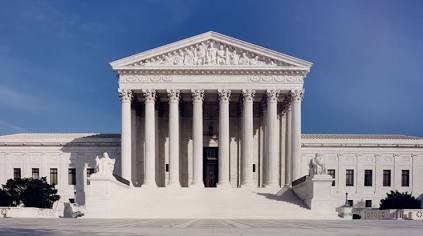
United-States-Supreme-Court-Building
The $166 Billion Refund Scramble
The Supreme Court ruling was categorical on the merits, but it left a multi-billion dollar question unanswered: what happens to the money already collected?
That question was swiftly answered on March 4, 2026, when Judge Richard Eaton of the U.S. Court of International Trade (CIT) issued a sweeping order. As reported by Saul Ewing LLP, Judge Eaton directed U.S. Customs and Border Protection (CBP) to liquidate all unliquidated entries without regard to the IEEPA duties and to issue refunds via normal administrative procedures.
The scale of this mandate was staggering. The government had collected over $166 billion in unauthorized IEEPA duties across more than 53 million entries filed by over 330,000 importers. To handle the deluge, CBP rapidly deployed the Customs Automated Portal for Electronic-refunds (CAPE). For Indian companies and their U.S. buyers, this meant redirecting immense legal resources away from forward-looking supply chain strategy and into the bureaucratic nightmare of clawing back millions in unlawfully collected taxes.
The Section 122 Pivot and Continual Legal Limbo
If Indian exporters hoped the Supreme Court ruling meant an end to unpredictable tariffs, they were sorely disappointed. Hours after the Supreme Court invalidated IEEPA, the administration issued Proclamation 11012.
This maneuver invoked Section 122 of the Trade Act of 1974—a temporary, emergency authority designed to address “balance-of-payments deficits”—to immediately replace the lost IEEPA duties with a flat 10% global surcharge.
For the U.S.-India interim agreement, this pivot was a disaster. The February 18% deal was structurally tethered to the now-defunct IEEPA authorities. The sudden shift to Section 122 threw the carefully negotiated rate into limbo. The confusion was compounded when the CIT struck again on May 7, 2026. A divided three-judge panel ruled that the Section 122 tariffs were also unlawful because the administration had failed to identify the specific balance-of-payments deficit required by the statute.
The Real Cost: Uncertainty
Because the CIT did not issue a universal injunction in May, the Section 122 tariffs remained partially active until their statutory expiration on July 24, 2026. By that point, the administration had pivoted yet again, replacing the Section 122 bridge with massive new Section 301 forced-labor tariffs.
As tracked by the Wharton Budget Model, the average effective U.S. tariff rate has plummeted and spiked wildly throughout the year as the administration jumps from one legal authority to the next.
For India, the Supreme Court curveball was a harsh lesson in American governance. Striking an executive deal with the White House is insufficient if the U.S. judiciary continuously invalidates the underlying legal mechanisms. Indian importers spent the spring and summer of 2026 drowning in compliance paperwork, filing CAPE refund requests for IEEPA, paying new surcharges under Section 122, and bracing for the arrival of Section 301.
And unfortunately for New Delhi, as the executive branch floundered in the courts, the U.S. Congress was preparing to step into the void—armed with the threat of 100% tariffs.
Source: SupremeCourt.gov