
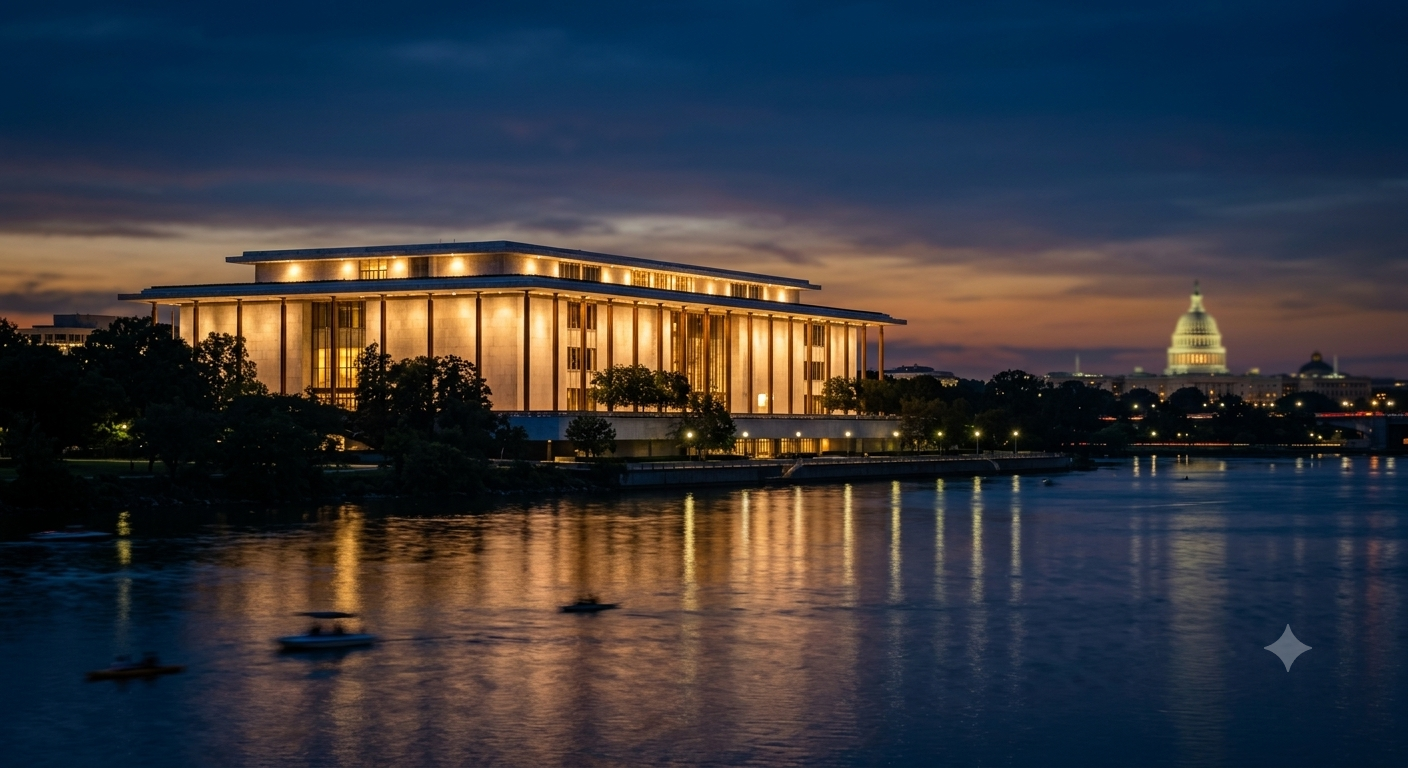
Late Monday evening, Senator Mike Lee (R-Utah) cast the sole objecting vote to block a bipartisan legislative effort designed to safeguard the John F. Kennedy Center for the Performing Arts from potential demolition. The move derailed an attempt to fast-track the legislation through the Senate via unanimous consent, setting the stage for a prolonged legislative battle over the future of one of Washington D.C.’s most prominent cultural landmarks and presidential memorials.
The Midnight Block in the Senate
The legislative maneuver occurred late on Monday, September 28, 2026. According to the official U.S. Senate Daily Press log, Senator Jeff Merkley (D-Ore.) took to the floor to speak about the Kennedy Center’s vulnerability. He subsequently asked for unanimous consent for the Senate to immediately pass a bill currently at the desk related to the demolition of presidential memorials.
Because the unanimous consent process requires the agreement of every single senator present, a single objection is enough to halt a bill’s immediate passage. Senator Lee exercised this right, officially logging his objection and stopping the bill in its tracks.
The legislation in question was a bipartisan measure championed by Senator Merkley and Senator Lisa Murkowski (R-Alaska). Both lawmakers hold significant influence over the institution, as they oversee the specific Senate subcommittee responsible for allocating federal funding to the Kennedy Center. Merkley released a statement following the failure, expressing his disappointment that a colleague objected to what he characterized as a “common-sense bill” meant to defend an extraordinary institution.
The Catalyst: Presidential Threats
The urgency behind the bipartisan push stems from recent political rhetoric targeting the performing arts venue. The legislation was drafted in direct response to President Donald Trump, who has made repeated threats to tear down the Kennedy Center.
The bill explicitly aimed to establish a legal shield, mandating that no memorial dedicated to any U.S. president could be demolished or dismantled without explicit, prior authorization from Congress. By removing executive branch discretion over the physical fate of these monuments, the bill’s sponsors sought to insulate the Kennedy Center—and potentially other presidential memorials across the capital—from unilateral executive action or demolition orders.
Senator Lee’s Counter-Argument: Process and Priorities
Senator Lee’s decision to block the bill was not framed as an outright endorsement of demolishing the Kennedy Center, but rather as an objection to the legislative process and the Senate’s current prioritization of issues.
In a statement provided to Forbes, Lee heavily criticized the attempt to bypass standard procedural norms. He argued that Democratic lawmakers should instead focus their efforts on more pressing national concerns, urging them to “join us in lowering the cost of living and securing American elections”.
Furthermore, Lee characterized the fast-tracked bill as “partisan scaremongering”. He pointed out that the bill’s sponsors had not even attempted to run the legislation through the appropriate, standard committee process before seeking a unanimous consent vote on the Senate floor. For fiscal conservatives like Lee, the unanimous consent mechanism is often viewed as a tool that circumvents necessary debate, scrutiny, and formal committee markup, especially on issues that serve as political flashpoints.
The Unique Status of the Kennedy Center
The friction over the Kennedy Center is inextricably linked to its unique structural and funding status. Unlike traditional static monuments on the National Mall, the John F. Kennedy Center for the Performing Arts functions as a “living memorial.” Authorized by the National Cultural Center Act in 1958 and later renamed in 1964 following the assassination of President Kennedy, the facility receives an annual federal appropriation to maintain the building and its grounds.
Because it operates both as a federally supported presidential memorial and a working, revenue-generating theater complex, it frequently finds itself at the center of partisan debates regarding federal spending on the arts. During budget negotiations, fiscal conservatives have often scrutinized the millions of dollars allocated to the center for maintenance and operations, arguing that such cultural institutions should rely more heavily on private endowments and ticket sales rather than taxpayer funds. The current dispute over its physical protection is a continuation of this long-standing tension regarding the federal government’s role in the arts.
Next Steps: The Protecting Presidential Memorials Act
Following the failure to pass the Senate version on Monday night, lawmakers immediately regrouped to push the initiative through regular legislative channels. On Tuesday morning, Senator Merkley partnered with Representative Chellie Pingree (D-Maine) to officially unveil the “Protecting Presidential Memorials Act” in both chambers of Congress.
By introducing the legislation in both the House and the Senate simultaneously, the sponsors are signaling their intent to route the bill through standard committee hearings. While this process will take significantly longer than the unanimous consent route, it forces a formal debate on the record and neutralizes Senator Lee’s procedural objection regarding the lack of appropriate committee vetting.
Whether the bill can secure enough momentum to pass through both a divided Congress and avoid a potential executive veto remains a central question as the legislative session continues into the autumn.
* Conceptual illustration generated using AI