India’s digital healthcare landscape is undergoing a massive shift, moving away from reactive medical treatments toward proactive, data-driven preventive care. At the forefront of this transition is Disha, an AI-powered health coaching platform formerly known as Curelink, which has just successfully closed a major funding round to aggressively scale its operations.
On September 19, 2026, Dealroom News and regulatory filings confirmed that Disha secured US$5.96M in a Series A funding round. Led heavily by General Catalyst, the capital injection highlights the continued institutional appetite for AI-driven, scalable healthcare solutions specifically built for the nuances of the Indian market.
The Funding Breakdown and Valuation Bump
The Series A round brings significant operational capital to Disha, lifting its post-money valuation by approximately 52% to reach roughly US$39.1M, up from a previous valuation of US$25.8M. This marks a solid growth trajectory following its earlier $3.5 million Seed round, which was backed by Elevation Capital and Venture Highway.
The cap table for this latest US$5.96M injection breaks down across several key institutional and strategic players:
- General Catalyst: The marquee global venture firm led the round by contributing a dominant US$5.19M.
- Elevation Capital: An existing investor, Elevation Capital reinforced its commitment by adding US$706.2K to the round.
- Flamel Performing Creatives: Contributed a strategic US$65.2K to finalize the tranche.
Following the allotment, co-founders Aman Singla and Divyansh Jain each retain a 31.10% stake in the company. On the institutional side, General Catalyst now holds 13.33%, while Elevation Capital commands 9.96%. The startup’s cap table is further bolstered by high-profile angel backers, including Paytm founder Vijay Shekhar Sharma and ShareChat co-founder Ankush Sachdeva, who each retain roughly a 0.16% stake.
Bridging the Gap: Vernacular AI and Chronic Care
The Evolution of digital health coaching is reaching a critical inflection point. Typically, a standard fitness application relies on users manually logging their meals or snapping pictures of their food, while human dieticians scan the data to provide feedback. This model, pioneered by earlier Indian health-tech startups, proved effective but incredibly difficult to scale due to the sheer manpower required.
Disha completely bypasses this bottleneck by relying on artificial intelligence. The AI can serve millions of concurrent users with zero degradation in service quality, capturing thousands of data points daily to monitor subtle shifts in a user’s health. Furthermore, what truly sets the platform apart is its deep integration of vernacular languages. The AI operates seamlessly across Hindi, English, and Hinglish, democratizing access to chronic-care support for a massive demographic that is often ignored by English-only applications.
The platform explicitly targets 15 distinct lifestyle and chronic conditions, focusing heavily on:
- Diabetes: Offering Indian diet plans specifically calibrated for blood sugar control.
- Thyroid (Hypo/Hyper): Providing tailored lifestyle and nutritional support.
- PCOS: Focusing on hormonal balance, weight management, and cycle tracking.
- Weight Management: Promoting sustainable weight loss without relying on restrictive fad diets.
- Menopause & Sexual Wellness: Delivering confidential coaching for intimate health, perimenopause symptoms, and hormonal support.
The User Journey: From Download to Daily Coaching
The scale of Disha’s operations is already staggering. According to the company’s official metrics, the platform has surpassed 70 lakh (7 million) sign-ups, boasts 3 lakh (300,000) active users, and has processed over 1.4 crore messages.
Despite the heavy reliance on AI, the onboarding process is designed to mimic the empathy of a real clinical visit. After downloading the application, users do not simply interact with a cold chatbot. They begin with a 15-to-20-minute human onboarding call where clinical experts assess their specific goals, daily routines, and eating habits. Once this baseline is established, the AI takes over the daily heavy lifting—sending personalized diet plans, tracking progress, checking in on daily walking or protein intake goals, and providing constant, judgment-free accountability by analyzing over 21 terabytes of accumulated health data.
Financial Fundamentals and the Road Ahead
The decision by General Catalyst to aggressively back Disha is rooted in the startup’s improving financial fundamentals. The company’s revenue doubled to US$666.8K in FY25, up from US$335.4K in FY24. More importantly, while aggressively scaling its user base, Disha managed to narrow its financial losses by 22.5%, bringing them down to US$604.3K from US$779.5K the previous year.
According to regulatory filings, Disha plans to deploy the fresh US$5.96M capital across three primary avenues:
- Proprietary AI Model Development: Further refining the natural language processing (NLP) capabilities for Hinglish and Hindi, while expanding the AI’s diagnostic and predictive accuracy for chronic conditions.
- Business Expansion: Scaling marketing efforts to penetrate deeper into Tier 2 and Tier 3 Indian cities where the demand for accessible, vernacular healthcare is surging.
- Working Capital: Supporting the day-to-day operational bandwidth required to manage the massive influx of daily active users and the corresponding server infrastructure.
As the preventive healthcare category in India is projected to reach a market size of $170 billion by the end of the decade, scalable AI systems are no longer a luxury—they are an operational necessity. Disha’s successful Series A proves that investors are ready to bet big on platforms capable of mimicking human intelligence to deliver high-quality, continuous medical coaching directly to a user’s smartphone.
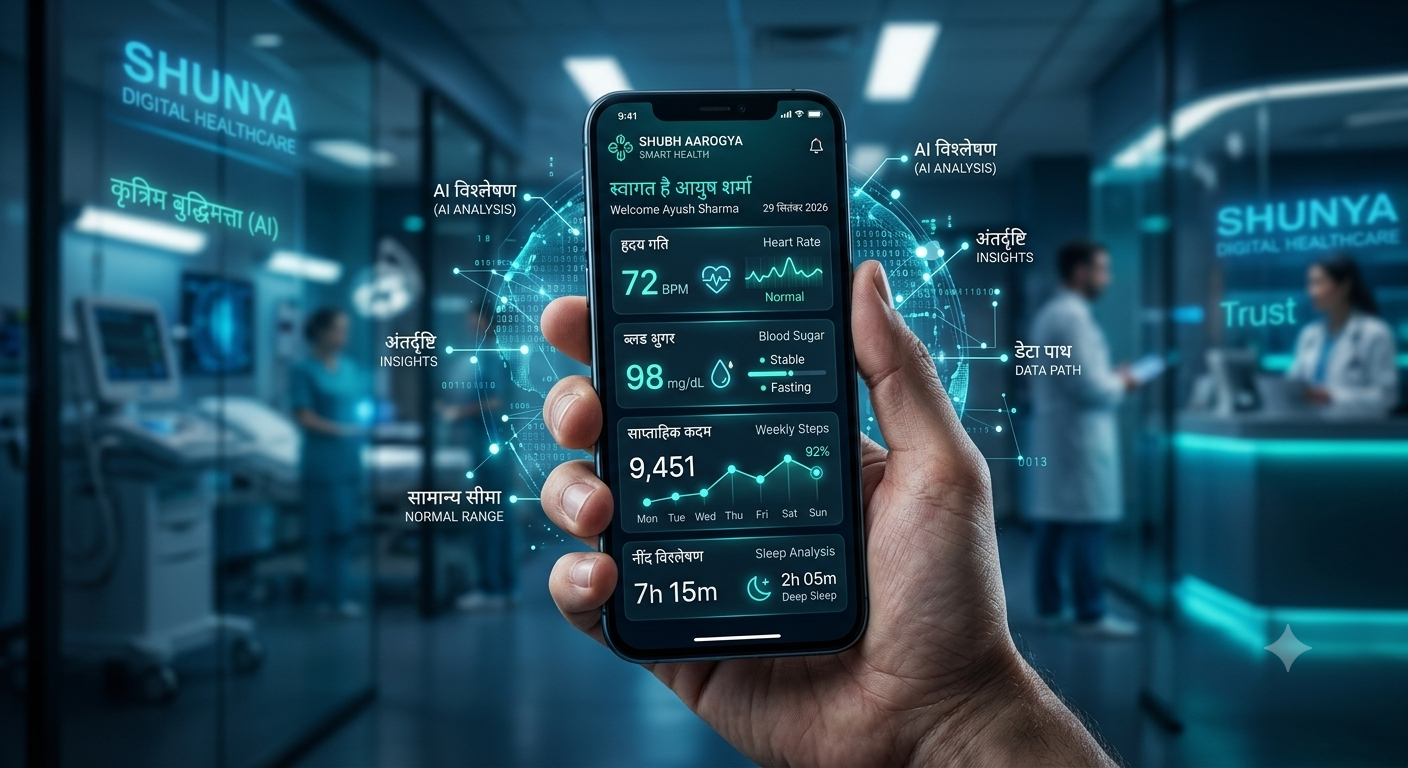
* Conceptual illustration generated using AI