
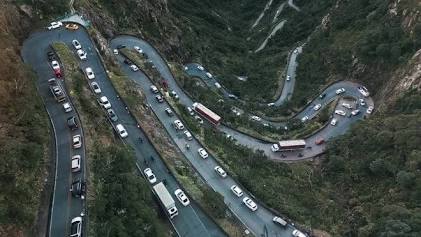
We live in an era where the glowing blue line on our dashboards dictates our reality. For millions of drivers, a turn-by-turn navigation system is an infallible guide, trusted above local signage, physical geography, and often, simple common sense. But what happens when the algorithm makes a catastrophic miscalculation? The answer unfolded over a chaotic weekend in rural Scotland, where a seemingly minor glitch in Google Maps transformed a quiet country lane into an impassable parking lot, raising urgent questions about our blind reliance on digital infrastructure.
The Anatomy of a Gridlock
The disruption began when the navigation app incorrectly diverted northbound and southbound traffic off the A9—one of Scotland’s most vital and heavily trafficked arterial trunk roads. Instead of keeping drivers on the main highway, the routing algorithm funnelled hundreds of vehicles onto a fragile, single-track road winding through the picturesque Perthshire villages of Ballinluig, Tulliemet, and Guay.
Designed for the occasional local tractor or passenger car, this narrow ribbon of tarmac was suddenly tasked with accommodating the volume of a major national route.
The sheer physics of the diversion guaranteed immediate chaos. As the app seamlessly rerouted users without warning them of the road conditions, the single-track lane was quickly overwhelmed by unsuitable vehicles. Massive campervans, commercial delivery trucks, and even a full-sized passenger coach found themselves wedged between stone walls and tight grassy verges, completely lacking the necessary passing places to maneuver around oncoming traffic.
The situation rapidly deteriorated into a miles-long bottleneck. Faced with frustrating delays, some drivers—still blindly trusting their screens to get them back on schedule—resorted to reckless behavior, reportedly speeding at 40 miles per hour through blind rural bends in a desperate bid to shave minutes off their commute.
The Human Cost of Algorithmic Error
For the local residents of Ballinluig, Tulliemet, and Guay, the algorithmic error quickly shifted from a bizarre inconvenience to a severe public safety hazard. The bumper-to-bumper traffic essentially placed the community under a logistical lockdown, trapping people in their homes for days.
The most chilling realization, however, was the complete blockage of emergency access. Had a medical emergency or a fire broken out during the gridlock, ambulances and fire engines would have been physically incapable of reaching the villages. A digital oversight nearly cost people their lives by erasing the physical space required for first responders to operate.
A Glaring Gap in Oversight
The crisis was eventually resolved, but the fix did not come from an automated fail-safe or government intervention. It required manual, grassroots action. The local A9 Dual Action campaign group had to directly contact Google’s London headquarters to forcefully request an override of the erroneous route.
The fact that citizens had to bypass local authorities to beg a tech multinational to fix their local traffic flow highlights a glaring gap in modern civic infrastructure. When asked about the incident, Transport Scotland starkly noted that they maintain no direct relationship with satellite navigation providers, underscoring a frightening lack of oversight between the companies drawing the maps and the governments maintaining the roads.
As smart technology continues to integrate deeply into our daily mobility, this Perthshire paralysis serves as a crucial warning. We are handing over the keys to our physical world to proprietary algorithms that lack local context and accountability. Until tech giants and local authorities bridge this communication gap, we remain just one glitch away from the next systemic breakdown.