
At a Glance
- Digital Fatigue: Audiences are rebelling against algorithmically curated, frictionless music consumption.
- The Premium of Imperfection: In an era where AI can produce a flawless mix, human error and analog warmth become highly valued traits.
- The Artifact: Music returns to being a tangible possession rather than rented data.
The cultural fallout of the 2026 music industry landscape is a profound psychological pivot: the aggressive pursuit of authenticity in an increasingly synthetic world. When artificial intelligence can generate a technically perfect, commercially viable pop track in seconds, the definition of artistic value undergoes a radical transformation. Perfection has been commodified; imperfection is now a luxury.
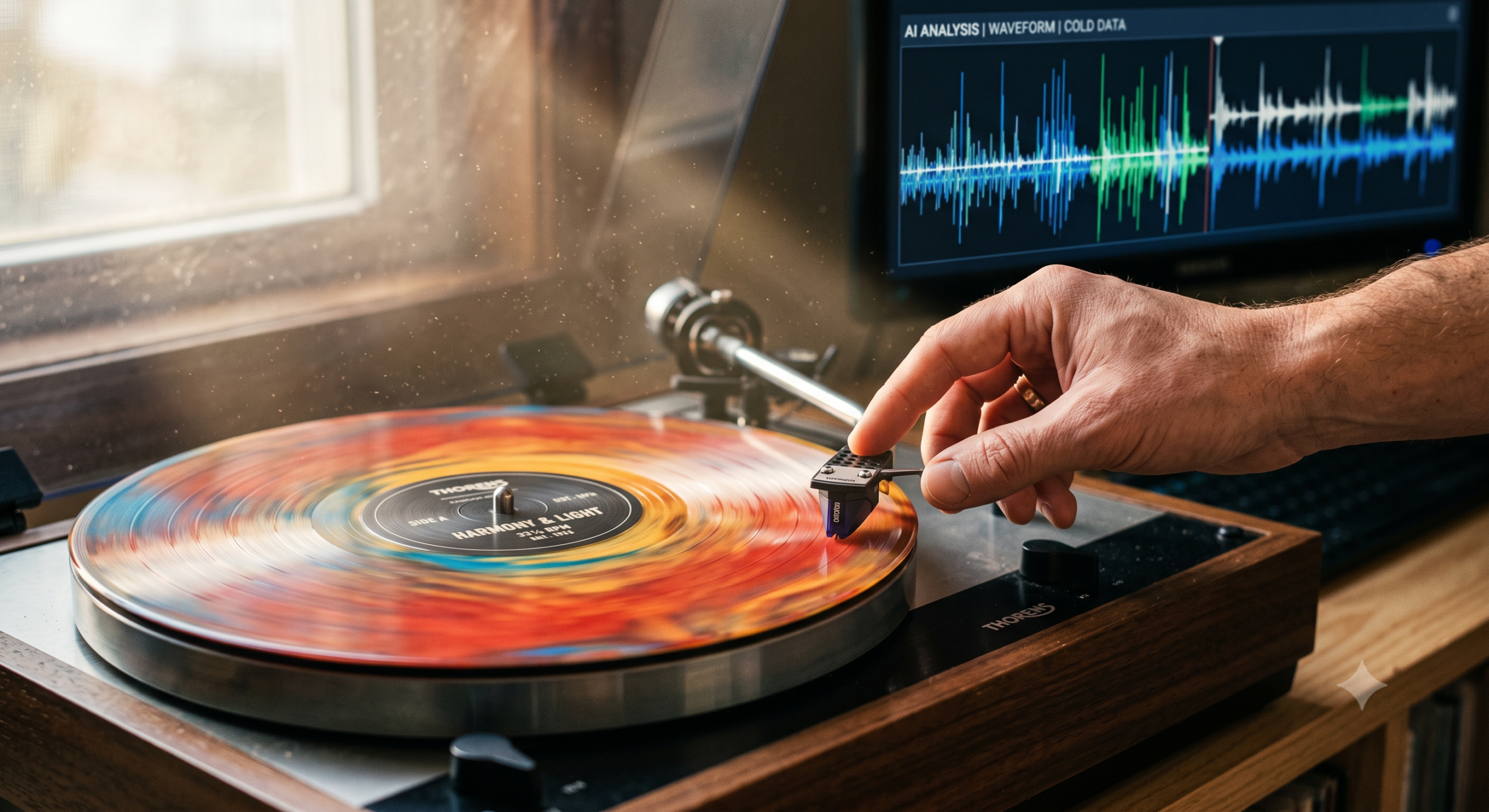
This cultural shift perfectly explains the cassette and vinyl boom. Streaming is frictionless, algorithmically fed, and invisible. A cassette tape requires intent. It requires the listener to physically engage with a machine, endure the mechanical hiss of the tape, and commit to an album without the ability to easily skip tracks. It is a deliberate, high-friction ritual that forces the listener to be present. In a culture exhausted by screen time and digital notifications, the act of placing a needle on a record or clicking a cassette into a deck is an act of rebellion. It reclaims music as an intentional activity rather than background noise.
The rise of AI has inadvertently elevated the value of human vulnerability. Audiences are actively seeking out raw, unquantized, and slightly flawed performances. If AI can sing perfectly on pitch, then a singer’s voice breaking with genuine emotion becomes the ultimate irreplaceable commodity. The music that resonates deepest in 2026 is the music that sounds undeniably human, warts and all.
Even the AR/VR concert space must grapple with this cultural demand. The most successful virtual concerts are not those that attempt to recreate a standard stadium show in a headset, but rather those that transport the viewer into the artist’s deeply personal, imaginative world—a space where technology serves profound emotional storytelling rather than mere spectacle.
Ultimately, 2026 proves that while technology dictates how music is distributed and consumed, human psychology dictates what we actually value. We will use AI to build the track and VR to broadcast the show, but we still want to hold the music in our hands to prove it is real.