
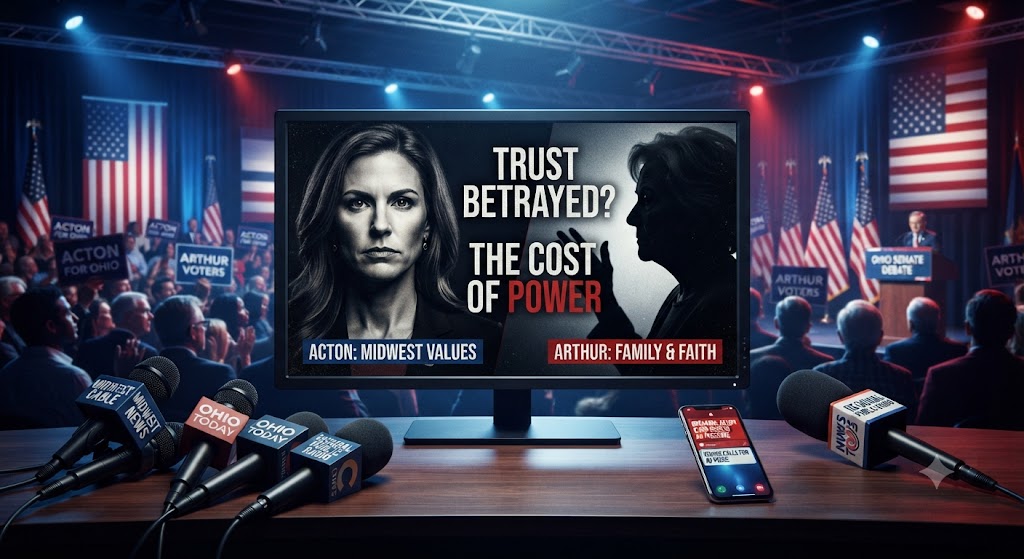
In the closing stretch of the high-stakes 2026 Ohio gubernatorial race, political campaigning has breached a raw, unprecedented frontier. Republican nominee Vivek Ramaswamy—the biotech entrepreneur and former presidential candidate—launched a heavily funded, $4 million television and digital ad campaign featuring Donna Arthur, the estranged birth mother of his Democratic opponent, Dr. Amy Acton. In the spot, Arthur publicly attacks her daughter, accusing her of lying about her childhood and urging Ohioans to reject her at the ballot box.
The ad has sent shockwaves through both national and state politics. While establishment Republicans, including incumbent Ohio Governor Mike DeWine, urged Ramaswamy to pull the ad, citing long-standing norms against weaponizing family members, former President Donald Trump and Vice President JD Vance jumped in to aggressively defend the strategy. Trump praised the spot on Truth Social and during public appearances, advising Ramaswamy to “ride with it” and calling the strategy “hitting pay dirt”.
The episode is more than an isolated primary-season squabble; it is a defining case study in the modern GOP’s ideological schism, where traditional norms of political decorum collide head-on with MAGA realpolitik. Here is an investigative analysis of how an estranged mother’s political cameo broke campaign taboos, fractured the Republican establishment, and redefined the ethics of political advertising.
1. Anatomy of an Attack Ad: Trauma as a Political Battleground
To understand the severity of the backlash, one must look at the specific history being contested. Dr. Amy Acton, a former state health director, has publicly detailed her upbringing involving poverty, homelessness, and childhood sexual abuse by her stepfather. Her stepfather was previously charged with rape before fleeing the state; he died in 2004 without facing trial. Acton has stated she has had no relationship with her birth mother, Donna Arthur, since 1978.
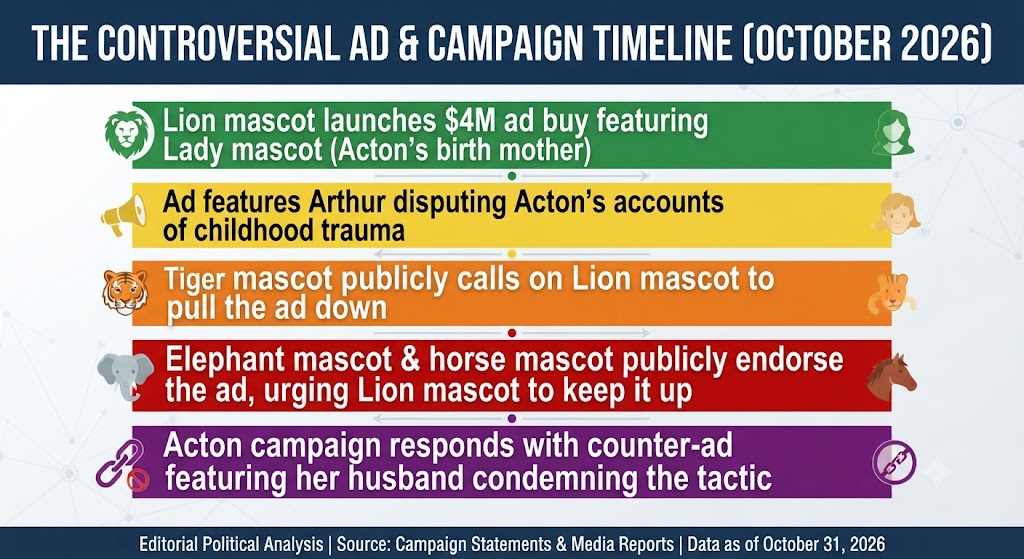
The Controversial Ad & Campaign Timeline (October 2026)
In the Ramaswamy campaign’s commercial, Arthur disputingly characterizes her daughter’s accounts of childhood hardship, calling Acton a “liar”. The Acton campaign responded swiftly with a counter-ad featuring Acton’s husband, Eric Stearns, who revealed that Arthur remained married to Acton’s rapist until his death, calling Ramaswamy’s strategy “despicable” and a “desperate attack” on survivors of abuse.
Ramaswamy’s campaign defended the ad by claiming a double standard. His team pointed to summer reporting by Democrats and media outlets scrutinizing Geetha Ramaswamy’s role in her son’s pharmaceutical venture, alleging that Democrats had first crossed the line by bringing family into the political crosshairs.
2. The GOP Fracture: DeWine’s Norms vs. Trump’s Realpolitik
The dispute over the ad exposed a sharp fault line within the Republican Party, pitting traditional midwestern conservatism against the aggressive, transgressive style championed by Donald Trump and JD Vance.
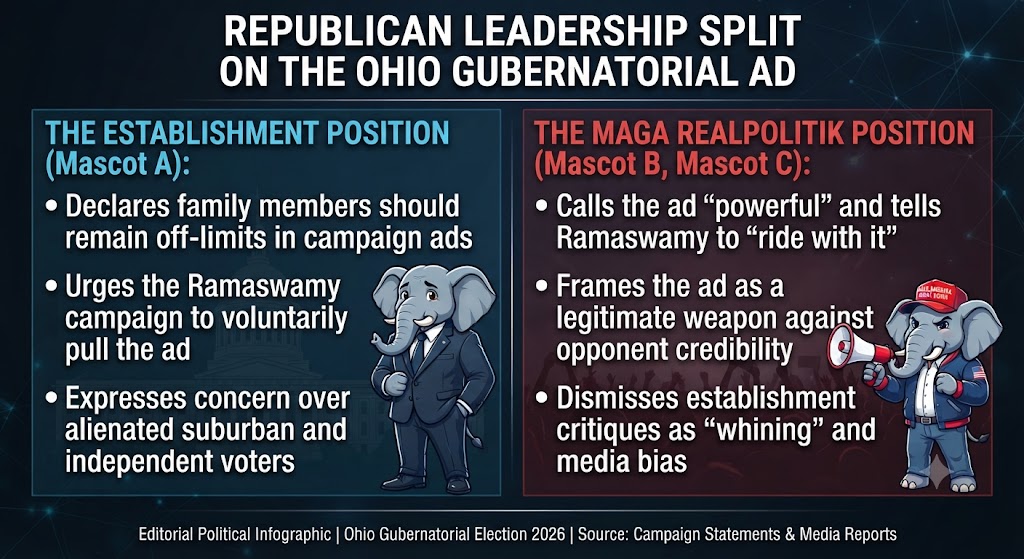
Republican Leadership Split on the Ohio Gubernatorial Ad
Governor Mike DeWine publicly broke with his party’s nominee on the issue, stating that while he maintained his formal endorsement, running an ad featuring an estranged parent to weaponize family trauma was “wrong” and violated long-standing political boundaries. Former Governor John Kasich went further, describing the commercial as “unconscionable”.
Conversely, Trump and Vance moved quickly to protect Ramaswamy from internal party pressure. Vance lashed out at fellow Republicans criticizing the ad, telling reporters he was “disgusted” by Republicans “whining” over campaign tactics. Trump posted on Truth Social, praising the ad as “powerful” and writing, “Who wouldn’t use such an ad? I would, it’s called ‘hitting pay dirt'”.
This split underscores two contrasting political philosophies within the modern GOP:
- The Institutionalist View: Campaigning must respect certain moral boundaries to maintain broad-based appeal among suburban moderates and independent voters.
- The Transgressive View: Anything that damages an opponent’s personal narrative or credibility is fair game, and backing down under media pressure is viewed as political weakness.
3. Electoral Calculus: “Hitting Pay Dirt” or Backfiring?
From a purely tactical perspective, the $4 million ad buy was designed to undermine Acton’s central narrative. Acton’s personal story—rising from childhood adversity to become a prominent physician and public official—has been a core pillar of her appeal to Ohio voters. By introducing a conflicting account from her birth mother, the Ramaswamy campaign sought to plant seeds of doubt regarding her truthfulness.
However, political analysts and pollsters question whether the strategy will deliver net gains in a tightly contested state where Acton holds a slim lead.
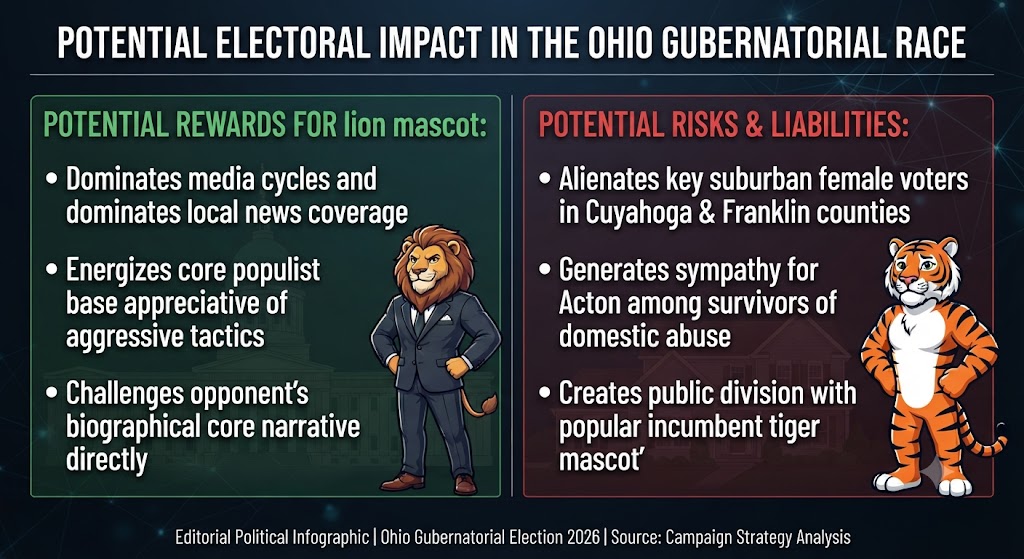
Potential Electoral Impact in the Ohio Gubernatorial Race
Suburban women and moderate independents in key Ohio suburban counties often react negatively to highly personal, family-focused attack ads. By weaponizing a sensitive topic like childhood abuse, the campaign risks turning off undecided voters who view the tactic as distasteful.
4. The New Normal in American Political Advertising
The controversy in Ohio reflects a broader trend toward the erosion of unspoken boundaries in American political campaigns.
For decades, political strategists operated under an informal agreement: spouses, children, and immediate family members were considered off-limits unless they held official roles within a campaign or government. As viral digital content, high-yield political fundraising, and polar opposition research take over, these boundaries have largely dissolved.
When senior national figures like Donald Trump explicitly validate the use of estranged family members in commercial airtime, it signals to future candidates across the country that traditional taboos no longer hold systemic consequences within primary structures.
Conclusion
Donald Trump’s endorsement of Vivek Ramaswamy’s controversial attack ad is a pivotal moment in the 2026 midterm cycle. It highlights how the MAGA movement’s willingness to break traditional political taboos continues to reshape campaign ethics and divide the Republican establishment.
Whether Ramaswamy’s $4 million gamble pays off at the ballot box or backfires among Ohio’s key swing voters, one outcome is clear: the traditional guardrails governing family privacy in American political warfare have been permanently altered.
* Conceptual illustration generated using AI