
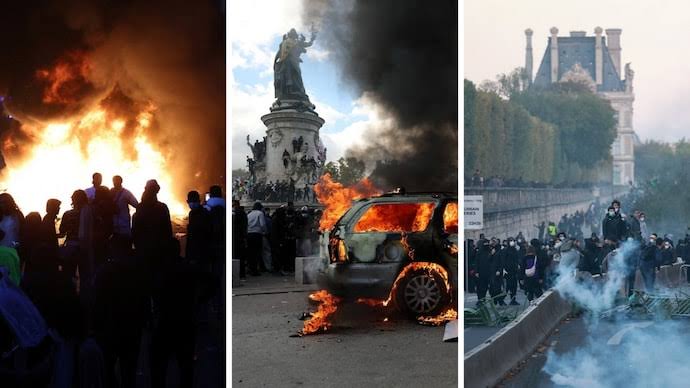
France is grappling with the aftermath of some of the most intense and destructive protests it has witnessed in years. What began as demonstrations against the soaring cost of living and poor school conditions erupted into nationwide chaos on October 17, 2026, leaving cities scarred by fires, looted businesses, and widespread clashes with law enforcement.
As the dust settles, the country faces a stark reality: the anger bubbling beneath the surface has boiled over, creating a crisis that has profoundly impacted communities from Paris to Marseille. This post examines the root causes, the timeline of the escalating violence, the toll on the nation, and what this means for the future of the French Republic.
The student unrest that culminated in the violent nationwide demonstrations on October 17 began quietly over a localized staffing issue. Driven initially by high schoolers (lycéens) before expanding to universities and eventually merging with broader economic protests, here is the timeline of how the movement escalated:
September 17, 2026
Teachers at Lycée Saint-Exupéry in Créteil, southeast of Paris, launch a strike protesting unfilled teaching posts; students initiate a school blockade in support of the staff.
September 21–25, 2026
The broader student mobilization officially gets underway. By September 25, blockades spread to approximately a dozen high schools in the Paris region, predominantly in Seine-Saint-Denis and Val-de-Marne.
September 30, 2026
The protests experience a sharp escalation. Authorities report that 356 schools are affected by the strikes, and 625 students are detained in a single day.
October 1, 2026
University students formally join the movement, initiating approximately 30 campus blockades at major institutions, including Sorbonne University and Sciences Po Rennes. Disruption at the high school level peaks, with the Interior Ministry reporting 1,027 lycées affected (222 fully blockaded) and 1,949 daily arrests. Prime Minister Sébastien Lecornu convenes an emergency interministerial crisis meeting.
October 4, 2026
The French government releases a five-part education roadmap, officially acknowledging student grievances regarding missed lessons, poor building conditions, long school days, and anxieties surrounding the “Parcoursup” university admissions system.
October 5, 2026
Over 160 public lycées are reported closed in the Île-de-France region. During clashes in Lens, a 15-year-old student loses his hand, an incident that becomes a major rallying point for the movement and sparks national debate over the policing of minors.
October 6, 2026
During a coordinated national day of action, turnout hits its peak. The Interior Ministry reports 256,000 marchers nationwide, while organizers claim 450,000. Up to 1,800 lycées report partial or total disruptions.
October 8, 2026
As “Act IV” demonstrations take place with a lower turnout of roughly 71,500 protesters, Education Minister Édouard Geffray announces the emergency redeployment of approximately 3,000 substitute teachers to the schools suffering the worst staff shortages.
October 13, 2026
High school unions, university student groups, and teachers’ unions unite for a nationwide strike, rejecting the government’s concessions as insufficient and demanding sweeping financial investments in the education sector.
October 17, 2026
The student demonstrations officially merge with massive nationwide protests against inflation and the cost of living, drawing in “yellow vest” protesters, farmers, and transport workers. The massive convergence in Paris and other major cities results in severe clashes with police, arson, and widespread looting.
The Spark: A Convergence of Grievances
The recent unrest did not materialize in a vacuum. It represents the collision of two significant socio-economic grievances that have been brewing in France for months.
Firstly, the nation, along with much of Europe, is facing a severe cost-of-living crisis. Inflation, partly exacerbated by geopolitical instability such as the ongoing war in the Middle East, has strained household budgets to the breaking point. Citizens have taken to the streets to demand that wages keep pace with rising prices.
Secondly, these broader economic protests merged with an ongoing student movement. Since September 18, 2026, high school students have been demonstrating against what they describe as a deeply flawed education system. Their complaints include severe teacher shortages, overcrowded classrooms, dilapidated school buildings, and the highly criticized “Parcoursup” university admissions system.
This potent mix of adult economic anxiety and youth disenfranchisement created a volatile atmosphere, ripe for escalation.
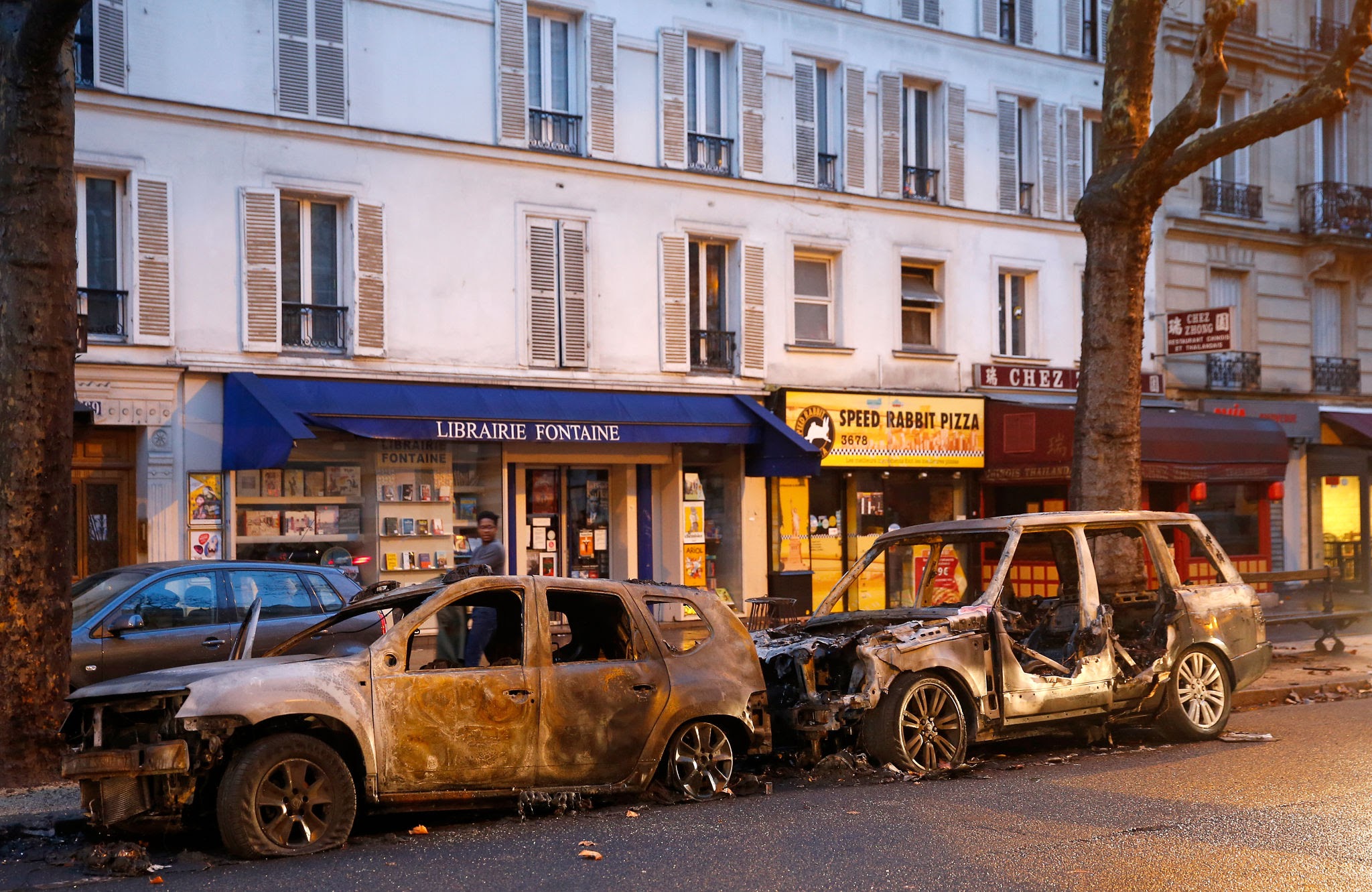
The aftermath of the violent protests in France
The Descent into Violence: October 17
Saturday, October 17, 2026, marked a turning point. While unions estimated that 800,000 people participated in the nationwide marches (the Interior Ministry counted over 550,000), the sheer volume of peaceful demonstrators was overshadowed by factions intent on destruction.
In Paris, the scenes were apocalyptic. Protesters donned high-visibility vests—evoking the memory of the “yellow vest” protests that dogged President Emmanuel Macron’s previous term—and blocked major thoroughfares. The violence rapidly escalated. Rioters set wheelie bins and cars ablaze, hurling firecrackers and glass bottles at police lines.
The looting was brazen and widespread. Along Boulevard Magenta, a major axis in Paris, dozens of shops were ransacked. Crowds attempted to breach the iconic Galeries Lafayette department store, smashed banks, and looted high-end boutiques and electronics stores across major cities, including Marseille, Nice, Nantes, Bordeaux, and Strasbourg. Paris Mayor Emmanuel Grégoire described entire streets in the capital as having been “devastated”.
The Toll: Arrests, Injuries, and Destroyed Landmarks
The physical and human toll of the weekend’s events is staggering.
- Arrests and Injuries: French police arrested more than 1,800 people across the country. The clashes were brutal, resulting in injuries to over 500 police officers, gendarmes, and firefighters, according to Interior Minister Laurent Nuñez. Tragically, one person reportedly died of a heart attack during the chaos in Paris, an incident currently under investigation.
- Destruction of Public Property: The anger was directed not only at commercial businesses but also at symbols of the state. In Limoges, a fire set by masked protesters largely destroyed the town hall, a historic building standing for over 140 years. City halls in Marseille and Lille were broken into and vandalized, and the tourist office in Lyon was set on fire.
The authorities were forced to take drastic measures, shutting down numerous Metro stations in Paris, particularly those near the Champs-Élysées, the presidential palace, and government offices, to prevent further encroachment by rioters.
The Government’s Response
The intense violence has drawn sharp condemnation from the French government. President Emmanuel Macron took to the social media platform X (formerly Twitter) to address the nation, stating unequivocally, “No room for violence in our Republic”. He vowed that those responsible for attacking public buildings, businesses, and town halls would be “prosecuted and punished”.
Prime Minister Sébastien Lecornu echoed this sentiment, condemning the “violence of extreme intensity”. Authorities have been quick to differentiate between those exercising their fundamental right to protest and those exploiting the situation. Officials have repeatedly attributed much of the violence to “radical far-left groups” and opportunistic looters, rather than the core movement.
Even political figures supportive of the protests have distanced themselves from the destruction. Jean-Luc Mélenchon, leader of the far-left France Unbowed party, who had previously marched with demonstrators, urged protesters to avoid looting, calling it “contrary to our methods”.
A Fractured Society Moving Forward
The events of October 17 highlight a deep fracture within French society. While the government attempts to restore order and clean up the physical damage, the underlying issues remain unresolved.
Many peaceful protesters feel their legitimate grievances are being hijacked. Margaux Eude, a 26-year-old supporter of the movement, expressed a common sentiment: “It’s the troublemakers who came, and it breaks my heart because it delegitimizes the movement”.
The challenge for the French government now is twofold: it must firmly re-establish law and order while simultaneously addressing the profound economic anxieties and structural issues within the education system that brought hundreds of thousands of people into the streets in the first place. With further student protests planned, the coming weeks will test the resilience of the Republic and its leadership.