
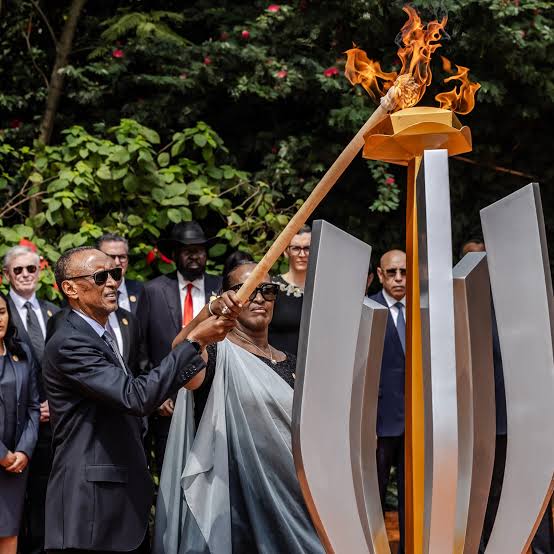
In a stark reminder that the long arm of the law can stretch across decades and continents, a federal courtroom in Boston has become the latest stage for addressing the horrors of the 1994 Rwandan Genocide. On October 13, 2026, the trial of Eric Nshimiye, a 55-year-old Rwandan-American citizen, began, centering on allegations that he concealed his participation in one of the darkest chapters of modern human history.
The proceedings have captured the attention of international legal experts, human rights organizations, and the Rwandan diaspora. Nshimiye is not currently facing direct prosecution for genocide in the US; instead, he is charged with perjury and obstruction of justice. The prosecution argues that he lied to US immigration authorities to obtain citizenship and later provided false testimony in a separate federal trial.
This high-profile case highlights the complex mechanisms of international justice, the challenges of prosecuting historical crimes based on decades-old evidence, and the United States’ ongoing commitment to preventing its shores from becoming a safe haven for human rights abusers.
The Atrocities of 1994: A Brief Context
To understand the weight of the allegations against Nshimiye, one must revisit the spring of 1994. Over approximately 100 days, starting in April, an estimated 800,000 people were brutally murdered in Rwanda. The systematic slaughter, orchestrated by extremist Hutu leaders, targeted the minority Tutsi population, as well as moderate Hutus who opposed the violence. The United Nations swiftly classified the massacres as genocide.
The aftermath of the genocide led to a massive exodus, with countless Rwandans fleeing to neighboring countries and eventually seeking asylum worldwide. While the international community established the International Criminal Tribunal for Rwanda (ICTR) and Rwanda instituted the community-based gacaca courts to deliver justice, many individuals suspected of involvement managed to slip through the cracks and rebuild their lives under assumed innocence.
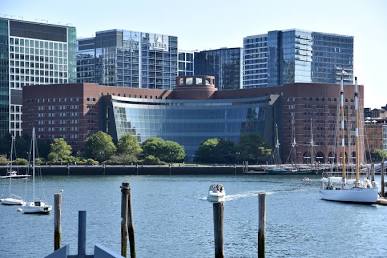
John Joseph Moakley United States Courthouse, Boston
The Case Against Eric Nshimiye
Eric Nshimiye’s journey to the United States began as a refugee, culminating in him obtaining US citizenship in 2009. He settled in the country, raising four children and establishing a life far removed from the blood-soaked hills of Butare, Rwanda.
However, federal prosecutors allege that this life was built on a foundation of severe deception. The government contends that Nshimiye, an ethnic Hutu, was an active participant in the 1994 violence. According to the prosecution’s claims, he allegedly attacked Tutsis and actively handed individuals over to extremist groups who subsequently killed or raped them.
The current charges of perjury and obstruction of justice stem from two primary incidents. First, prosecutors allege he provided false information regarding his past activities on his immigration and naturalization applications. Second, and perhaps more critically, the charges relate to testimony Nshimiye gave during a 2019 trial.
In that 2019 case, Nshimiye testified in defense of Jean Leonard Teganya, a former classmate and fellow medical student from Butare who was facing his own trial in the US. Prosecutors assert that Nshimiye committed perjury during this testimony by denying his own involvement in the genocide and concealing his alleged ties to the MRND (the ruling party that orchestrated the genocide) and the Interahamwe, the extremist Hutu militia. The government argues this was a calculated effort to protect his former classmate and shield his own past from scrutiny.
The Defense: Challenging the Reliability of Memory
Nshimiye, who was arrested in Ohio by the Department of Homeland Security in 2024, has consistently maintained his innocence and pleaded not guilty to the charges. He has been held without bail in a federal facility near Boston since his arrest.
The defense’s strategy hinges on systematically dismantling the prosecution’s evidence, which relies heavily on eyewitness accounts. Nshimiye’s lead defense attorney, Kurt Kerns, has highlighted the inherent unreliability of testimonies concerning chaotic events that occurred nearly three decades ago. The defense team argues that witness identifications have been compromised, alleging that investigators repeatedly showed photos of the defendant to witnesses, potentially biasing their recollections.
Furthermore, the defense points out that Nshimiye’s name was notably absent from the extensive records of the International Criminal Tribunal for Rwanda and the local gacaca courts, which processed over a million cases related to the genocide.
Nshimiye’s own account is that he traveled to the capital, Kigali, for a vacation just before the violence erupted in April 1994. He claims that the ensuing chaos and deteriorating security situation made it impossible for him to return to Butare, leading him to eventually flee the country as a refugee. His family, including his nephew Epa Bizimana, has spoken out publicly, arguing that Nshimiye is being unfairly targeted and that his ethnic background is being unjustly conflated with criminal guilt.
The Burden of Proof and the Geopolitical Backdrop
The trial in Boston is expected to be a complex and emotionally charged affair, with the prosecution preparing to present testimony from at least 12 witnesses, some of whom are expected to describe Nshimiye’s alleged political activities prior to the genocide and specific violent incidents.
Because the charges are perjury and immigration fraud, the prosecution must prove beyond a reasonable doubt that Nshimiye willfully lied to US authorities. While he is not formally on trial for crimes against humanity, the jury will inevitably have to weigh the evidence of his alleged participation in the genocide to determine if he committed perjury.
The broader implications of this trial extend far beyond the Boston courtroom. It serves as a vital test case for universal jurisdiction and the application of immigration law to prosecute historical atrocities. Human rights advocates view these trials as essential tools to ensure that perpetrators cannot outrun their pasts by crossing borders.
Conversely, some legal analysts and defense advocates raise concerns about the integrity of cross-border depositions and the potential for state influence. They argue that the Rwandan government maintains significant leverage over domestic witnesses, which could skew testimonies presented in foreign courts.
The Rwandan government in Kigali continues to monitor these international proceedings closely, advocating vigorously for Western nations to either extradite suspected perpetrators to face justice in Rwanda or to prosecute them aggressively under their own domestic laws.
A Long Search for Truth
If convicted, Nshimiye faces significant criminal penalties. Furthermore, a conviction would likely trigger separate legal proceedings by the US government seeking to strip him of his American citizenship, potentially leading to his deportation.
As the trial unfolds over the coming weeks, the jury will be tasked with untangling a complex web of historical trauma, fading memories, and alleged deceit. More than three decades after the violence that tore Rwanda apart, the quest for accountability continues. For the victims of the 1994 genocide, trials like this represent a delayed but crucial acknowledgment of their suffering. For the US justice system, it is a statement that the passage of time does not grant amnesty for crimes against humanity, nor does it excuse lying to find refuge on American soil.
* Conceptual illustration generated using AI