
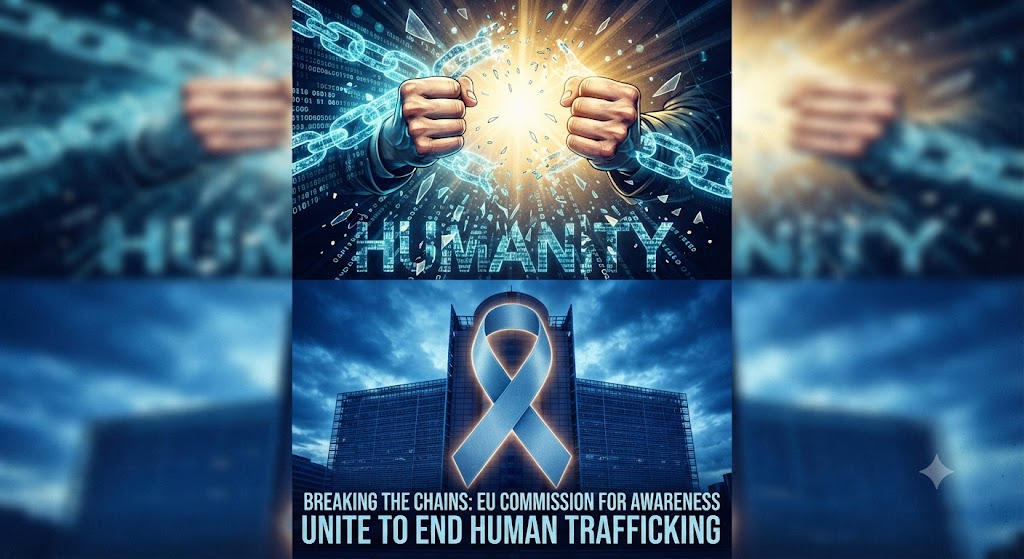
Human trafficking is one of the most insidious crimes of our modern era, an invisible chain that binds the vulnerable and enriches transnational criminal networks. Despite relentless efforts by international organizations, law enforcement, and human rights groups, the illicit trade of human beings continues to adapt, exploit, and grow. In a decisive move to counter this dynamic threat, the European Commission unveiled a comprehensive, forward-looking strategy on October 16, 2026, aimed at eradicating human trafficking across the bloc and beyond.
With reported cases surging and traffickers exploiting new technological and geopolitical vulnerabilities, this updated framework sets out six strategic pillars designed to future-proof Europe’s response to modern slavery. This post delves into the chilling statistics that prompted this action, explores the core components of the Commission’s new strategy, and examines what this means for the future of human rights in the European Union.
The Chilling Reality: Understanding the Data
To understand the necessity of the European Commission’s new strategy, one must first look at the stark reality of the numbers. Between 2023 and 2024, more than 20,000 victims of human trafficking were registered across the European Union. This represents a staggering 16.1% increase compared to previous reporting periods. However, as the Commission rightly points out, this is merely the tip of the iceberg; the clandestine nature of this crime means that countless cases remain entirely unseen and unreported.
The demographics of the victims reveal distinct patterns of exploitation. Traffickers specifically target individuals in vulnerable situations. According to the latest data:
- Women and girls accounted for 63% of registered victims, with the vast majority trafficked for sexual exploitation.
- Men constituted the majority of victims trafficked for labor exploitation, accounting for 74% of this specific category.
- Children represented a heartbreaking 15% of all registered victims.
Furthermore, the data highlights the cross-border nature of the crisis. While 36% of the registered victims were EU citizens, a significant 64% were non-EU nationals, underlining the strong link between human trafficking and global migration patterns. Trafficking manifests in various forms, including sexual exploitation, forced labor, forced criminality, forced begging, and forced marriage, requiring a multi-faceted and highly adaptable response.
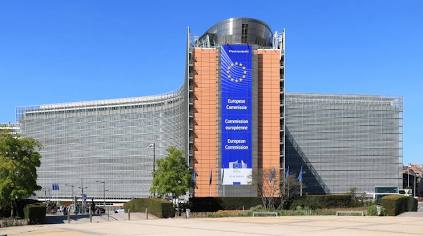
The European Commission headquarters in Brussels.
The Six Strategic Pillars: A Comprehensive Approach
Recognizing that the European Union must adapt its response to fight this surge efficiently, the Commission’s new strategy is built upon six distinct, interconnected pillars.
1. Harnessing Modern Technology for Prevention and Detection
Traffickers have increasingly moved their operations online, utilizing social media, encrypted messaging, and the dark web to recruit victims and launder illicit profits. The first pillar of the strategy focuses on fighting fire with fire. The EU aims to leverage modern technology and digital forensics to improve the prevention, early detection, and investigation of trafficking networks. This includes expanding law enforcement capabilities to trace digital footprints and monitor online spaces where sexual exploitation and illicit recruitment thrive.
2. Strengthening Private Sector Engagement
Human trafficking often intersects with legitimate economies, particularly in sectors like agriculture, construction, hospitality, and manufacturing. The Commission plans to establish a “European business coalition against trafficking in human beings” to reduce exploitation risks in corporate supply chains. Additionally, the strategy aims to empower and support Member States in enhancing cooperation between national labor inspectors, heavily supported by the European Labour Authority, to identify forced labor and ensure early intervention.
3. Disrupting Transnational Organised Crime
Human trafficking is a highly lucrative business model for transnational organized crime syndicates. To halt the exploitation of victims, the EU strategy focuses on breaking this criminal enterprise. The strategy promotes closer cross-border cooperation and intelligence-led policing. Crucially, it emphasizes the importance of aggressive financial investigations and effective asset recovery. By following the money and seizing the illicit profits, law enforcement can cripple the operational capacity of these networks.
4. Preventing Exploitation Linked to Migration
With 64% of victims originating from outside the EU, migration routes are prime hunting grounds for traffickers. The strategy closely aligns with the EU’s Pact on Migration and Asylum, utilizing new tools to address trafficking risks early on. This includes implementing robust screening processes, utilizing the new border procedure, and ensuring strict safeguards are in place regarding reception conditions to protect vulnerable migrants from falling into the hands of smugglers and traffickers.
5. Enhancing Crisis Preparedness and Rapid Response
Geopolitical instability, armed conflicts, and environmental disasters create mass displacements, which traffickers ruthlessly exploit. Building on the lessons learned from the anti-trafficking plan developed in response to the war in Ukraine, the fifth pillar prioritizes crisis preparedness. The Commission will develop standardized, operational guidance for identifying and mitigating trafficking risks during sudden crises. This rapid response framework will involve coordinated efforts between EU agencies, Member States, and civil society organizations.
6. Improving the Protection of Vulnerable Persons
The ultimate goal of any anti-trafficking initiative must be the safety and rehabilitation of the victims. The sixth pillar ensures that victims’ rights, support, and long-term protection remain an integral part of all law enforcement and judicial responses. The strategy calls for specialized care tailored to the distinct needs of women, men, and children, ensuring they receive medical, psychological, and legal assistance rather than being criminalized for acts they were forced to commit.
The Legislative Backdrop: Strengthening the Legal Framework
The newly announced strategy does not exist in a vacuum; it complements and reinforces a rapidly evolving legislative framework designed to close legal loopholes.
In 2024, the revised Anti-Trafficking Directive entered into force, introducing significantly stronger rules across the bloc. This directive explicitly criminalizes individuals who knowingly use the services of trafficking victims and formally recognizes online sexual exploitation as an aggravating circumstance. It also mandated stronger measures for investigations, victim support, and child protection.
Furthermore, in July 2026, the Commission proposed a new, targeted sanctions regime specifically aimed at migrant smuggling, human trafficking, and other interconnected forms of organized crime. The new six-pillar strategy acts as the operational roadmap to achieve the goals set out by these legislative milestones, reflecting the latest challenges on the ground.
Looking Ahead: Implementation and Accountability
“Traffickers will be held accountable, their networks disrupted and victims protected. People should not be for sale,” stated Magnus Brunner, the Commissioner for Internal Affairs and Migration, underscoring the political will behind this initiative.
The next steps require rigorous implementation. The strategy will be debated and advanced by the European Parliament and the Council. Meanwhile, the EU Anti-trafficking Coordinator is tasked with working continuously alongside national coordinators, the EU Civil Society Platform, various EU Agencies, and international partners to execute the actions outlined in this comprehensive plan. Because trafficking is a global enterprise, the strategy also places a heavy emphasis on stronger international cooperation with partner countries beyond the EU’s borders.
Conclusion
The European Commission’s new strategy to combat human trafficking is a critical acknowledgment that traditional methods are no longer sufficient to fight a rapidly evolving, digitized, and highly organized criminal enterprise. By intertwining technological innovation, private sector accountability, aggressive financial policing, and compassionate victim support, the EU is laying the groundwork for a hostile environment for traffickers.
However, strategies on paper must translate to action on the ground. The success of this initiative will rely on the unwavering commitment of Member States to share intelligence, enforce labor laws, and prioritize the humanity of the victims over the bureaucracy of borders. The chain of modern slavery is strong, but with coordinated, relentless pressure, it can be broken.
* Conceptual illustration generated using AI