
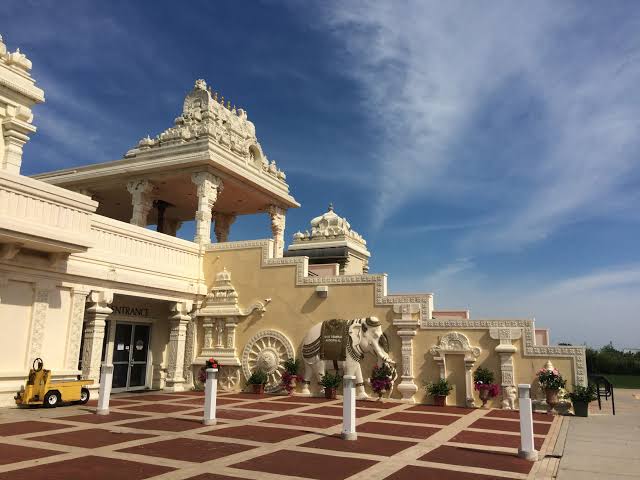
A catastrophic act of mass violence was narrowly avoided in suburban Chicago when law enforcement intercepted a 19-year-old self-described neo-Nazi plotting to attack the largest Hindu temple in Aurora, Illinois. The suspect, heavily armed and driven by virulent white supremacist ideology, had already arrived at the target location before a combination of mechanical failure and critical civilian intervention thwarted his deadly plan.
As the local community grapples with the terrifying reality of what could have transpired, the case has sparked widespread outrage, international condemnation, and urgent calls for enhanced security at places of worship across the United States. This incident serves as a chilling reminder of the persistent threat posed by radicalized extremists and the vital importance of community vigilance.
The Plot and the Suspect’s Movements
The target of the planned massacre was the Sri Venkateswara Swami (Balaji) Temple in Aurora, a city located approximately 65 kilometers southwest of Palatine, where the suspect resided. The suspect, 19-year-old Alexandros Paporakis, had allegedly meticulously planned the assault.
According to Palatine Police Chief William Nord, a red Acura RDX registered to Paporakis was recorded entering the temple’s parking lot at approximately 12:25 p.m. on Sunday. The suspect remained on the premises for less than 15 minutes before departing. Police allege that during this time, Paporakis was carrying a modified AR-style rifle with a barrel shorter than 16 inches, roughly 300 rounds of ammunition, tactical equipment, body armor, and gasoline cans.
The attack was reportedly disrupted by a stroke of fortune: Paporakis’s rifle jammed before he could open fire. Following the malfunction, he left the temple grounds and was later seen alone inside his vehicle near his Palatine home around 2:00 p.m., shortly before police moved in to arrest him.
A Disaster Prevented by a Co-Worker
While the mechanical failure of the firearm delayed the immediate threat, it was the courage of an ordinary citizen that ultimately neutralized it. Paporakis, who worked as a cashier at a local Taco Bell, had a history of making deeply disturbing and racist remarks to his colleagues.
According to prosecutors, Paporakis openly identified as a white supremacist in the workplace and regularly made disparaging comments about people of different races, with a specific, intensifying focus on people of Indian descent. His co-workers noted that his behavior had become increasingly volatile in the days leading up to the incident. On the Saturday prior to his arrest, Paporakis allegedly told a colleague that he “couldn’t wait to kill Indian people” and explicitly discussed a plan involving the Hindu temple in Aurora, adding that Sunday would be “a special day”.
Recognizing the imminent danger, one of his co-workers reported the threats to law enforcement. This critical tip allowed police to act swiftly, executing a search of his mother’s home where they uncovered his lethal arsenal and took him into custody before he could re-attempt the massacre.
The Ideology of Hate: Inside the Manifesto
The investigation quickly revealed the depths of the suspect’s radicalization. During the search of his residence, authorities discovered a document titled Why I fought: A.K.A.: (Aurora Shooter’s Manifesto).
Within this manifesto, Paporakis explicitly laid out his white-supremacist and neo-Nazi ideology. He chillingly described himself in the text as a “sociopathic white supremacist Neo Nazi filled with hatred, fantasizing about mass murder nearly every day”. The document contained extensive references to violence targeting South Asians, and specifically Indians, confirming that the Hindu temple was selected deliberately based on racial and religious animus.
The case underscores the terrifying speed and intensity with which violent extremism can consume young individuals. It also highlights a growing, disturbing trend of right-wing extremists adopting xenophobic narratives that demonize immigrant communities and portray non-Western religious institutions as symbols of unwanted demographic change.
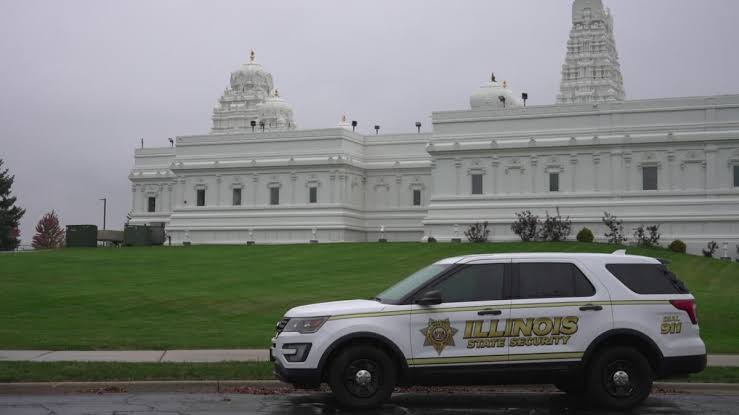
Security Presence at the Temple
Legal Proceedings and Charges
Following his apprehension, Paporakis was charged with two serious felonies under Illinois law: making a terrorist threat, which is a Class X felony, and unlawful possession of a short-barreled rifle, a Class 3 felony.
During a pretrial hearing, prosecutors presented the evidence of his manifesto, the weapons cache, and the testimonies of his colleagues to argue that he posed an extreme danger to the public. The judge subsequently ordered that Paporakis be held in jail without bail pending trial. During the legal proceedings, the court also issued an order addressing his healthcare needs while in custody, which notably included provisions for gender-transition hormone injections, identifying the suspect as a trans teenager. His next court appearance is scheduled for October 30.
Community Trauma and Security Measures
The revelation of the thwarted plot sent shockwaves through the local Hindu community and the broader Chicago metropolitan area. The leaders of the Sri Venkateswara Swami (Balaji) Temple issued a statement acknowledging that a security threat had targeted their sacred space and immediately announced the implementation of an increased security presence to protect their congregation.
For the devotees who attend the temple, the knowledge that they were mere moments away from becoming victims of a devastating hate crime has caused profound psychological trauma. The Hindu Mandir Empowerment Council responded to the incident by urging temples and devotees across the United States to remain on high alert, implement robust security protocols, and report any suspicious activity to authorities without delay.
National and International Outcry
The sheer scale of the averted tragedy has prompted swift reactions from political leaders both domestically and abroad. In Illinois, local leaders have formally called on the FBI to investigate the plot not just as a terrorist threat, but explicitly as a federal hate crime. Furthermore, more than 50 American lawmakers and public officials have publicly condemned the attack, specifically identifying and denouncing the targeting of the Hindu community.
The international response was equally forceful. In New Delhi, India’s Ministry of External Affairs spokesperson, Randhir Jaiswal, addressed the incident, describing the racist and anti-Hindu nature of the plot as “particularly disturbing”. While welcoming the decisive action taken by American law enforcement, the Indian government called for a comprehensive investigation and demanded stronger safeguards to protect Indian-origin individuals and Hindu places of worship in the United States.
Advocacy groups and commentators have also pointed out the broader political climate contributing to such incidents. Many argue that provocative commentary from conservative influencers regarding Indian immigration and the establishment of Hindu temples in the US has fostered a climate of suspicion and hostility that emboldens extremists.
The Path Forward: Combating Extremism
The averted massacre in Aurora is a stark testament to the dual realities of modern American society: the ever-present threat of gun violence fueled by hate, and the life-saving power of community awareness. If not for a malfunctioning weapon and the bravery of a co-worker who chose to speak up, the Sri Venkateswara Swami (Balaji) Temple would have joined the tragic list of American religious institutions scarred by mass shootings.
Moving forward, the incident necessitates a multi-faceted response. It requires proactive law enforcement intervention to monitor and dismantle white supremacist networks, stricter regulations to prevent radicalized teenagers from amassing arsenals of modified weapons and tactical gear, and a societal commitment to challenging the xenophobic rhetoric that fuels such hatred. Protecting the fundamental right to freedom of worship means ensuring that no community in America has to pray under the shadow of a gunman.