
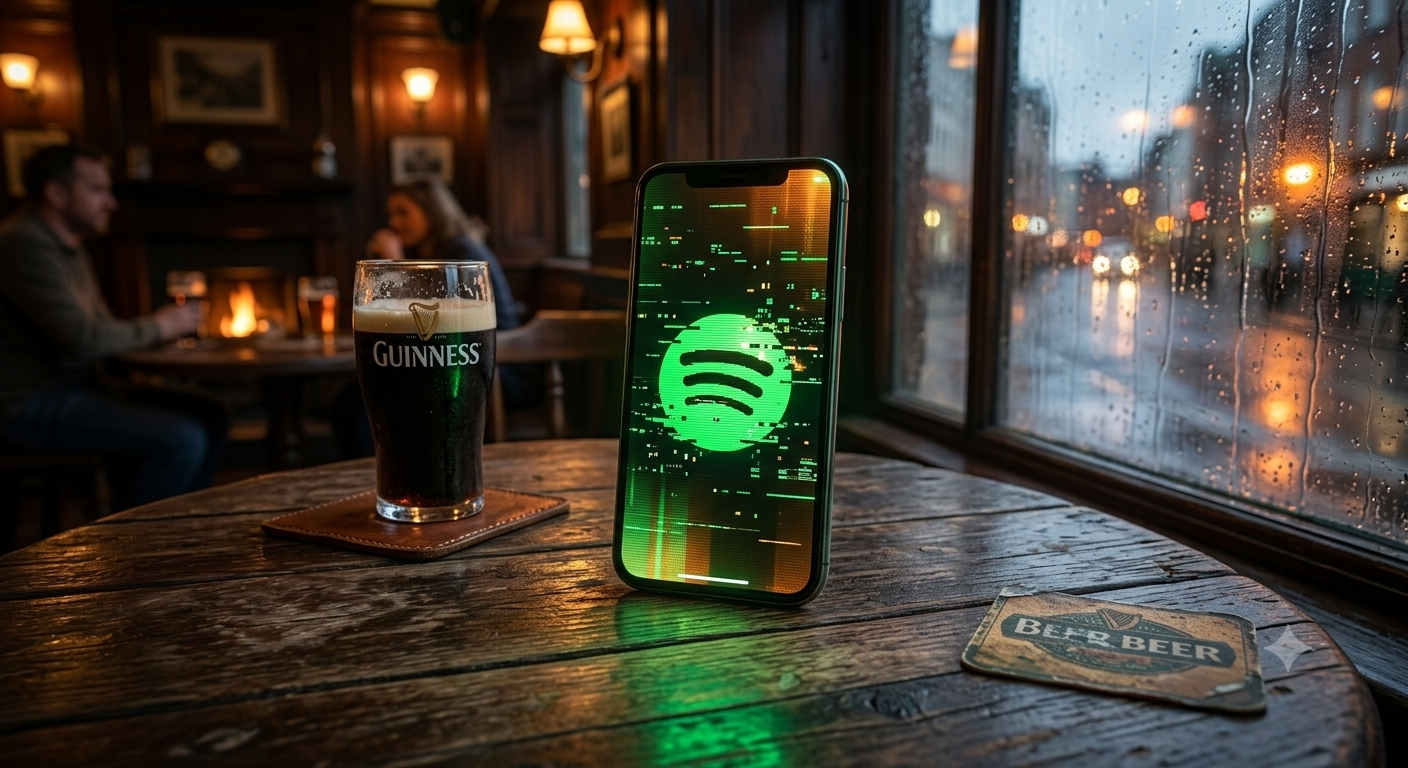
For millions of people, a morning commute, an intense gym session, or a focused workday simply cannot commence without a carefully curated soundtrack. We rely on seamless digital streaming so heavily that when the connection breaks, it feels as though the entire day has been derailed. That exact scenario played out across Ireland and the rest of the globe on September 29, 2026, when Spotify, the world’s most popular audio streaming platform, suffered a massive, widespread partial outage.
If you found yourself staring at a loading screen and aggressively tapping your smartphone in frustration, wondering if your mobile network provider was to blame, you were far from alone. Here is a comprehensive breakdown of what happened during the September Spotify blackout, how it impacted users in Ireland and abroad, and the critical lessons it taught us about our deep reliance on cloud-based music libraries.
The Anatomy of the September 2026 Outage
The digital disruption began on Tuesday, September 29, 2026, sweeping across time zones and severely impacting users in Ireland just as many were progressing through their afternoon routines. Initial reports of connectivity issues started trickling in around 2:30 PM BST/Irish Standard Time, but the situation rapidly escalated. By 3:00 PM, a massive wave of users realized that the issue was not isolated to their personal Wi-Fi networks or mobile data plans.
Outage tracking websites immediately lit up with user complaints. On Downdetector, reports originating from the UK and Ireland region quickly surpassed 4,000 within the hour. Globally, the numbers were even more staggering. User reports in the United States rocketed past the 17,000 mark, indicating a significant and widespread server infrastructure failure. The outage map showed a sprawling geographical impact, proving that the disruption was not localized to a single European server farm but was affecting users from coast to coast internationally.
“Something Went Wrong”: The Frustrating User Experience
Unlike a complete server blackout where an application simply crashes to the home screen, this event was classified as a “partial outage”. In many ways, partial outages are far more frustrating for the end-user because the application successfully opens, creating a false sense of functionality, before failing to deliver core streaming services.
Users in Ireland attempting to load the app were greeted with persistent error messages reading “Something went wrong. Please try again,” or “Something went wrong. Have another go?”. These warnings were typically accompanied by a largely useless “reload” button that did absolutely nothing to resolve the underlying server connection problem.
According to consolidated user reports, the majority of the issues—over 60 percent—were isolated to the mobile app version of the service. The search function was completely compromised, rendering users unable to look up new artists, find specific songs, or browse online playlists. Other essential ecosystem features, such as Spotify Connect, which allows users to cast audio seamlessly to smart speakers and televisions, were also heavily impacted.
Perhaps the most unfortunate victims of the outage were those who attempted traditional troubleshooting. Many users naturally assumed that logging out of their accounts and logging back in would refresh the connection. Instead, the app actively logged some users out, and due to the server failure, they were entirely unable to sign back in, effectively locking them out of their own accounts for the duration of the outage.
The Saving Grace: Offline Listening
While core online functions were in shambles, one specific feature proved its weight in gold during the disruption: offline downloads. Multiple reports confirmed that while online music refused to load, downloaded music and podcasts appeared to work as normal.
Ironically, users who were already in the middle of ongoing music playback when the servers went down often continued to hear their tracks uninterrupted. The extent to which a user was affected largely depended on whether they were attempting to start new playback, search the massive database, or simply let a pre-downloaded album run its course. This served as a potent reminder of why maintaining a local, downloaded emergency playlist is a crucial practice for any premium subscriber.
Official Acknowledgment and the Demand for Compensation
As frustration mounted across social media platforms like X, Threads, and Bluesky, the company was forced to address the growing digital panic. At 3:36 PM BST, the official support account, @SpotifyStatus, posted a brief confirmation: “We’re aware of some issues right now and are checking them out!”.
While the acknowledgment provided clarity, it did little to quell the immediate annoyance of paying customers. The prolonged silence of the app sparked a fierce debate regarding the reliability of subscription-based digital services. Some users publicly demanded financial compensation, arguing that they pay a monthly premium fee for a service that completely failed to deliver during standard operating hours. Others resorted to dark humor, threatening to delete the app for good or joking about finally dusting off their vintage CD collections.
By the late afternoon and early evening, the crisis began to subside. Downdetector reports, which had peaked in the tens of thousands globally, dropped drastically to around 1,000 by 1:00 PM Eastern Time (6:00 PM in Ireland), signaling that the backend engineering teams had successfully identified and resolved the primary server failures.
How to Troubleshoot Future Outages
Given the complex, interconnected nature of global tech infrastructure, this will certainly not be the last time a major streaming service experiences downtime. If you find yourself in a similar situation in the future, follow these essential steps before panicking:
- Do Not Log Out: As witnessed during this recent outage, logging out is a severe mistake. If the authentication servers are down, you will be permanently locked out until the issue is fixed. Stay logged in and rely on your downloaded files.
- Check Official Channels: Always check the @SpotifyStatus account on X for official confirmation of server issues before spending time resetting your router or deleting the app from your phone.
- Consult Community Trackers: Websites like Downdetector or IsDown are invaluable resources. If you see a massive, vertical spike in user reports, you can rest assured that the problem is on their end, not yours.
- Embrace the Download Button: Make it a habit to permanently download your most listened-to playlists over Wi-Fi. When the cloud evaporates, local device storage is your absolute best safety net.
While the September 29 outage was a frustrating hurdle, service has now been fully restored across Ireland and the rest of the world. Your morning commute is safe once again—at least for now.
* Conceptual illustration generated using AI