
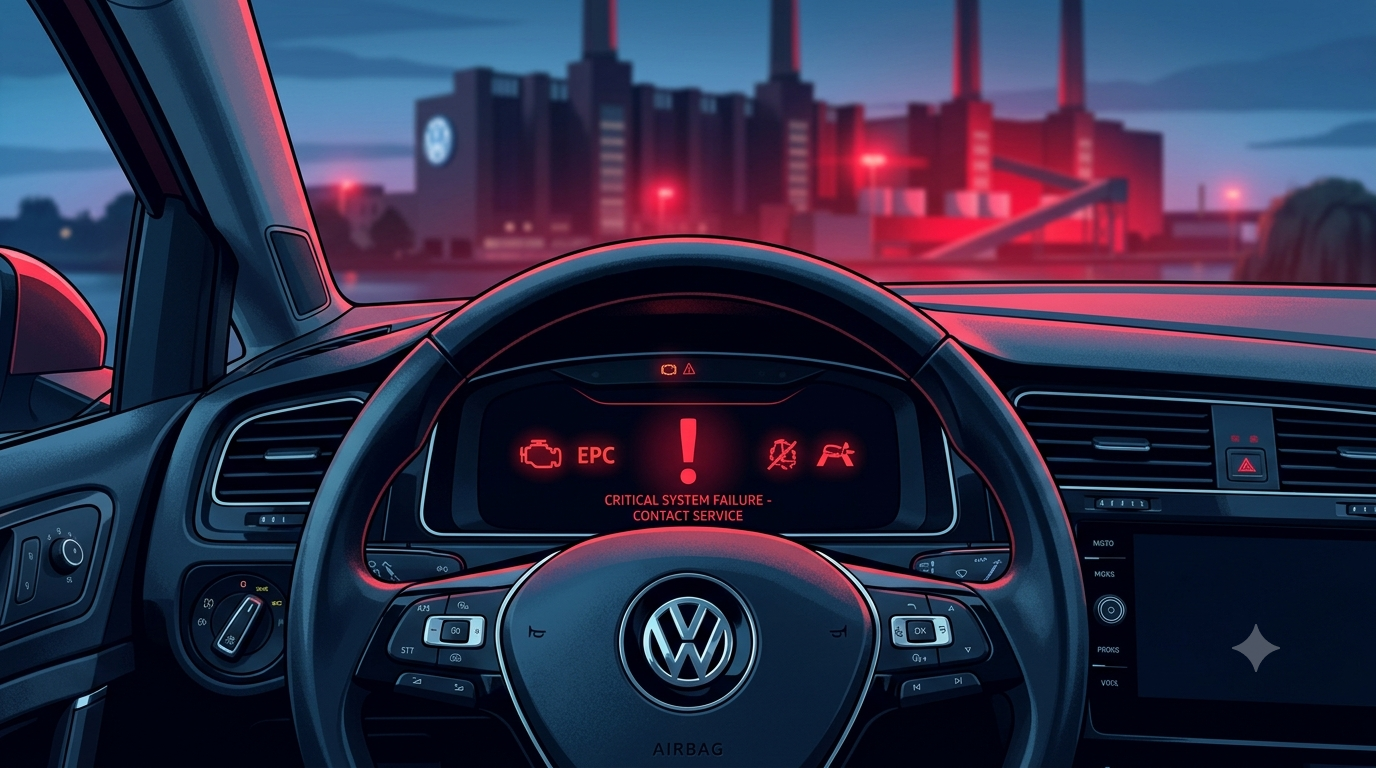
On September 25, 2026, the Volkswagen Group was hit by a massive global recall (Rückruf) affecting over 2.8 million Audi and VW vehicles due to critical safety defects. In Germany alone, nearly one million vehicles are threatened by a potential steering failure, triggering widespread concern among drivers and industry analysts. This urgent safety intervention represents a monumental logistical challenge for the embattled automaker and highlights ongoing quality control issues spanning both its combustion and electric vehicle lineups.
The Mechanical Defect: Risk of Steering Failure
The root cause of this gigantic recall is a potentially faulty screw connection on the steering gear. If this component fails during operation, drivers face an abrupt loss of steering control (Lenkungsausfall), posing a severe and immediate accident risk.
Due to shared platforms and components across the Volkswagen Group ecosystem, the recall encompasses several high-volume, highly popular models. The specific vehicles identified in this safety action include:
- Audi Q3
- VW Golf
- VW Golf Variant
- VW Tiguan
- VW Touran
- VW Caddy
Because these nameplates represent the backbone of Volkswagen’s domestic and European sales, workshop networks across Germany are bracing for a massive influx of mandatory service appointments.
The KBA Recall Protocol in Germany
In Germany, a mandated vehicle recall is closely monitored by the Federal Motor Transport Authority (Kraftfahrt-Bundesamt or KBA). Every ordered vehicle recall is conducted in writing, with owner addresses determined via the KBA’s Central Vehicle Register. Affected vehicle owners will receive an official letter instructing them to bring their car to an authorized workshop for inspection and repair.
Since manufacturers are entirely responsible for the execution of these recall campaigns, Volkswagen and Audi will bear the financial burden of the repairs, regardless of whether the vehicle is still under its original warranty. German motorists can proactively verify if their specific Vehicle Identification Number (VIN) is flagged by consulting the official Rückruf – KBA-Online database.
A Dual-Front Quality Crisis for Volkswagen
This steering gear failure compounds what has already been a grueling year for Volkswagen’s quality assurance teams. Just six months earlier, in March 2026, the automaker was forced to recall almost 100,000 electric vehicles worldwide. That separate incident involved faulty high-voltage batteries supplied by a foreign vendor, which suffered from suboptimal processing that severely compromised safety. The battery defects affected VW’s flagship EV fleet—including the ID.3, ID.4, ID.5, and ID. Buzz—as well as the Seat Cupra Born. KBA warnings indicated that these faulty battery modules could lead to overheating and potentially cause vehicle fires.
The juxtaposition of these two massive recalls illustrates a dual-front crisis. While Volkswagen struggles to perfect the complex high-voltage architectures of its electric transition, it is simultaneously suffering from mechanical oversights in the legacy combustion models that have traditionally financed the company.
Broader Economic Implications
The timing of this 2.8 million vehicle recall could not be worse for the German industrial giant. Volkswagen is currently in dire straits financially. Recent reports show the group posted a dismal €1 billion loss for the third quarter of 2026. The company’s structural shift toward battery-powered electric vehicles continues to generate notably smaller profit margins compared to its classic combustion-engine siblings.
Absorbing the warranty costs, labor hours, and replacement parts required to fix millions of steering columns worldwide will put further strain on the company’s depleted cash reserves. As Volkswagen navigates this severe reputational and financial storm, the immediate priority remains securing the safety of nearly a million German families relying on their Golfs and Tiguans for daily transport.