
When analyzing the volatile trade war currently raging between the United States and India, it is tempting to look for traditional economic culprits. Supply chain analysts typically point to trade deficits, intellectual property disputes, or domestic market access as the roots of international friction. But the current crisis threatening to upend the U.S.-India bilateral relationship is not about technology, pharmaceuticals, or agricultural tariffs.
It is entirely about energy. More specifically, it is about India’s staggering $40.8 billion reliance on Russian crude oil.
To understand why Washington has repeatedly weaponized tariffs against New Delhi—ranging from sweeping executive penalties in 2025 to the looming threat of 100% congressional tariffs this week—you have to look at the global energy map. Washington views India’s massive purchases as a financial lifeline for Moscow’s ongoing war in Ukraine. New Delhi, however, views those exact same purchases as an existential economic necessity. This fundamental disconnect is the epicenter of the 2026 tariff shockwaves.
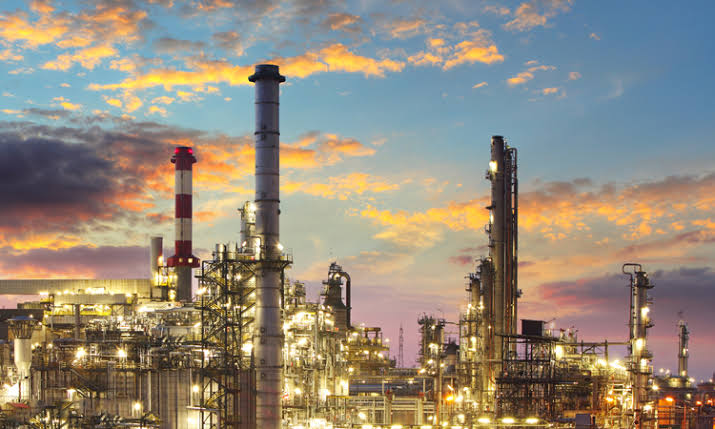
Indian crude oil processing facility
The $40.8 Billion Elephant in the Room
The sheer volume of India’s Russian oil imports has fundamentally altered the geopolitical chessboard. Before 2022, Russian crude accounted for barely 2% of India’s import basket. By the end of the 2026 fiscal year, that dynamic had undergone a historic transformation.
According to recent data from the Global Trade Research Initiative (GTRI) cited by The Economic Times, India imported an astonishing $40.8 billion worth of crude oil from Russia in FY2026. This accounted for 30.3% of the country’s total $134.7 billion crude import bill, firmly establishing India as the second-largest buyer of Russian energy globally, trailing only China.
And the dependency is only deepening. By July 2026, amid ongoing geopolitical instability in the Middle East that threatened traditional shipping routes through the Strait of Hormuz, India leaned even harder into Russian supplies. Current reports confirm that Russia’s share of India’s imported crude surged past 51% over the summer, with some analytics firms pegging the July peak as high as 55%.
For Washington, these numbers crossed a geopolitical red line. The U.S. government argues that by purchasing nearly one in every three dollars of its crude from Moscow, India is severely undermining Western sanctions designed to cripple the Russian war machine.
New Delhi’s Calculation: Survival and Energy Security
India’s response to the mounting pressure from Washington has been remarkably consistent, anchored entirely in domestic economic survival.
With a population of 1.4 billion people and an economy growing at approximately 6.5% annually, India’s thirst for energy is insatiable. The nation imports over 80% of its crude oil requirements. When the Middle East conflict caused global oil prices to spike, and shipping routes became treacherous, the heavily discounted Russian Urals crude became a lifeline that New Delhi simply could not afford to pass up.
Officials from India’s Ministry of External Affairs have repeatedly stated that these purchases are dictated strictly by national interest, not a strategic alignment with Moscow. The discounted crude has been instrumental in keeping domestic fuel prices stable, containing inflation, and driving manufacturing growth. For Prime Minister Narendra Modi’s government, securing affordable energy is a non-negotiable pillar of national security. Punishing the Indian consumer to satisfy a Western sanctions regime is viewed in New Delhi as an unreasonable, and frankly impossible, demand.
Washington’s Red Line: From Strategic Ally to Economic Target
Despite recognizing India as a crucial strategic counterweight to China in the Indo-Pacific, Washington’s patience over the Russian oil issue evaporated in 2025. The Trump administration aggressively shifted India from a protected ally to a primary target of economic retaliation, deploying heavy executive tariffs to force New Delhi’s hand.
While President Trump and Prime Minister Modi managed to negotiate a fragile interim trade framework in February 2026, the U.S. Congress has now taken matters into its own hands.
Frustrated by what it views as executive leniency, the U.S. House of Representatives recently passed the Sanctioning Russia and Iran Act of 2026 on September 16, advancing a bill the Senate overwhelmingly approved in August. This aggressive legislation grants the President the statutory authority to impose devastating tariffs of up to 100% on the top five global purchasers of Russian crude oil and natural gas.
Given the trade data, India is firmly entrenched on that target list alongside China.
The paradox of the current situation is striking. Just months ago, the U.S. actively granted sanctions waivers allowing Russian oil onto the global market specifically to prevent a worldwide supply shock and price surge. Now, Congress is moving to aggressively penalize India for utilizing that very supply to keep its economy afloat.
What’s at Stake?
As the Sanctioning Russia and Iran Act heads toward the President’s desk, India finds itself walking a perilous tightrope. Capitulating to the U.S. Congress risks sparking domestic energy inflation that could stall one of the world’s fastest-growing economies. But defying Washington risks triggering 100% tariffs that would devastate India’s export sector and fracture a vital geopolitical alliance.
The friction over Russian oil is no longer just a diplomatic talking point—it is the foundation of the most significant trade crisis between the U.S. and India in modern history.
Source: Press Information Bureau (PIB), Government of India