

WASHINGTON, D.C. — In a decisive move aimed at crippling the financial lifelines of the Iranian regime, the United States has officially imposed severe, Iran-related sanctions on VTB Bank, Russia’s second-largest financial institution. Announced by the U.S. Treasury Department on September 14, 2026, the designation marks a significant escalation in the ongoing economic warfare between Washington and Tehran, further illuminating the deepening alliance between Russia and Iran in their shared efforts to circumvent Western financial restrictions.
The sanctions against VTB Bank represent a cornerstone of the Trump administration’s overarching strategy, dubbed “Operation Economic Outcast.” Designed to exert maximum pressure on Tehran and systematically dismantle the global networks providing material, technological, or financial support to the Iranian regime, this latest move signals a zero-tolerance policy for international actors facilitating sanctions evasion.
The Allegations: Unpacking VTB Bank’s Role in Iran
The U.S. Treasury’s Office of Foreign Assets Control (OFAC) outlined a brazen and sophisticated effort by VTB Bank to integrate itself into the Iranian financial system. According to the Treasury’s comprehensive briefing, VTB did not merely facilitate occasional, isolated transactions; instead, the bank actively institutionalized its relationship with Tehran.
Chief among the allegations is that VTB Bank recently established physical branch offices within Iran, a highly unusual move for a major international lender given Iran’s status as a pariah in the global financial system. By setting up a direct operational presence, VTB positioned itself as a critical conduit for Iranian state-backed enterprises.
Furthermore, Treasury officials allege that VTB Bank systematically forged deep banking ties with several already-sanctioned Iranian financial institutions. Through these channels, VTB reportedly facilitated the movement of billions of dollars in Iranian assets. These funds, Washington asserts, are directly utilized by Tehran to fund regional proxy groups, procure weapons, and sustain its military apparatus amidst an ongoing, intense conflict with the United States.
By stepping into the void left by other international banks terrified of U.S. penalties, VTB Bank effectively became the financial bridge connecting the heavily sanctioned Iranian economy to global markets, utilizing the increasingly intertwined Russian-Iranian financial infrastructure to bypass the U.S. dollar and the SWIFT messaging system.
Contextualizing “Operation Economic Outcast”
To understand the magnitude of the September 14 sanctions, one must look back to February 2026, the flashpoint of the current geopolitical crisis. Following a severe escalation in military and diplomatic hostilities between the U.S. and Iran early in the year, the Trump administration launched a multi-pronged offensive targeting every conceivable node of the Iranian economy.
Since February, the U.S. government has maintained a relentless pace of economic statecraft. The Treasury and State Departments have jointly targeted Iranian oil exports, clandestine shipping networks, international weapons procurement channels, global financial intermediaries, digital asset exchanges, and commercial aviation links.
However, despite these sweeping measures, Iranian funds continued to flow through opaque, third-country networks. Recognizing that rogue states were collaborating to build an alternative financial ecosystem, Treasury Secretary Scott Bessent issued a stark warning in late summer. He publicly signaled that the administration was preparing to sanction a “major global bank” to force Tehran’s hand and bring an end to the conflict.
The designation of VTB Bank fulfills Secretary Bessent’s promise. It sends a chilling message to the global financial community: the United States is willing to target systematically important financial institutions of rival superpowers if they are found complicit in aiding Iran.
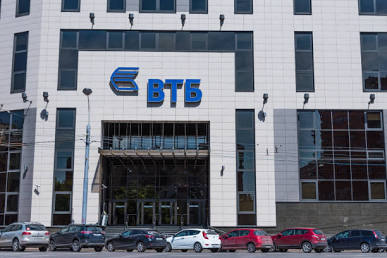
VTB Bank office building. Source: iStock
A New Chapter of Sanctions for VTB Bank
For VTB Bank, navigating Western sanctions is nothing new. The institution has been heavily targeted for over a decade. It first faced restrictive measures following Russia’s illegal annexation of Crimea in 2014. Those restrictions were dramatically expanded into comprehensive, blocking sanctions in 2022 following Moscow’s full-scale invasion of Ukraine, effectively cutting VTB off from the U.S. financial system and freezing its Western assets.
Given that VTB was already a pariah in the eyes of the West, a critical question arises: What is the practical impact of sanctioning an institution that is already sanctioned?
According to geopolitical analysts and financial compliance experts, the marginal effect on VTB’s day-to-day domestic operations within Russia may be limited. The bank has spent the last four years adapting to a post-Western reality, pivoting its operations toward Asia, the Middle East, and the Global South.
However, the strategic genius behind this new designation lies not in its direct impact on VTB, but in its underlying legal and diplomatic framework. By explicitly tying these new sanctions to Iran and global terrorism concerns—rather than the conflict in Ukraine—the U.S. Treasury has fundamentally altered the risk calculus for any international entity still doing business with the Russian lender.
The Mechanics of Secondary Sanctions: The True Threat
The primary weapon deployed in this action is the threat of secondary sanctions. While primary sanctions prohibit U.S. persons and entities from doing business with a sanctioned target, secondary sanctions apply extraterritorially. They threaten foreign banks, corporations, and governments with being cut off from the U.S. financial system if they conduct significant transactions with the sanctioned entity.
Many countries in the Global South, including rising economic powers in Asia and Latin America, have refused to participate in the Ukraine-related sanctions regime against Russia. Consequently, banks in these regions have maintained lucrative correspondent banking relationships with VTB, allowing the Russian institution to continue facilitating cross-border trade.
The Iran-related designation changes the paradigm. While a bank in the UAE, India, or China might be willing to risk Western ire over Ukraine-related transactions, the legal and reputational risks associated with facilitating Iranian sanctions evasion—and by extension, terrorism financing—are vastly different.
Treasury officials are betting that foreign banks, heavily reliant on access to U.S. dollar clearinghouses in New York, will simply refuse to take the risk. Compliance departments worldwide are currently scrambling to sever any remaining ties with VTB Bank out of fear that a single misstep could result in their own institution being blacklisted by OFAC. In this way, the U.S. is effectively deputizing the global banking sector to enforce its blockade against Iran and Russia.
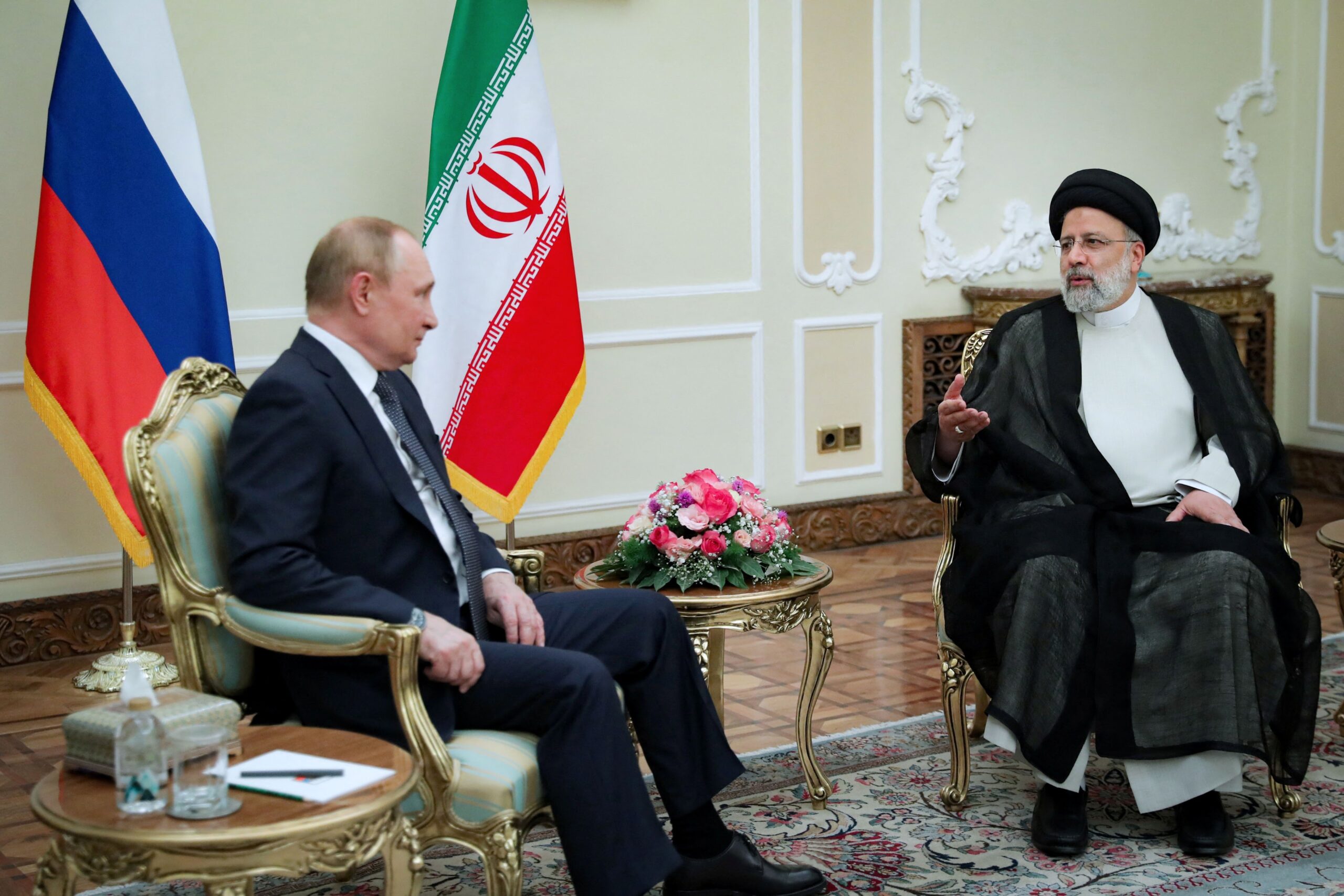
High-level diplomatic meeting between Russia and Iran. Source: WANA NEWS AGENCY / via REUTERS
The Emerging Russia-Iran Axis
Beyond the immediate financial mechanisms, the VTB sanctions highlight a profound shift in global geopolitics: the solidification of the Russia-Iran axis. What began as a marriage of convenience—driven by mutual animosity toward the West and a shared status as heavily sanctioned states—has evolved into a deeply integrated strategic partnership.
Russia requires Iranian drones, munitions, and military technology to sustain its ongoing war effort in Ukraine. In exchange, Iran desperately needs Russian capital, cyber expertise, advanced fighter jets, and diplomatic cover. By utilizing state-backed entities like VTB Bank to merge their financial systems, Moscow and Tehran are actively attempting to build a “sanctions-proof” economic bloc.
They have accelerated efforts to link their domestic payment systems (Russia’s Mir and Iran’s Shetab), trade in national currencies, and utilize blockchain technologies to settle debts outside the purview of Western intelligence agencies. The U.S. Treasury’s action against VTB is a direct strike against the architecture of this alternative system.
Looking Ahead: Will the Strategy Work?
As “Operation Economic Outcast” continues to unfold, the global markets are watching closely to see how both Russia and Iran will retaliate. Will this designation force Tehran back to the negotiating table to end the conflict that began in February 2026, or will it accelerate the bifurcation of the global financial system?
If the sanctions successfully terrify third-country intermediaries into abandoning VTB, it could result in a severe liquidity crisis for Iranian state enterprises, significantly curtailing Tehran’s ability to fund its proxy network. Conversely, if non-Western nations ignore the secondary sanctions threat—calculating that the U.S. cannot afford to sanction major banks in Beijing, Mumbai, or Dubai—it could signal a waning of American financial hegemony.
For now, the U.S. Treasury has made its position unequivocally clear. By dropping the hammer on VTB Bank, Washington has signaled that there are no longer any safe harbors for those who facilitate sanctions evasion. The economic battle lines have been drawn, and the collateral damage in the global financial sector is only just beginning.
Source: ANI News | Anadolu Agency | Iran International | Banking Dive | AML Intelligence