
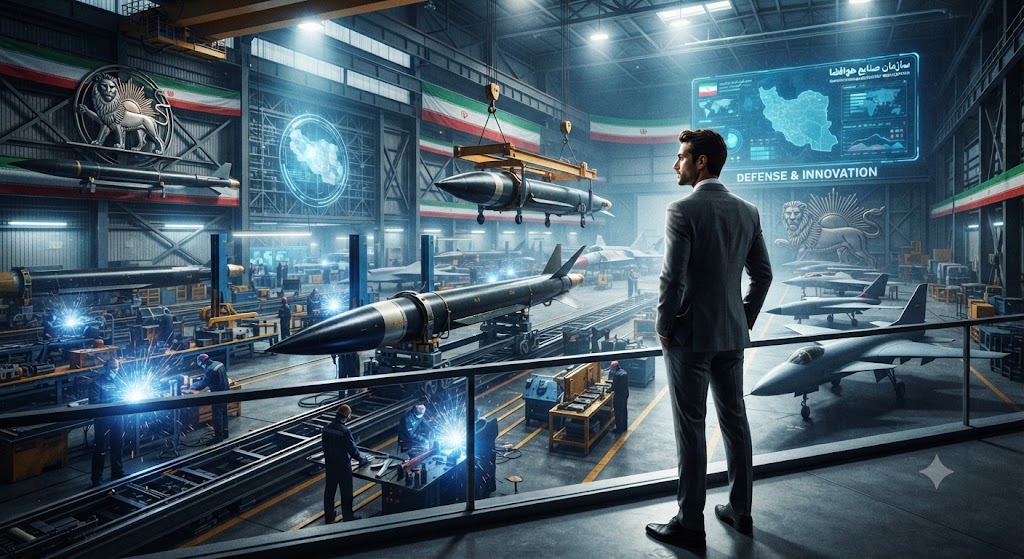
The Iranian Parliament made a highly consequential decision on Sunday, October 18, 2026, officially appointing Mehrdad Akhlaghi Ketabchi as the nation’s new Minister of Defense and Armed Forces Logistics. The confirmation, which saw Akhlaghi secure 237 votes in favor with only 15 against in a virtual parliamentary session, brings an end to months of interim leadership at the ministry.
However, this is not a standard bureaucratic reshuffle. Akhlaghi is stepping into one of the most dangerous and heavily scrutinized roles in the Middle East. He replaces Aziz Nasirzadeh, the former Defense Minister who was killed on February 28 during the opening salvo of the devastating joint US-Israeli strikes on Iran. In appointing Akhlaghi, the Islamic Republic has sent a clear, defiant signal to Washington and Tel Aviv: Iran’s military strategy is pivoting heavily toward domestic industrial capability, advanced aerospace technology, and ballistic missile production.
Unlike his predecessors, who often rose through the traditional ranks of military command, Akhlaghi is not a general. He is an engineer, a manager, and the architect of Iran’s modern weapons manufacturing establishment. Here is a detailed look at who Mehrdad Akhlaghi is, his extensive history within the Iranian military-industrial complex, and his tech-focused vision for the ongoing war.
Four Decades in the Shadows: Akhlaghi’s Rise
Mehrdad Akhlaghi is a 42-year veteran of the Iranian defense sector. Entering the industry in the early 1980s during the crucible of the Iran-Iraq War, Akhlaghi spent decades operating behind the scenes in technical, industrial, and managerial positions.
His career trajectory is inextricably linked to the development of Iran’s most potent strategic deterrent: its ballistic missile program. Akhlaghi spent significant time working at the Shahid Bagheri Industrial Group, a subsidiary of the Aerospace Industries Organization (AIO) that is heavily involved in solid-fuel missile propulsion systems and ballistic missile development. His technical expertise and managerial acumen eventually led him to the very top of Iran’s defense production hierarchy.
In 2014, he became the head of the Aerospace Industries Organization, and later took over the Defense Industries Organization (DIO), which he has reportedly led since 2013. During his tenure, Akhlaghi was a central figure in the Fateh-110 missile project, a highly accurate, solid-fueled tactical ballistic missile that has become a staple of Iran’s arsenal. His success in these programs was reportedly heavily influenced by his close relationship with Hassan Tehrani Moghaddam, the legendary founder of the Islamic Revolutionary Guard Corps’ (IRGC) missile program.
Because of his deep, foundational involvement in these strategic weapons programs, Akhlaghi is a highly sanctioned individual. He was placed under United Nations sanctions in 2007 for his alleged involvement in nuclear and ballistic missile development, and he remains subject to severe US and EU sanctions today. According to reports from The Week, the new defense minister is also “already on the US kill list,” highlighting the immense personal risk associated with his new cabinet position following the assassination of his predecessor.
A Tech-Focused Defense Strategy for 2026
Akhlaghi’s appointment represents a shift from a purely tactical military posture to an industrial-technological one. Recognizing that Iran is currently engaged in a massive, asymmetric war of attrition against the technologically superior United States and Israel, the Iranian leadership has placed a production expert in charge of the defense portfolio.
In the program he presented to lawmakers prior to his confirmation, Akhlaghi outlined a stark, tech-forward vision designed to counter Western military dominance. His primary stated goals include:
- Rebuilding the Military-Industrial Infrastructure: Following eight months of severe US and Israeli airstrikes targeting Iranian defense factories, Akhlaghi’s immediate priority is reconstructing the nation’s weapons manufacturing capacity.
- Expanding Missile and UAV Capabilities: Drawing on his roots in the AIO, Akhlaghi pledged to rapidly accelerate the development of advanced ballistic missiles and Unmanned Aerial Vehicles (UAVs). The deployment of cost-effective, mass-produced drones has been a defining feature of the current conflict, and Akhlaghi aims to drastically scale up this production.
- Space and Satellite Expansion: In a move that deeply concerns Western intelligence agencies, Akhlaghi emphasized the development of military satellites and the expansion of Iran’s space capabilities. A robust military satellite network would enhance Iran’s ability to guide long-range missiles and conduct reconnaissance against US naval assets in the region.
- Private-Sector Integration: Recognizing the limits of state-run enterprises under heavy sanctions, Akhlaghi plans to expand the Defense Ministry’s cooperation with private-sector tech companies to accelerate the development of defense technologies.
The Rhetoric of Deterrence
While Akhlaghi’s background is rooted in engineering and logistics, his public rhetoric since his confirmation has been fiercely combative. Speaking to the parliament, he described the defense portfolio as “particularly sensitive” given the current war.
In a direct response to recent reports by CNN that the US military has developed strike plans potentially utilizing the massive GBU-43/B Massive Ordnance Air Blast (colloquially known as the “Mother of All Bombs”) against Iranian energy infrastructure and deeply buried nuclear sites, Akhlaghi issued a severe warning to US President Donald Trump.
“If the American enemy makes another miscalculation, the response of the valiant Iranian people and the fighters of Islam will be surprising and extensive,” Akhlaghi stated. In a particularly grim warning directed at US personnel stationed in the region, he added, “If he drops a single bomb, he will have to consider how many of his troops will end up being carried out of the region in a horizontal position”. He further pledged to increase material support for the regional “Axis of Resistance” proxy groups fighting against US and Israeli forces.
Conclusion
The confirmation of Mehrdad Akhlaghi Ketabchi signifies that Tehran is digging in for a protracted, industrially exhausting conflict. By selecting the architect of the Revolutionary Guards’ missile program to lead the Defense Ministry, Iran is demonstrating that its strategy relies not on matching American military might ship-for-ship, but on out-producing the West in asymmetric technologies: solid-fuel missiles, attack drones, and air defense systems.
Akhlaghi’s success or failure will dictate whether Iran can sustain the massive material losses inflicted by the US and Israel. As the war grinds into late 2026, the newly appointed Minister of Defense faces the ultimate test of the industrial machine he spent the last four decades building.
* Conceptual illustration generated using AI