
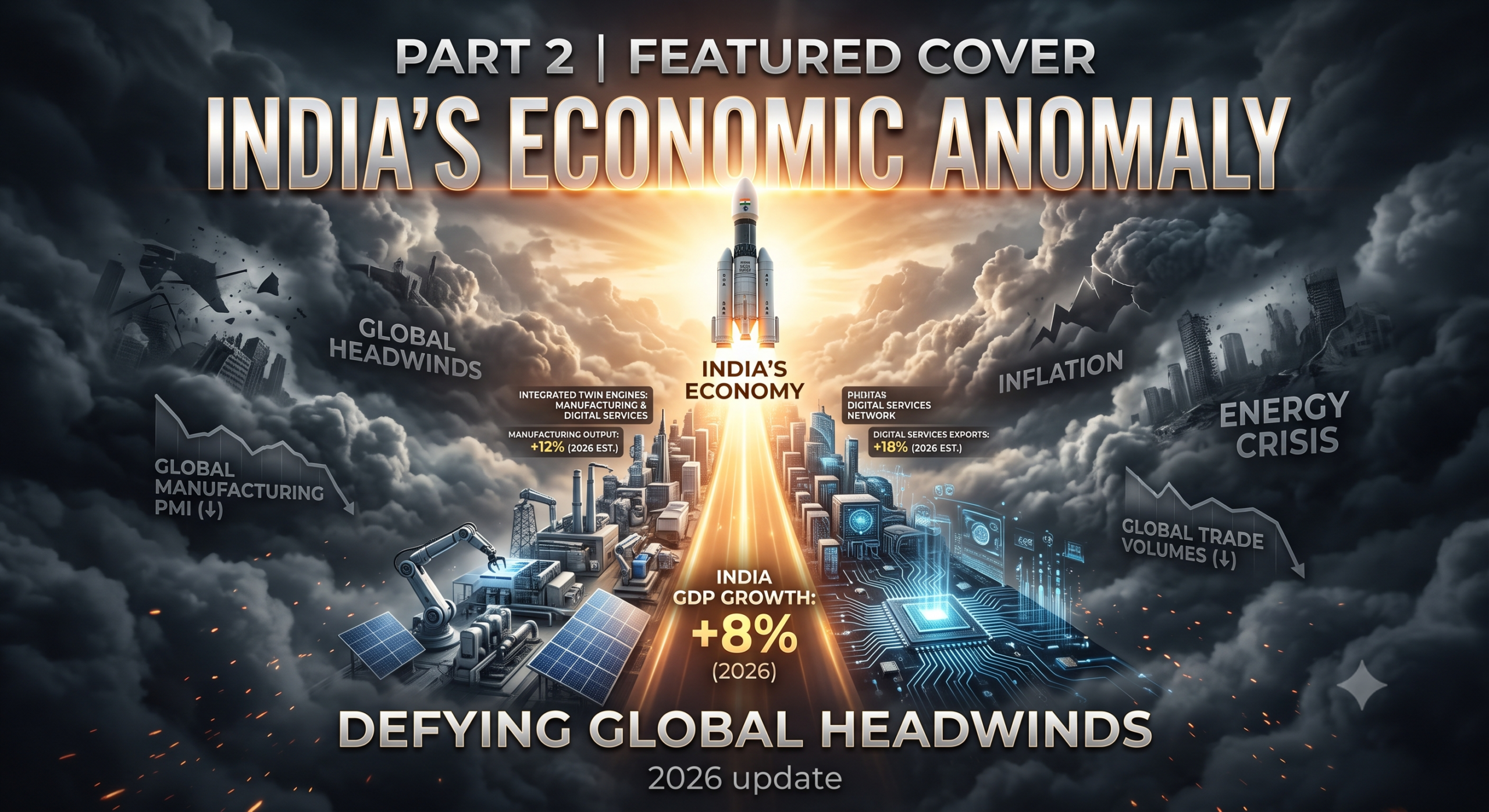
While the global economic narrative in late 2026 is defined by sluggish growth and structural fragmentation, the Indian economy presents a stark anomaly. As major economies struggle to clear the 3% growth hurdle amidst towering interest rates and shifting trade winds, India’s trajectory is pointing aggressively upward.
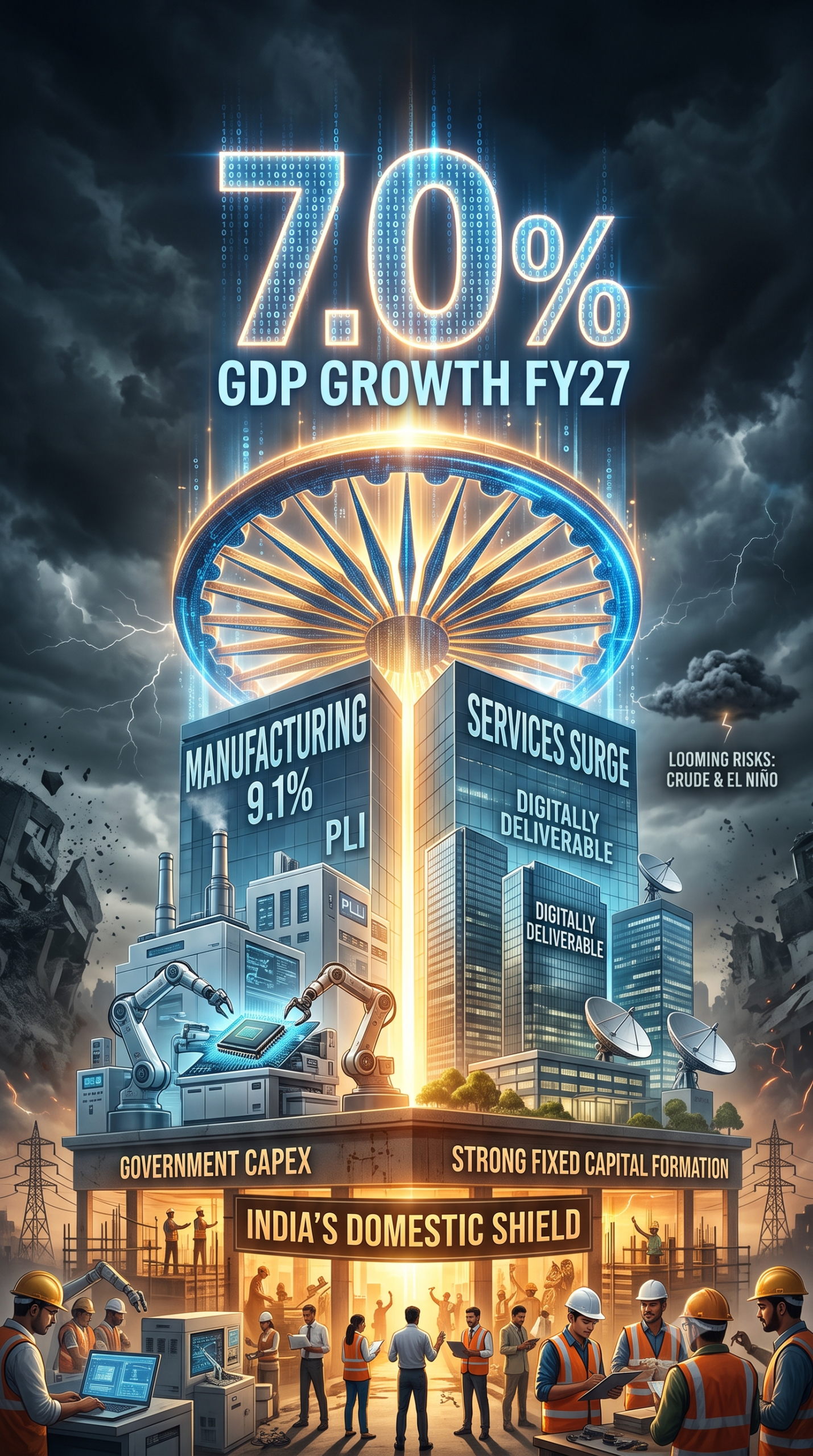
The most definitive signal came in mid-September when Moody’s revised its real GDP growth forecast for India in fiscal 2027 to a robust 7.0%. This upgrade notably surpasses both the International Monetary Fund’s 6.4% projection and the Reserve Bank of India’s 6.6% estimate, cementing India’s position as the fastest-growing major economy. But the headline number is only part of the story. To deliver truly insightful analysis, the crucial question is not just how fast India is growing, but what exactly is fueling that engine while the rest of the world stalls.
India Economy Growth Story
The answer lies in a dual-engine acceleration: a historical strength in services now married to a rapidly scaling manufacturing sector. Traditionally, India’s economic narrative has been dominated by its digitally deliverable services and IT exports. While services remain a massive, foundational pillar, it is the industrial side that is driving the current upside surprise. Manufacturing output has expanded by approximately 9.1%—a staggering figure when contrasted against the global manufacturing slump.
This industrial surge is the intended downstream effect of the government’s Production Linked Incentive (PLI) schemes and a sharp, post-pandemic rise in factory capacity utilization. Furthermore, India’s aggressive push into high-tech manufacturing is bearing fruit. With five semiconductor units now in production under the ISM 2.0 initiative, the country is actively building a domestic ecosystem to integrate with highly coveted global tech supply chains.
This manufacturing momentum is shielded by India’s most potent economic weapon: a massive, insulated domestic market. While export-driven nations are suffering directly from the global slowdown in physical goods trade, India’s growth is fundamentally domestic. Robust private consumption and a sustained, multi-year government capital expenditure (capex) program have created a protective buffer. The central government has maintained its infrastructure spending blitz while simultaneously urging state governments to boost their own capital expenditures to 3% of their Gross State Domestic Product (GSDP). This concerted effort in gross fixed capital formation ensures that money is flowing into physical infrastructure, driving localized demand that remains relatively insulated from Western monetary policy.
However, realistic economic analysis requires acknowledging the vulnerabilities beneath the bullish data. India’s 7% trajectory is not bulletproof. The most immediate threat comes from the external environment. With crude oil and energy prices remaining elevated due to ongoing Middle Eastern conflicts, India—which imports the vast majority of its crude requirements—faces imported inflation risks. This pressure could force the RBI to maintain a tighter monetary stance than domestic industries might prefer.
Additionally, agricultural output remains a critical variable. Lingering concerns over climate unpredictability and potential El Niño effects on crop yields threaten to spark food inflation, which disproportionately impacts the rural consumption engine. Finally, if global trade tensions escalate further, there is a risk of fiscal strain; the government may need to increase subsidy outlays to protect consumers from sudden price shocks.
Ultimately, the Indian economic anomaly of 2026 is a testament to domestic resilience and aggressive policy execution. By pivoting toward high-value manufacturing while leaning heavily on state-backed infrastructure spending, India has built a formidable firewall against global stagnation. The challenge for the coming quarters will be transitioning this public-sector-led growth into sustained, massive private-sector investment.